ZTE Communications ›› 2025, Vol. 23 ›› Issue (4): 65-76.DOI: 10.12142/ZTECOM.202504008
• Special Topic • Previous Articles Next Articles
ZHANG Yang1, CEN Zihan1, ZHAN Wen2( ), CHEN Xiang1
Received:2025-09-20
Online:2025-12-25
Published:2025-12-22
About author:ZHANG Yang received his BE degree in communication engineering from Sun Yat-sen University, China in 2023. He is currently pursuing the MS degree in integrated circuit engineering at Sun Yat-sen University. His research interests include multi-AP coordination and distributed MIMO technologies.ZHANG Yang, CEN Zihan, ZHAN Wen, CHEN Xiang. C-WAN for FTTR: Enabling Low-Overhead Joint Transmission with Deep Learning[J]. ZTE Communications, 2025, 23(4): 65-76.
Add to citation manager EndNote|Ris|BibTeX
URL: https://zte.magtechjournal.com/EN/10.12142/ZTECOM.202504008
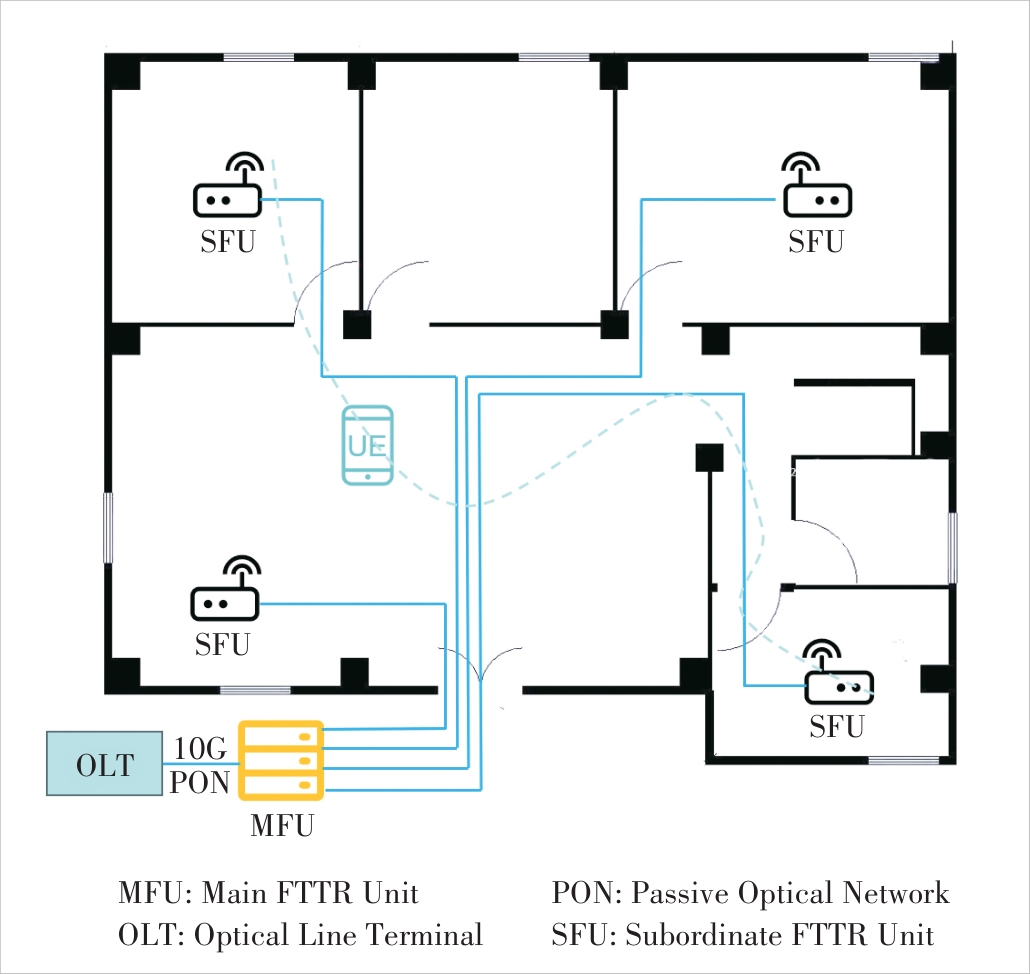
Figure 1 Typical Fiber-to-the-Room (FTTR) system

Figure 2 (a) Traditional distributed Fiber-to-the-Room (FTTR) architecture; (b) FTTR/centralized wireless access network (C-WAN) architecture

Figure 3 Hybrid model architecture that fuses CNN and ResNet
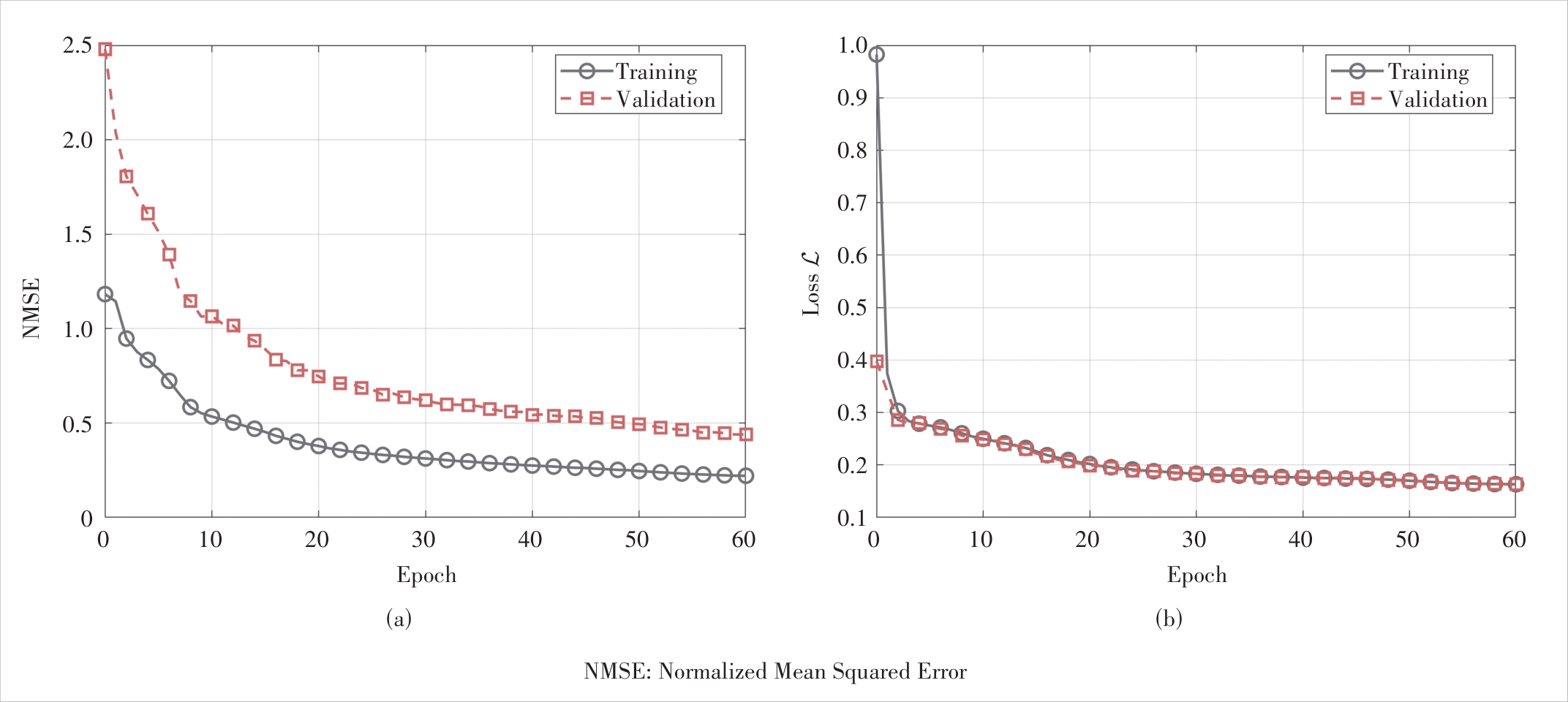
Figure 4 Loss convergence curves: (a) NMSE; (b) the spectral efficiency loss function ?
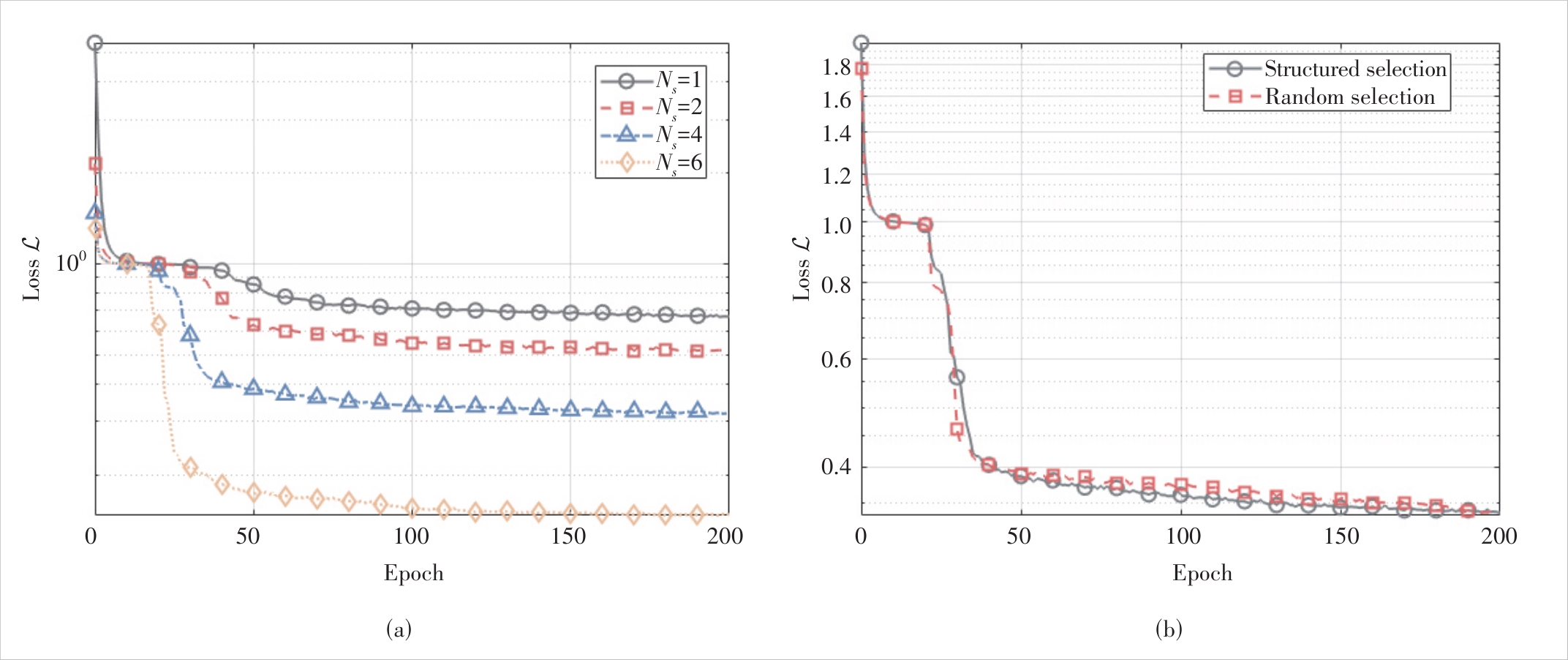
Figure 5 (a) Effect of N? on the loss function; (b) Effect of N? selection strategy on the loss function

Figure 6 (a) Adaptive fusion weightα for the temporal branch and (b) performance comparison of model variants

Figure 7 Cumulative Distribution Function (CDF) of achievable spectral efficiency for different CSI acquisition methods
| [1] | ZHANG D Z, ZENG T, YANG Z Y, et al. FTTR-B technology exploration and practice [C]//Proc. IEEE International Conference on Communications Workshops (ICC Workshops). IEEE, 2024: 37–41. DOI: 10.1109/ICCWorkshops59551.2024.10615937 |
| [2] | NUNEZ D, SMITH M, BELLALTA B. Multi-AP coordinated spatial reuse for Wi-Fi 8: group creation and scheduling [C]//Proc. 21st Mediterranean Communication and Computer Networking Conference (MedComNet). IEEE, 2023: 203–208. DOI: 10.1109/MedComNet58619.2023.10168857 |
| [3] | SHEN G X, LI J, CAI J H, et al. Enhancing fiber-to-the-room (FTTR) technologies: addressing key challenges and solutions (invited tutorial) [C]//Proc. Conference on Lasers and Electro-Optics Pacific Rim (CLEO-PR). IEEE, 2024: 1–2. DOI: 10.1109/CLEO-PR60912.2024.10676562 |
| [4] | SUNDARAVARADHAN S P, PORAT R, TOUSSI K N. Increasing spatial multiplexing gain in future multi-AP WiFi systems via joint transmission [J]. IEEE communications standards magazine, 2022, 6(2): 20–26. DOI: 10.1109/MCOMSTD.0001.2100085 |
| [5] | CHEN B H, JIAO X J, LIU W, et al. An experimental study of Wi-Fi joint transmission with multiple openwifi access points [C]//IEEE Wireless Communications Networking Conference (WCNC). IEEE, 2025: 1–67. DOI: 10.1109/WCNC61545.2025.10978612 |
| [6] | HAMED E, RAHUL H, ABDELGHANY M A, et al. Real-time distributed MIMO systems [C]//Proc. 2016 ACM SIGCOMM Conference (SIGCOMM ' 16. Association for Computing Machinery, 2016: 412–425. DOI: 10.1145/2934872.2934905 |
| [7] | TITUS A, BANSAL R, SREEJITH T V, et al. Decision problems for joint transmission in multi-AP coordination framework of IEEE 802.11be [C]//Proc. International Conference on COMmunication Systems & NETworkS (COMSNETS). IEEE, 2021: 326–333. DOI: 10.1109/COMSNETS51098.2021.9352818 |
| [8] | LEVINBOOK Y, EZRI D, MELZER E. AP cooperation in Wi-Fi: joint transmission with a novel precoding scheme, resilient to phase offsets between transmitters [J]. Signal processing, 2024, 220: 109432. DOI: 10.1016/j.sigpro.2024.109432 |
| [9] | KUNNATH GANESAN U, SARVENDRANATH R, LARSSON E G. BeamSync: over-the-air synchronization for distributed massive MIMO systems [J]. IEEE transactions on wireless communications, 2024, 23(7): 6824–6837. DOI: 10.1109/TWC.2023.3335089 |
| [10] | HE J L, YAO H, ZHAO D S, et al. Multi-channel phase synchronization method for independent asynchronous local oscillators based on pre-calibration matrix [C]//Proc. IEEE International Symposium on Antennas and Propagation and INC/USNC‐URSI Radio Science Meeting (AP-S/INC-USNC-URSI). IEEE, 2024: 449–450. DOI: 10.1109/AP-S/INC-USNC-URSI52054.2024.10687303 |
| [11] | VERMA S, RODRIGUES T K, KAWAMOTO Y, et al. A survey on multi-AP coordination approaches over emerging WLANs: future directions and open challenges [J]. IEEE communications surveys & tutorials, 2024, 26(2): 858–889. DOI: 10.1109/COMST.2023.3344167 |
| [12] | LIU Z Y, ZHANG L, DING Z. Overcoming the channel estimation barrier in massive MIMO communication via deep learning [J]. IEEE wireless communications, 2020, 27(5): 104–111. DOI: 10.1109/MWC.001.1900413 |
| [13] | JIANG W, SCHOTTEN H D. Deep learning for fading channel prediction [J]. IEEE open journal of the communications society, 2020, 1: 320–332. DOI: 10.1109/OJCOMS.2020.2982513 |
| [14] | CHEN W, WAN W X, WANG S Y, et al. CSI-PPPNet: a one-sided one-for-all deep learning framework for massive MIMO CSI feedback [J]. IEEE transactions on wireless communications, 2024, 23(7): 7599–7611. DOI: 10.1109/TWC.2023.3342735 |
| [15] | BANERJEE B, ELLIOTT R C, KRZYMIEŃ W A, et al. Machine learning assisted DL CSI estimation for high-mobility multi-antenna users with partial UL CSI availability in TDD massive MIMO systems [C]//Proc. IEEE Globecom Workshops (GC Wkshps). IEEE, 2022: 1579–1585. DOI: 10.1109/GCWkshps56602.2022.10008644 |
| [16] | WANG J Z, LIU W C, MENG J, et al. Fiber to the radio/C-WAN architecture and its performance analysis [C]//Proc. IEEE International Conference on Communications Workshops (ICC Workshops). IEEE, 2024: 709–713. DOI: 10.1109/ICCWorkshops59551.2024.10615771 |
| [17] | ZHENG J K, ZHANG J Y, BJÖRNSON E, et al. Impact of channel aging on cell-free massive MIMO over spatially correlated channels [J]. IEEE transactions on wireless communications, 2021, 20(10): 6451–6466. DOI: 10.1109/TWC.2021.3074421 |
| [18] | EUCHNER F, KELLNER D, STEPHAN P, et al. CSI dataset espargos-0005: four phase- and time-synchronous ESPARGOS antenna arrays in a lab room [EB/OL]. [2020-05-01]. |
| [19] | VIEIRA J, RUSEK F, TUFVESSON F. Reciprocity calibration methods for massive MIMO based on antenna coupling [C]//2014 IEEE Global Communications Conference. IEEE, 2014: 3708–3712. DOI: 10.1109/GLOCOM.2014.7037384 . |
| [20] | WU X M, ZENG Y, SI X S, et al. Fiber-to-the-room (FTTR): standards and deployments [C]//Proc. Optical Fiber Communication Conference (OFC) 2023. Optica Publishing Group, 2023: 1–3. DOI: 10.1364/ofc.2023.tu3f.6 |
| [21] | JIMÉNEZ LÓPEZ M, GUTIÉRREZ RIVAS J L, DÍAZ ALONSO J. A white-rabbit network interface card for synchronized sensor networks [C]//Proc. SENSORS, 2014 IEEE. IEEE, 2014: 2000–2003. DOI: 10.1109/ICSENS.2014.6985426 |
| [22] | XU Y L, RAJAGOPALA A D, FRUITWALA N, et al. Multi-FPGA synchronization and data communication for quantum control and measurement [EB/OL]. [2025-06-11]. |
| [23] | BALAN H V, ROGALIN R, MICHALOLIAKOS A, et al. AirSync: enabling distributed multiuser MIMO with full spatial multiplexing [J]. IEEE/ACM transactions on networking, 2013, 21(6): 1681–1695. DOI: 10.1109/TNET.2012.2230449 |
| [24] | LIU X, LI J W, WU X M, et al. Fiber-to-the-room (FTTR) technologies for the 5th generation fixed network (F5G) and beyond [C]//Proc. IEEE Future Networks World Forum (FNWF). IEEE, 2022: 351–354. DOI: 10.1109/FNWF55208.2022.00068 |
| [25] | LI J L, ZHANG Q, XIN X J, et al. Deep learning-based massive MIMO CSI feedback [C]//18th International Conference on Optical Communications and Networks (ICOCN). IEEE, 2019: 1–3. DOI: 10.1109/ICOCN.2019.8934725 |
| [26] | NAKAMURA T, BOUAZIZI M, YAMAMOTO K, et al. Wi-Fi-based fall detection using spectrogram image of channel state information [J]. IEEE Internet of Things journal, 2022, 9(18): 17220–17234. DOI: 10.1109/JIOT.2022.3152315 |
| [27] | SEGUEL F, SALIHU D, HAEGELE S, et al. Complex-valued deep learning for WiFi-based indoor positioning: method and performance [C]//European Wireless 2024; 29th European Wireless Conference. VDE, 2024: 59–65 |
| [28] | BAI S J, KOLTER J Z, KOLTUN V. An empirical evaluation of generic convolutional and recurrent networks for sequence modeling [EB/OL]. [2018-04-19]. |
| [1] | Lu Zhaohua, Yi Chenyang, Wu Jie, Shao Bo, Xu Wei. Deep CSI Compression and Feedback for Massive MIMO: A Survey [J]. ZTE Communications, 2026, 24(1): 4-15. |
| [2] | Zhao Jianchao, Geng Zhaosen, Li Zeyi, Wang Pan. Key Technologies for AI-Driven Network Traffic Classification Workflow and Data Distribution Shift [J]. ZTE Communications, 2026, 24(1): 34-44. |
| [3] | LIU Yichen, GAO Ruixin, ZENG Chen, LIU Yingzhuang. A Transformer-Based End-to-End Receiver Design for Wi-Fi 7 Physical Layer [J]. ZTE Communications, 2025, 23(4): 27-36. |
| [4] | HE Shuai, LIU Limin, WANG Zhanli, LI Jinliang, MAO Xiaojun, MING Anlong. M+MNet: A Mixed-Precision Multibranch Network for Image Aesthetics Assessment [J]. ZTE Communications, 2025, 23(3): 96-110. |
| [5] | AI Bo, ZHANG Yuxin, YANG Mi, HE Ruisi, GUO Rongge. A Machine Learning-Based Channel Data Enhancement Platform for Digital Twin Channels [J]. ZTE Communications, 2025, 23(2): 20-30. |
| [6] | CHENG Jiaming, CHEN Wei, LI Lun, AI Bo. Efficient Spatio-Temporal Predictive Learning for Massive MIMO CSI Prediction [J]. ZTE Communications, 2025, 23(1): 3-10. |
| [7] | WANG Chongchong, LI Yao, WANG Beibei, CAO Hong, ZHANG Yanyong. Point Cloud Processing Methods for 3D Point Cloud Detection Tasks [J]. ZTE Communications, 2023, 21(4): 38-46. |
| [8] | GONG Panyin, ZHANG Guidong, ZHANG Zhigang, CHEN Xiao, DING Xuan. Research on Fall Detection System Based on Commercial Wi-Fi Devices [J]. ZTE Communications, 2023, 21(4): 60-68. |
| [9] | DENG Letian, ZHAO Yanru. Deep Learning-Based Semantic Feature Extraction: A Literature Review and Future Directions [J]. ZTE Communications, 2023, 21(2): 11-17. |
| [10] | LU Ping, SHENG Bin, SHI Wenzhe. Scene Visual Perception and AR Navigation Applications [J]. ZTE Communications, 2023, 21(1): 81-88. |
| [11] | FAN Guotian, WANG Zhibin. Intelligent Antenna Attitude Parameters Measurement Based on Deep Learning SSD Model [J]. ZTE Communications, 2022, 20(S1): 36-43. |
| [12] | GAO Zhengguang, LI Lun, WU Hao, TU Xuezhen, HAN Bingtao. A Unified Deep Learning Method for CSI Feedback in Massive MIMO Systems [J]. ZTE Communications, 2022, 20(4): 110-115. |
| [13] | ZHANG Jintao, HE Zhenqing, RUI Hua, XU Xiaojing. Spectrum Sensing for OFDMA Using Multicarrier Covariance Matrix Aware CNN [J]. ZTE Communications, 2022, 20(3): 61-69. |
| [14] | HE Hongye, YANG Zhiguo, CHEN Xiangning. Payload Encoding Representation from Transformer for Encrypted Traffic Classification [J]. ZTE Communications, 2021, 19(4): 90-97. |
| [15] | XUE Songyan, LI Ang, WANG Jinfei, YI Na, MA Yi, Rahim TAFAZOLLI, Terence DODGSON. To Learn or Not to Learn:Deep Learning Assisted Wireless Modem Design [J]. ZTE Communications, 2019, 17(4): 3-11. |
| Viewed | ||||||
|
Full text |
|
|||||
|
Abstract |
|
|||||