ZTE Communications ›› 2025, Vol. 23 ›› Issue (4): 27-36.DOI: 10.12142/ZTECOM.202504005
• Special Topic • Previous Articles Next Articles
LIU Yichen, GAO Ruixin, ZENG Chen, LIU Yingzhuang( )
)
Received:2025-09-16
Online:2025-12-22
Published:2025-12-22
About author:LIU Yichen is currently pursuing the PhD degree in the School of Electronic Information and Communications, Huazhong University of Science and Technology, China. His research interests include wireless communications, artificial intelligence, and WLAN systems.Supported by:LIU Yichen, GAO Ruixin, ZENG Chen, LIU Yingzhuang. A Transformer-Based End-to-End Receiver Design for Wi-Fi 7 Physical Layer[J]. ZTE Communications, 2025, 23(4): 27-36.
Add to citation manager EndNote|Ris|BibTeX
URL: https://zte.magtechjournal.com/EN/10.12142/ZTECOM.202504005
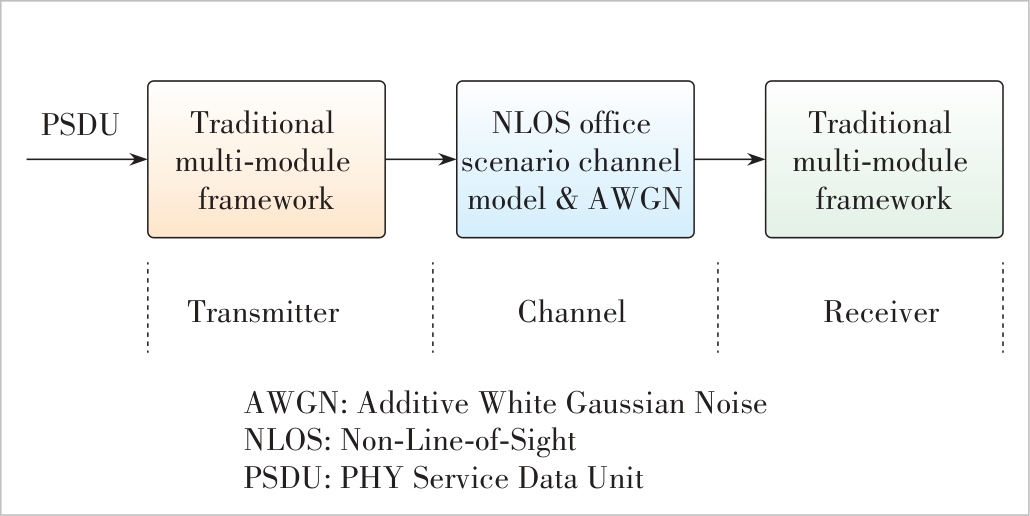
Figure 1 A traditional modular design of PHY transmission
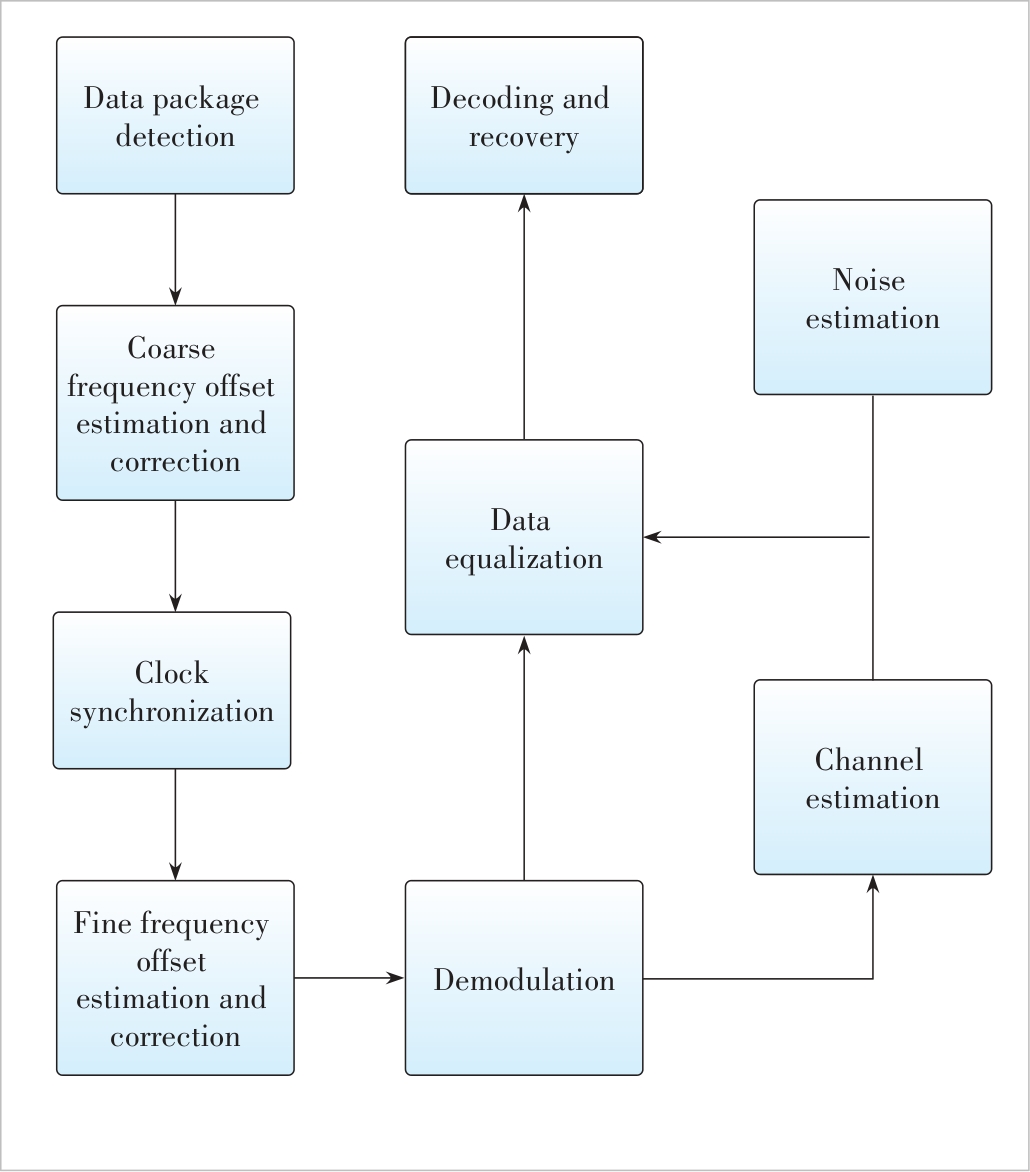
Figure 2 Operation flowchart of the receiver
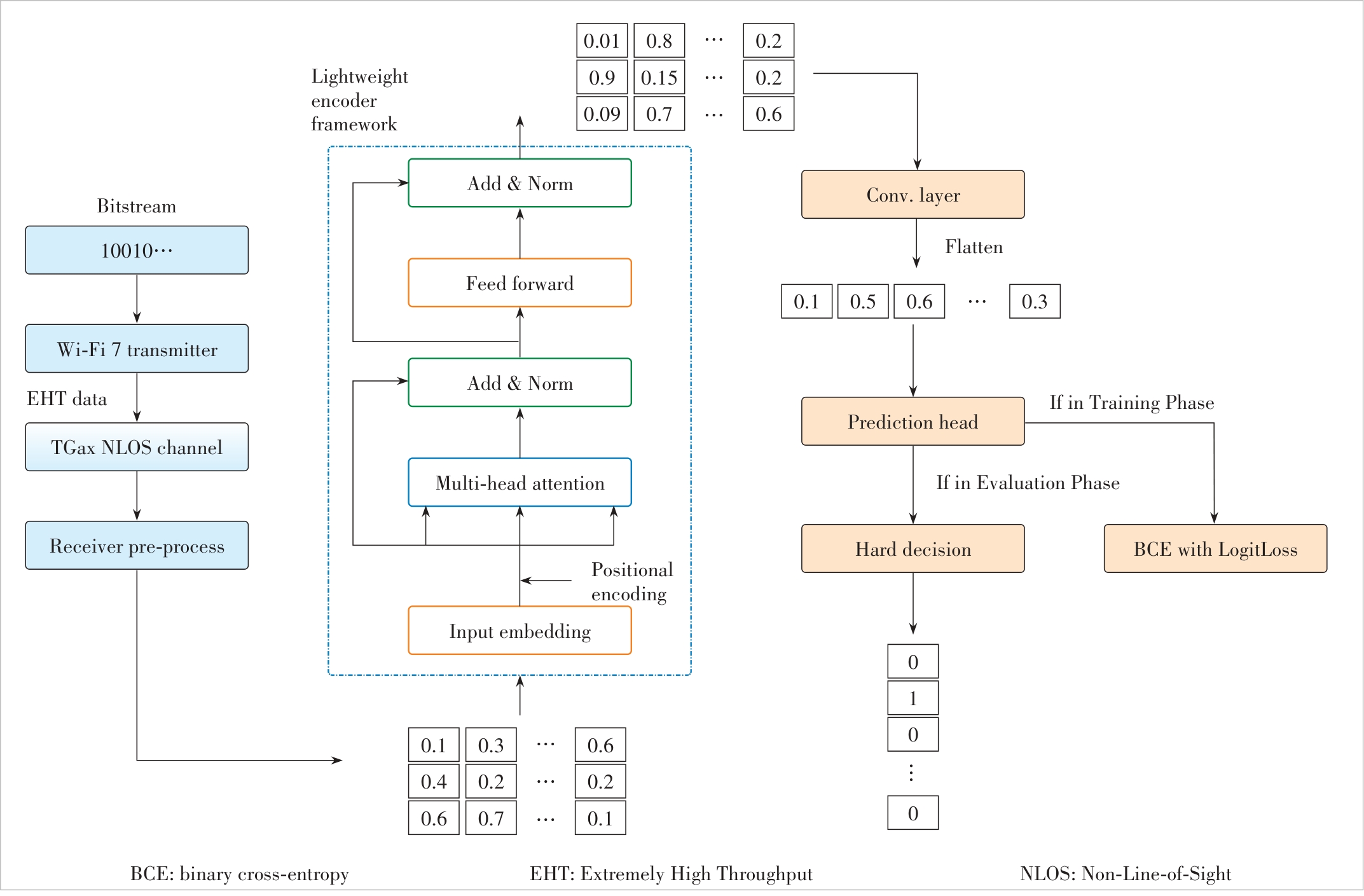
Figure 3 Lightweight encoder framework of the proposed Transformer-based receiver
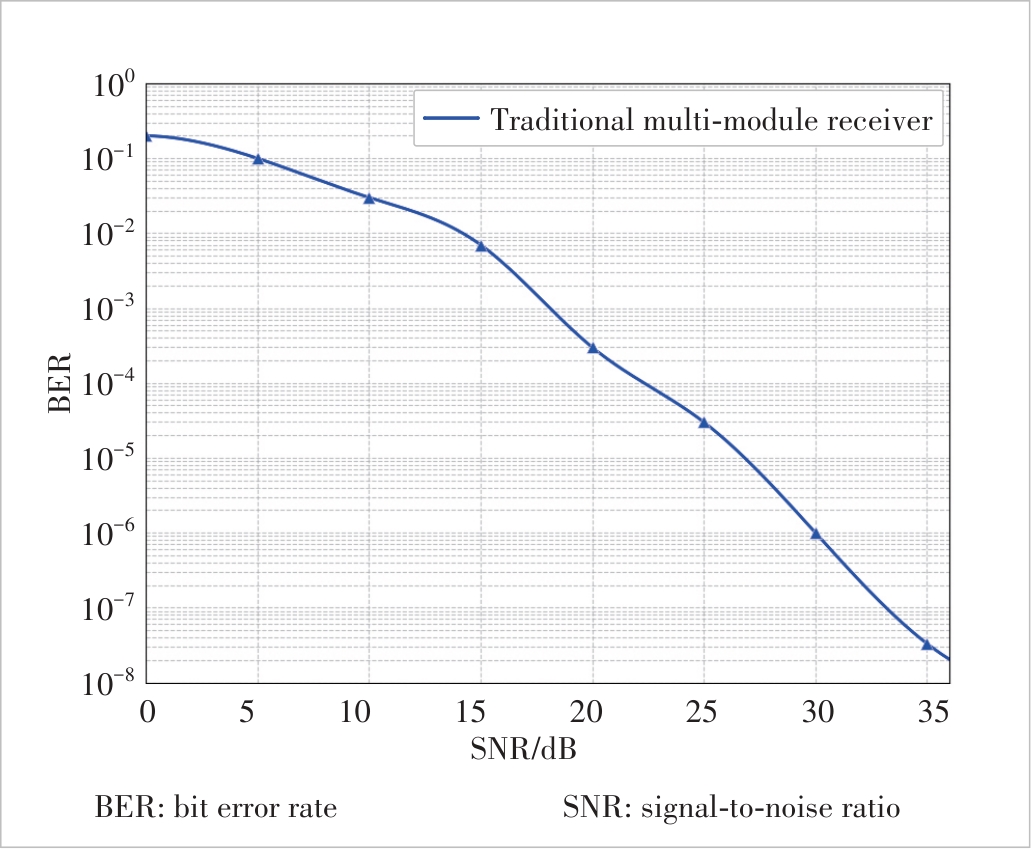
Figure 4 BER performance of the traditional scheme
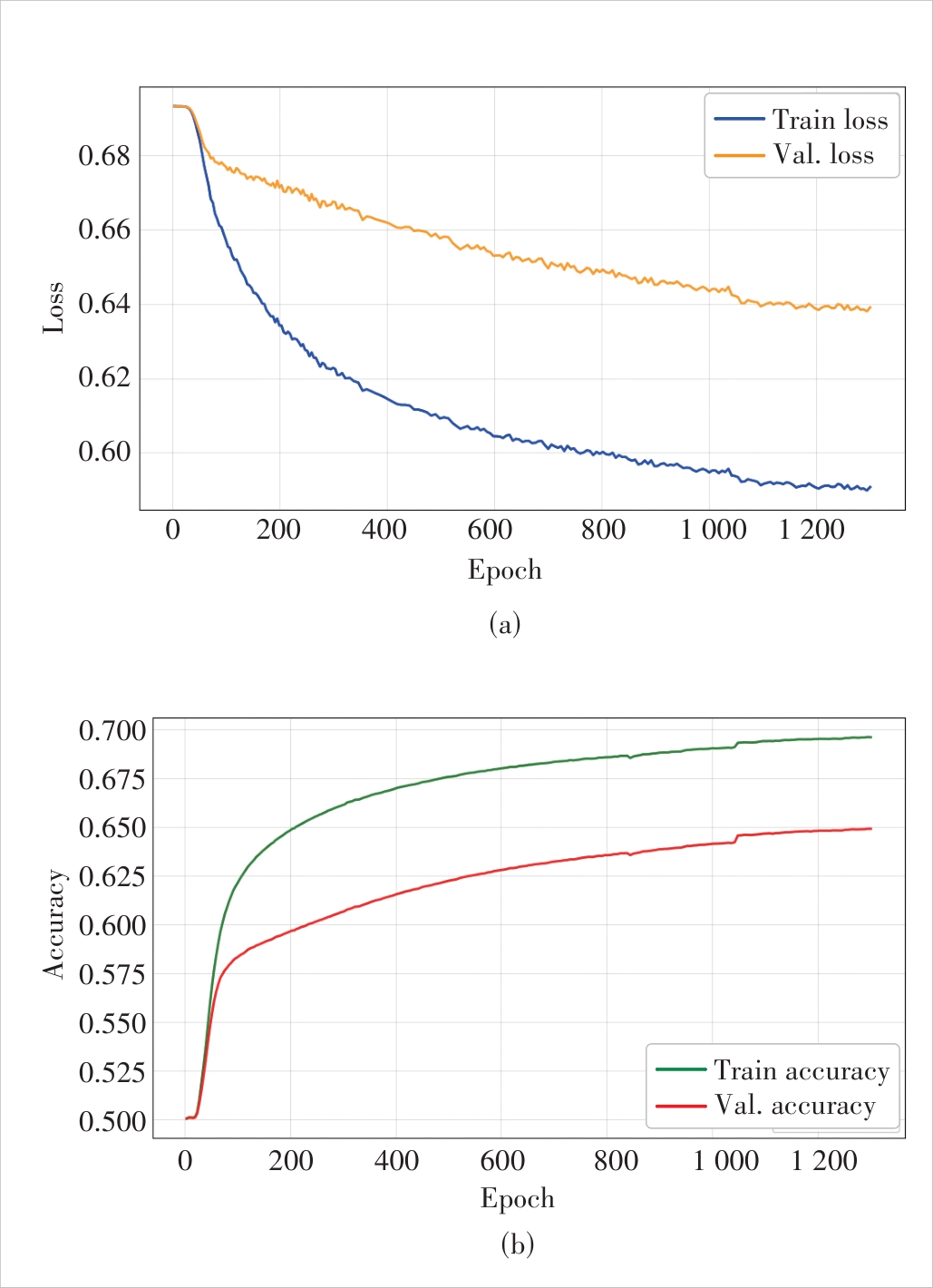
Figure 5 Training and validation curves: (a) loss versus epochs;(b) accuracy versus epochs

Figure 6 BER performance of the proposed scheme
| [1] | DENG C L, FANG X M, HAN X, et al. IEEE 802.11be Wi-Fi 7: new challenges and opportunities [J]. IEEE communications surveys & tutorials, 2020, 22(4): 2136–2166. DOI: 10.1109/COMST.2020.3012715 |
| [2] | KHOROV E, LEVITSKY I, AKYILDIZ I F. Current status and directions of IEEE 802.11be, the future Wi-Fi 7 [J]. IEEE access, 2020, 8: 88664–88688. DOI:10.1109/ACCESS.2020.2993448 |
| [3] | MENG J, ZHAO Q L, WU W M, et al. Enhancing IEEE 802.11ax network performance: an investigation and modeling into multi-user trans-mission [J]. IEEE transactions on mobile computing, 2025, 24(3): 2151–2165. DOI: 10.1109/TMC.2024.3493032 |
| [4] | DONG P H, ZHANG H, LI G Y, et al. Deep CNN-based channel estimation for mmWave massive MIMO systems [J]. IEEE journal of selected topics in signal processing, 2019, 13(5): 989–1000. DOI: 10.1109/JSTSP.2019.2925975 |
| [5] | WANG S Y, YAO R G, TSIFTSIS T A, et al. Signal detection in uplink time-varying OFDM systems using RNN with bidirectional LSTM [J]. IEEE wireless communications letters, 2020, 9(11): 1947–1951. DOI: 10.1109/LWC.2020.3009170 |
| [6] | POTTER C, VENAYAGAMOORTHY G K, KOSBAR K. RNN based MIMO channel prediction [J]. Signal processing, 2010, 90(2): 440–450. DOI: 10.1016/j.sigpro.2009.07.013 |
| [7] | MATTU S R, THEAGARAJAN L N, CHOCKALINGAM A. Deep channel prediction: a DNN framework for receiver design in time-varying fading channels [J]. IEEE transactions on vehicular technology, 2022, 71(6): 6439–6453. DOI: 10.1109/TVT.2022.3162887 |
| [8] | YANG Y, LI Y, ZHANG W X, et al. Generative-adversarial-network-based wireless channel modeling: challenges and opportunities [J]. IEEE communications magazine, 2019, 57(3): 22–27. DOI: 10.1109/MCOM.2019.1800635 |
| [9] | BOURTSOULATZE E, BURTH KURKA D, GÜNDÜZ D. Deep joint source-channel coding for wireless image transmission [J]. IEEE transactions on cognitive communications and networking, 2019, 5(3): 567–579. DOI: 10.1109/TCCN.2019.2919300 |
| [10] | HE H T, WEN C K, JIN S, et al. Deep learning-based channel estimation for beamspace mmWave massive MIMO systems [J]. IEEE wireless communications letters, 2018, 7(5): 852–855. DOI:10.1109/LWC.2018.2832128 |
| [11] | CHEN J, WANG X B. Learning-based intermittent CSI estimation with adaptive intervals in integrated sensing and communication systems [J]. IEEE journal of selected topics in signal processing, 2024, 18(5): 917–932. DOI: 10.1109/JSTSP.2024.3468037 |
| [12] | O’SHEA T, HOYDIS J. An introduction to deep learning for the physical layer [J]. IEEE transactions on cognitive communications and networking, 2017, 3(4): 563–575. DOI: 10.1109/TCCN.2017.2758370 |
| [13] | AOUDIA F AIT, HOYDIS J. End-to-end learning for OFDM: from neural receivers to pilotless communication [J]. IEEE transactions on wireless communications, 2022, 21(2): 1049–1063. DOI: 10.1109/TWC.2021.3101364 |
| [14] | SONG J X, HÄGER C, SCHRÖDER J, et al. Benchmarking and interpreting end-to-end learning of MIMO and multi-user communication [J]. IEEE transactions on wireless communications, 2022, 21(9): 7287–7298. DOI: 10.1109/TWC.2022.3157467 |
| [15] | VASWANI A, SHAZEER N, PARMAR N, et al. Attention is all you need [C]//Proc. 31st International Conference on Neural Information Processing Systems (NIPS’ 17. ACM, 2017: 6000–6010 |
| [16] | HUANG J H, YUAN K, HUANG C, et al. D2-JSCC: digital deep joint source-channel coding for semantic communications [J]. IEEE journal on selected areas in communications, 2025, 43(4): 1246–1261. DOI:10.1109/JSAC.2025.3531546 . |
| [17] | CHOUKROUN Y, WOLF L. Error correction code transformer [C]//Proc. 36th International Conference on Neural Information Processing Systems (NIPS’ 22. ACM, 2022: 38695–38705 |
| [18] | XU J, LI Z S, DU B W, et al. Reluplex made more practical: leaky ReLU [C]//Proc. IEEE Symposium on Computers and Communications (ISCC). IEEE, 2020: 1–7. DOI: 10.1109/ISCC50000.2020.9219587 |
| [1] | YU Weichao, LIU Yang, ZHANG Junxiong, YE Junliang, GE Xiaohu. Root Cause Analysis of Poor FTTR Quality Based on Transformer Mechanisms [J]. ZTE Communications, 2025, 23(4): 37-47. |
| [2] | ZHANG Yang, CEN Zihan, ZHAN Wen, CHEN Xiang. C-WAN for FTTR: Enabling Low-Overhead Joint Transmission with Deep Learning [J]. ZTE Communications, 2025, 23(4): 65-76. |
| [3] | HE Shuai, LIU Limin, WANG Zhanli, LI Jinliang, MAO Xiaojun, MING Anlong. M+MNet: A Mixed-Precision Multibranch Network for Image Aesthetics Assessment [J]. ZTE Communications, 2025, 23(3): 96-110. |
| [4] | AI Bo, ZHANG Yuxin, YANG Mi, HE Ruisi, GUO Rongge. A Machine Learning-Based Channel Data Enhancement Platform for Digital Twin Channels [J]. ZTE Communications, 2025, 23(2): 20-30. |
| [5] | CHENG Jiaming, CHEN Wei, LI Lun, AI Bo. Efficient Spatio-Temporal Predictive Learning for Massive MIMO CSI Prediction [J]. ZTE Communications, 2025, 23(1): 3-10. |
| [6] | REN Tianqi, LI Rongpeng, ZHAO Mingmin, CHEN Xianfu, LIU Guangyi, YANG Yang, ZHAO Zhifeng, ZHANG Honggang. Separate Source Channel Coding Is Still What You Need: An LLM-Based Rethinking [J]. ZTE Communications, 2025, 23(1): 30-44. |
| [7] | YUAN Lang, HUI Chen, WU Yanfeng, LIAO Ronghua, JIANG Feng, GAO Ying. Video Enhancement Network Based on CNN and Transformer [J]. ZTE Communications, 2024, 22(4): 78-88. |
| [8] | WANG Chongchong, LI Yao, WANG Beibei, CAO Hong, ZHANG Yanyong. Point Cloud Processing Methods for 3D Point Cloud Detection Tasks [J]. ZTE Communications, 2023, 21(4): 38-46. |
| [9] | GONG Panyin, ZHANG Guidong, ZHANG Zhigang, CHEN Xiao, DING Xuan. Research on Fall Detection System Based on Commercial Wi-Fi Devices [J]. ZTE Communications, 2023, 21(4): 60-68. |
| [10] | LI Wei, JI Jingkang, LIU Yuanlong, SUN Jiawei, LIN Subin. Simulation and Modeling of Common Mode EMI Noise in Planar Transformers [J]. ZTE Communications, 2023, 21(3): 105-116. |
| [11] | DENG Letian, ZHAO Yanru. Deep Learning-Based Semantic Feature Extraction: A Literature Review and Future Directions [J]. ZTE Communications, 2023, 21(2): 11-17. |
| [12] | LU Ping, SHENG Bin, SHI Wenzhe. Scene Visual Perception and AR Navigation Applications [J]. ZTE Communications, 2023, 21(1): 81-88. |
| [13] | FAN Guotian, WANG Zhibin. Intelligent Antenna Attitude Parameters Measurement Based on Deep Learning SSD Model [J]. ZTE Communications, 2022, 20(S1): 36-43. |
| [14] | GAO Zhengguang, LI Lun, WU Hao, TU Xuezhen, HAN Bingtao. A Unified Deep Learning Method for CSI Feedback in Massive MIMO Systems [J]. ZTE Communications, 2022, 20(4): 110-115. |
| [15] | ZHANG Jintao, HE Zhenqing, RUI Hua, XU Xiaojing. Spectrum Sensing for OFDMA Using Multicarrier Covariance Matrix Aware CNN [J]. ZTE Communications, 2022, 20(3): 61-69. |
| Viewed | ||||||
|
Full text |
|
|||||
|
Abstract |
|
|||||