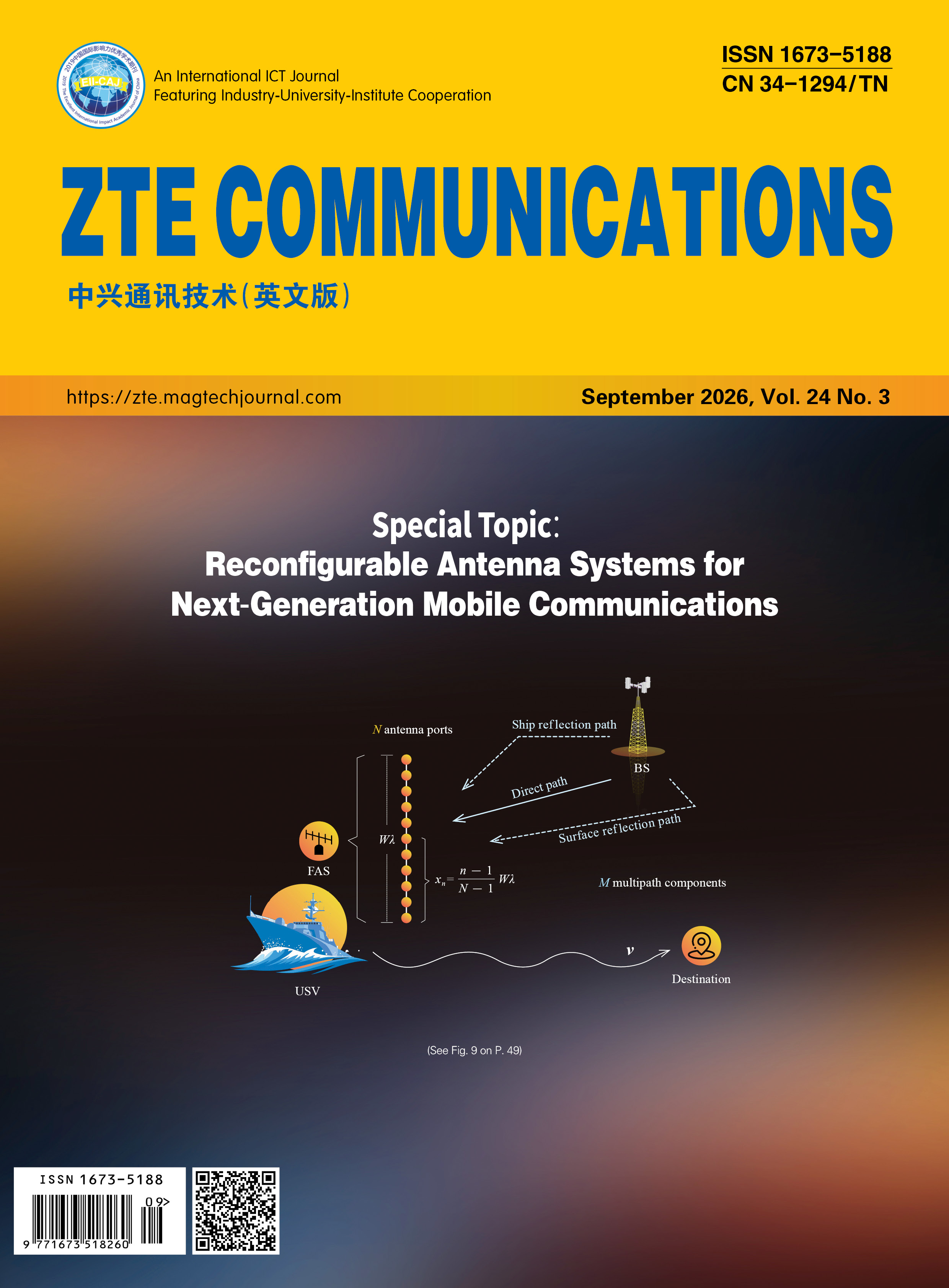
Due to its ability to significantly enhance communication reliability, the fluid antenna system (FAS) has emerged as a promising technology for ultra-reliable communications (URC). However, existing expressions to evaluate the outage probability of FAS are either computationally complex or simplified at the cost of accuracy. To address this issue, we propose an accuracy-controllable approximation method under Rayleigh fading channels. Specifically, we first approximate the fully correlated Rayleigh fading model as a block-correlation Rayleigh model, where the channel gains of ports in different blocks are assumed to be mutually independent, while the channel gains of ports in the same block are considered equally correlated, to simplify the analysis while maintaining accuracy. Then, we propose a novel method to approximate the Bessel function I0, introduced by the correlated Rayleigh fading, using an M-term series expansion, where the parameter M provides a tunable trade-off between approximation accuracy and computational complexity. Based on this approximation, a closed-form expression for the outage probability of FAS is derived. Simulation results demonstrate that our derived expression offers low computational complexity for evaluating the FAS outage probability while maintaining excellent approximation accuracy in the medium-to-high signal-to-noise ratio (SNR) range.
Fluid antenna systems (FAS) improve wireless reliability by selecting the strongest port within a compact aperture, but the same port-selection capability also changes the physical-layer security behavior of a wiretap channel. Exact secrecy outage analysis is difficult because the legitimate and eavesdropping links each contain many spatially correlated ports, leading to high-dimensional joint distributions. This paper develops a closed-form secrecy outage framework for FAS wiretap channels using the equivalent degrees of freedom (EDoF) principle. Under the Jakes spatial correlation model, the many correlated physical ports are represented by a much smaller set of aperture-limited dominant spatial modes. The resulting model converts the correlated wiretap channel into a tractable competition between the effective selection branches available to Bob and Eve. An eigenvalue-weighted refinement further captures unequal dominant-mode powers. Closed-form and asymptotic results reveal how Bob’s aperture determines secrecy diversity, how Eve’s aperture strengthens the eavesdropping link, and why proportional Bob-Eve signal-to-noise ratio scaling produces a nonzero secrecy outage floor. Numerical simulations verify the analytical trends and show that the decisive security resource is Bob’s aperture-induced EDoF advantage rather than the raw number of selectable ports.
Fluid antenna systems (FAS) provide continuous spatial degrees of freedom for next-generation wireless networks. However, deploying FAS on high-speed mobile embodied intelligent agents introduces Doppler shifts that shorten the channel coherence time, causing conventional full-port scanning to incur excessive pilot overhead. To address this issue, this paper proposes a prediction-aided adaptive communication architecture that constructs a dynamic local sounding window centered on upper-layer prediction results. By exploiting the spatial channel correlation among FAS ports, the proposed approach balances pilot overhead and spatial diversity gain under prediction deviations. We establish a quantitative model for the long-term expected throughput by integrating a nonlinear bounded hit probability function and a gain bridging model based on the zeroth-order Bessel function of the first kind. We then formulate a discrete optimization problem under practical constraints to maximize the expected transmission capacity, and develop a two-stage low-complexity algorithm that decouples the online computational complexity from the number of antenna ports. Simulation results show that the proposed mechanism adaptively adjusts the sounding window size according to moving velocity and prediction accuracy, reducing pilot overhead in high-mobility scenarios and achieving higher throughput than fixed-window and global scanning schemes.
This paper investigates joint resource allocation for movable-antenna (MA)-assisted secure integrated data and energy transfer (IDET) systems with passive eavesdroppers. A field-response-based MA channel model is adopted to capture the impact of antenna positions on legitimate, energy-transfer, and eavesdropping links, while energy signals are reused as artificial noise for simultaneous wireless power transfer and secrecy enhancement. A max-min secrecy-rate problem is formulated by jointly optimizing information beamformers, energy beamformers, and MA positions under energy-harvesting, power, movable-region, and antenna-spacing constraints. To address the resulting nonconvexity, an iterative algorithm based on semidefinite relaxation, successive convex approximation, and alternating optimization is developed. Simulation results demonstrate that the proposed scheme improves the minimum secrecy rate compared with fixed-position antenna benchmarks while satisfying the energy requirements of energy receivers.
Movable antenna (MA) systems can reshape the wireless channel by repositioning antenna elements in a confined region, but most existing MA optimization methods depend on perfect channel state information (CSI). This paper studies robust joint transmit beamforming and antenna-position optimization for a downlink multiple-input single-output (MISO) MA system with imperfect CSI. Instead of treating CSI errors as unstructured channel perturbations, we introduce bounded uncertainties directly into physical multipath parameters, including path-gain amplitudes and angular parameters. The resulting worst-case signal-to-noise ratio (SNR) design is approximated through discrete sampling and a harmonic-mean surrogate that penalizes weak channel realizations. An alternating optimization algorithm is then developed, where transmit beamforming is updated on the complex sphere manifold, and antenna positions are optimized via a sequential grid search. Simulation results show that the proposed robust design yields higher SNR performance than non-robust designs and the fixed-position antenna (FPA) baseline.
Millimeter-wave (MMW) radar is one of the indispensable sensors for advanced driver assistance systems (ADASs) and autonomous driving. This paper adopts inter-pulse frequency agility (FA) to synthesize a broadband signal, achieving broadband imaging without increasing the sampling rate. Meanwhile, given that Doppler division multiple access (DDMA) has higher transmission efficiency than time division multiple access (TDMA) and is widely used in automotive radar, this paper proposes a signal transmission framework that integrates DDMA and FA. Simulation results demonstrate that the proposed DDMA FA multiple-input multiple-output (DDMA-FA-MIMO) processing architecture can yield 30 to 40 times more detection points for a single target compared to traditional methods, preliminarily achieving target contour imaging.
Artificial Intelligence for IT Operations (AIOps) has emerged as a critical approach for managing complex IT systems, yet its advancement has been hindered by the lack of comprehensive public datasets for evaluation. This study addresses this challenge by introducing three large-scale, real-world benchmark datasets specifically designed for AIOps research and development. We present datasets covering key AIOps scenarios: key performance indicator (KPI) anomaly detection with diverse patterns from multiple Internet companies, multi-dimensional root cause localization with 400 labeled cases, and failure discovery and diagnosis containing 169 injected failures across various system components. These datasets are distinguished by their scale, authenticity, and detailed ground-truth labels, enabling rigorous evaluation of AIOps algorithms. The practical value of our datasets has been validated through three annual AIOps algorithm competitions (2018–2020), which attracted over 400 participating teams and led to numerous research publications. By providing these comprehensive benchmarks, our work establishes a foundation for reproducible AIOps research and facilitates fair comparison of different approaches, serving a role for AIOps analogous to that of ImageNet in computer vision.
Wireless power transfer (WPT) offers a promising solution for powering distributed devices in smart cities, significantly simplifying system complexity and accelerating urban automation. In traditional WPT systems, far-field schemes are costly, energy-intensive, and inefficient, while near-field transmission offers higher efficiency but suffers from limited distance. To address the limited transmission distance of near-field WPT, this paper derives an electromagnetic model for WPT using reflective metasurfaces and presents the design of a high-performance 3-bit reconfigurable intelligent surface (RIS). Based on theoretical models, we investigate the effects of phase quantization and array size on focusing efficiency. Simulation results guide the subsequent fabrication of the RIS prototype. Experimental measurements on the fabricated prototype validate the beam-focusing effect and evaluate the overall WPT efficiency.
Yet Another Next Generation (YANG) is a data modeling language which is primarily designed to define the hierarchical structure of data used in network configuration management protocols such as NETCONF. However, traditional relational databases struggle to maintain optimal index performance for YANG data, and it is challenging to ensure data validity and transaction characteristics, particularly in resource-constrained environments such as network base stations. In this paper, we introduce the design and implementation of DB4YANG, an embedded database optimized for minimal resource usage while effectively handling and storing YANG model data. DB4YANG supports fast read and write operations on YANG data and ensures data integrity through continuous synchronization with optimistic locking. This approach mitigates the performance drawbacks that arise from non-native processing and format conversions commonly found in relational databases. Furthermore, this paper delves into transaction processing techniques tailored for YANG model data. These techniques are designed to ensure the reliability and consistency of data operations and strictly adhere to the Atomicity, Consistency, Isolation, and Durability (ACID) principles to preserve data integrity. We conducted several experiments comparing DB4YANG with an existing database, and the results demonstrate the effectiveness and efficiency of the proposed database.
This paper addresses shortcomings in the current combined application of large language models (LLMs) and vector knowledge bases by proposing a novel method for text information extraction. The method integrates the powerful language understanding capabilities of LLMs with the robust matching ability of two-stage information filtering, aiming to improve both the hit rate for retrieving relevant background knowledge and the accuracy of text information extraction. Experimental results on a real-world accident investigation report dataset demonstrate that the proposed method achieves a significant 37% improvement in extraction accuracy compared to baseline methods. Additionally, comparative results across data from different industries further validate the method’s strong generalization performance, suggesting its potential as an effective technical solution for other long-text information extraction tasks.