ZTE Communications ›› 2026, Vol. 24 ›› Issue (1): 4-15.DOI: 10.12142/ZTECOM.202601003
• Special Topic • Previous Articles Next Articles
Lu Zhaohua1,2, Yi Chenyang3, Wu Jie3, Shao Bo3, Xu Wei3,4( )
)
Received:2024-09-20
Online:2026-03-17
Published:2026-03-17
About author:Lu Zhaohua received his BS degree in electrical engineering and PhD degree in signal processing from Tianjin University, China in 2001 and 2006, respectively. Since 2006, he has been engaged in mobile communication physical layer technology at ZTE Corporation, including MIMO, interference control, artificial intelligence, etc. He has published more than 30 papers and held over 200 authorized patents.Supported by:Lu Zhaohua, Yi Chenyang, Wu Jie, Shao Bo, Xu Wei. Deep CSI Compression and Feedback for Massive MIMO: A Survey[J]. ZTE Communications, 2026, 24(1): 4-15.
Add to citation manager EndNote|Ris|BibTeX
URL: https://zte.magtechjournal.com/EN/10.12142/ZTECOM.202601003
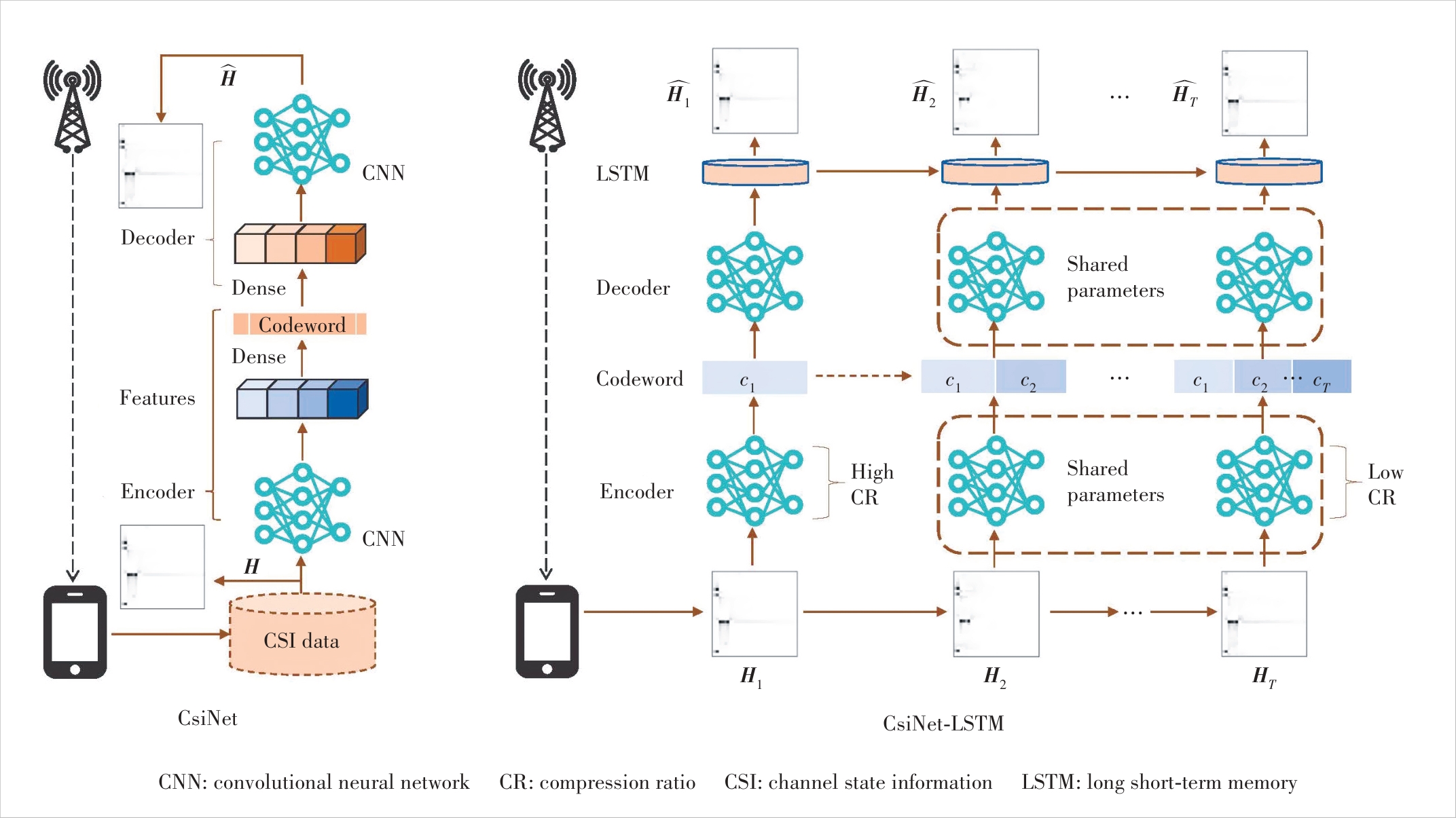
Figure 1 Illustration of autoencoder architecture
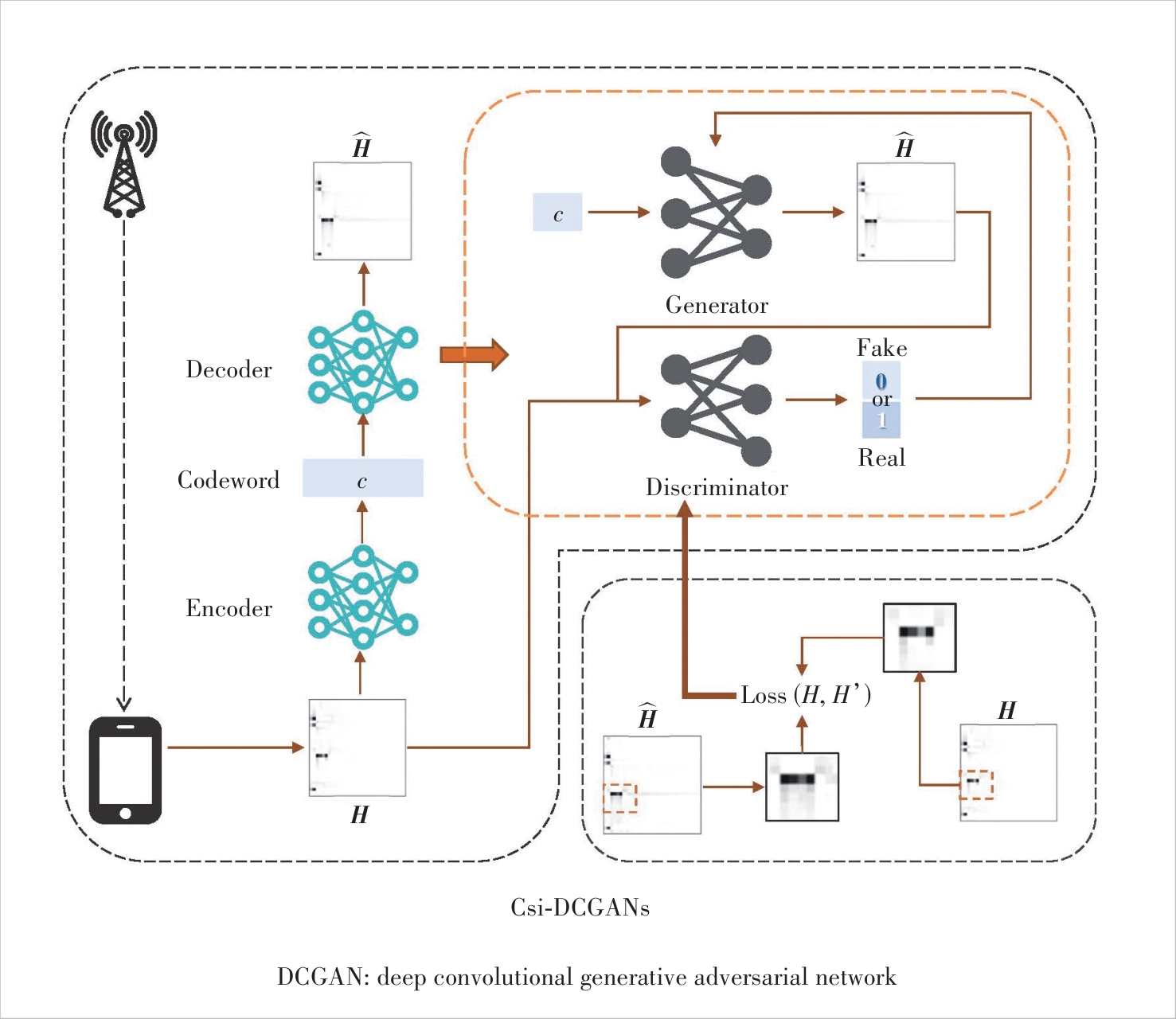
Figure 2 Illustration of generative adversarial network architecture
| Complexity | 1/4 | 1/8 | 1/16 | 1/32 | |
|---|---|---|---|---|---|
Time complexity | Ref. [ | 21 659 648 | 5 668 864 | 3 571 712 | 2 523 136 |
| Ref. [ | 121 708 544 | 97 591 296 | 86 319 104 | 80 879 616 | |
| Ref. [ | - | - | - | - | |
Space complexity | Ref. [ | 2 103 904 | 1 055 072 | 530 656 | 268 448 |
| Ref. [ | 28 326 904 | 22 296 312 | 19 477 624 | 18 117 432 | |
| Ref. [ | 10 247 148 | - | 7 484 688 | 7 024 272 | |
Table 1 Computational complexity of deep CSI feedback models
| Complexity | 1/4 | 1/8 | 1/16 | 1/32 | |
|---|---|---|---|---|---|
Time complexity | Ref. [ | 21 659 648 | 5 668 864 | 3 571 712 | 2 523 136 |
| Ref. [ | 121 708 544 | 97 591 296 | 86 319 104 | 80 879 616 | |
| Ref. [ | - | - | - | - | |
Space complexity | Ref. [ | 2 103 904 | 1 055 072 | 530 656 | 268 448 |
| Ref. [ | 28 326 904 | 22 296 312 | 19 477 624 | 18 117 432 | |
| Ref. [ | 10 247 148 | - | 7 484 688 | 7 024 272 | |
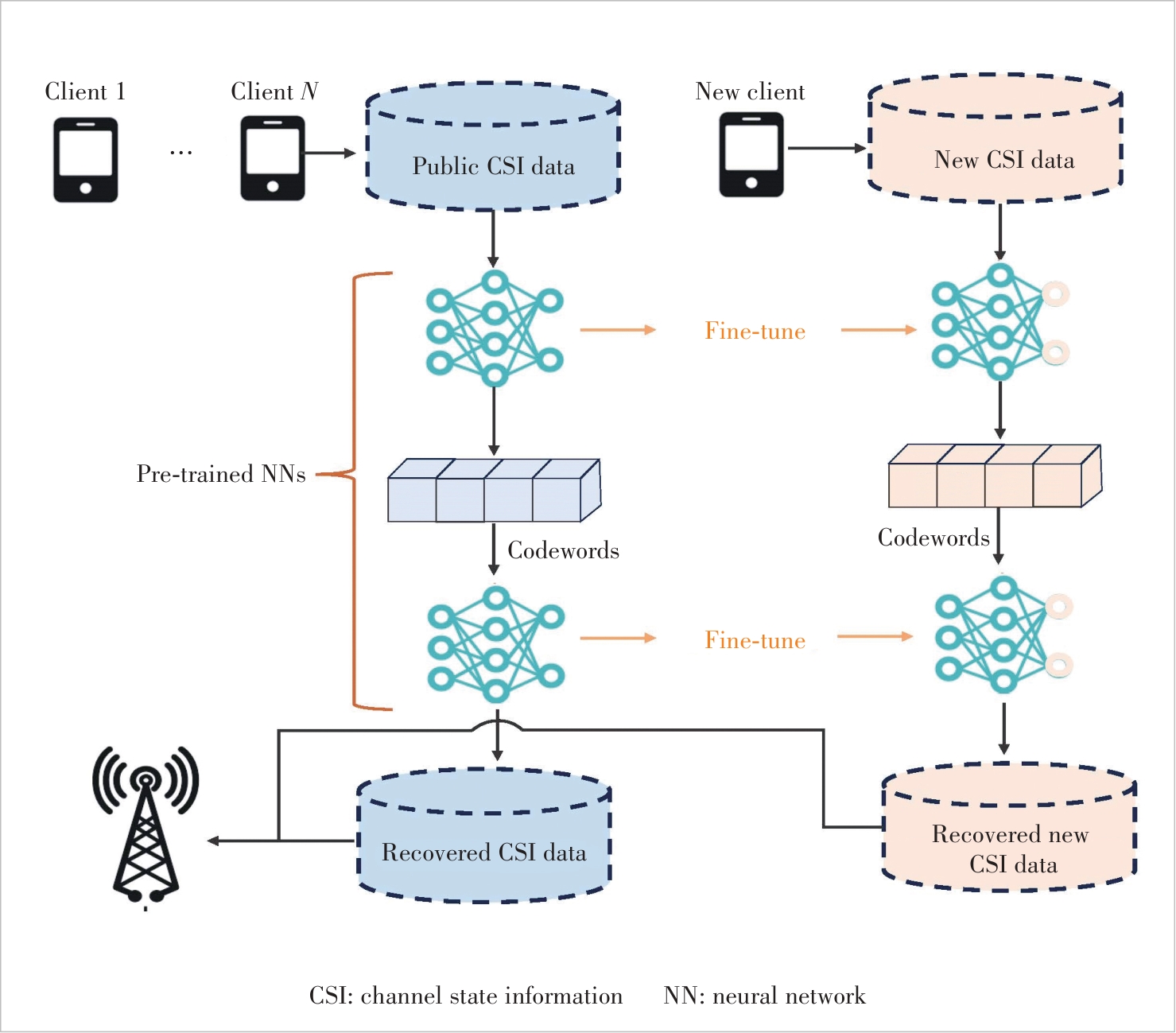
Figure 3 Transfer learning model for CSI feedback
| Advantages | Key Techniques | References |
|---|---|---|
| Network lightweighting | Design an innovative structure of multi-branch convolutions | Ref. [ |
| Exploit the similarity of real and imaginary parts of CSI | Refs. [ | |
| Performance improvement | Exploit the sparse characteristics of CSI | Refs. [ |
| Exploit the image characteristics of the CSI matrix | Refs. [ | |
| Extract CSI features based on physical propagation environment | Refs. [ | |
| Generalization enhancement | Adopt model-agnostic meta-learning approaches | Refs. [ |
| Adopt deep transfer learning techniques | Refs. [ | |
| Adopt interactive federated and transfer learning | Ref. [ | |
| End-to-end design | Joint framework of pilot design, CSI feedback, and precoding | Refs. [ |
| Consider adaptive pilot length for mm-wave MIMO systems | Ref. [ | |
| Design a dual-timescale network to reduce signaling overhead | Ref. [ |
Table 2 Summary of recent papers on deep CSI feedback
| Advantages | Key Techniques | References |
|---|---|---|
| Network lightweighting | Design an innovative structure of multi-branch convolutions | Ref. [ |
| Exploit the similarity of real and imaginary parts of CSI | Refs. [ | |
| Performance improvement | Exploit the sparse characteristics of CSI | Refs. [ |
| Exploit the image characteristics of the CSI matrix | Refs. [ | |
| Extract CSI features based on physical propagation environment | Refs. [ | |
| Generalization enhancement | Adopt model-agnostic meta-learning approaches | Refs. [ |
| Adopt deep transfer learning techniques | Refs. [ | |
| Adopt interactive federated and transfer learning | Ref. [ | |
| End-to-end design | Joint framework of pilot design, CSI feedback, and precoding | Refs. [ |
| Consider adaptive pilot length for mm-wave MIMO systems | Ref. [ | |
| Design a dual-timescale network to reduce signaling overhead | Ref. [ |
| [1] | Xu W, Yang Z H, Ng D W K, et al. Edge learning for B5G networks with distributed signal processing: semantic communication, edge computing, and wireless sensing [J]. IEEE journal of selected topics in signal processing, 2023, 17(1): 9–39. DOI: 10.1109/JSTSP.2023.3239189 |
| [2] | He M, Li X, Ni J. Physical layer security for mmWave communications: challenges and solutions [J]. ZTE communications, 2022, 20(4): 41–51. DOI: 10.12142/ZTECOM.202204006 |
| [3] | Lu L, Li G Y, Swindlehurst A L, et al. An overview of massive MIMO: benefits and challenges [J]. IEEE journal of selected topics in signal processing, 2014, 8(5): 742–758. DOI: 10.1109/JSTSP.2014.2317671 |
| [4] | Love D J, Heath R W, Lau V K N, et al. An overview of limited feedback in wireless communication systems [J]. IEEE journal on selected areas in communications, 2008, 26(8): 1341–1365. DOI: 10.1109/JSAC.2008.081002 |
| [5] | Zhao M K, Huang Y, Li X. Federated learning for 6G: a survey from perspective of integrated sensing, communication and computation [J]. ZTE communications, 2023, 21(2): 25–33. DOI: 10.12142/ZTECOM.202302005 |
| [6] | Choi J, Chance Z, Love D J, et al. Noncoherent trellis coded quantization: a practical limited feedback technique for massive MIMO systems [J]. IEEE transactions on communications, 2013, 61(12): 5016–5029. DOI: 10.1109/TCOMM.2013.111413.130379 |
| [7] | Gao Z, Dai L L, Han S F, et al. Compressive sensing techniques for next-generation wireless communications [J]. IEEE wireless communications, 2018, 25(3): 144–153. DOI: 10.1109/MWC.2017.1700147 |
| [8] | Kuo P H, Kung H T, Ting P G. Compressive sensing based channel feedback protocols for spatially-correlated massive antenna arrays [C]//IEEE Wireless Communications and Networking Conference (WCNC). IEEE, 2012: 492–497. DOI: 10.1109/WCNC.2012.6214417 |
| [9] | Liu Z Y, Zhang L, Ding Z. An efficient deep learning framework for low rate massive MIMO CSI reporting [J]. IEEE transactions on communications, 2020, 68(8): 4761–4772. DOI: 10.1109/TCOMM.2020.2993626 |
| [10] | Wang T Q, Wen C K, Wang H Q, et al. Deep learning for wireless physical layer: opportunities and challenges [J]. China communications, 2017, 14(11): 92–111. DOI: 10.1109 /CC.2017.8233654 |
| [11] | LeCun Y, Bottou L, Bengio Y, et al. Gradient-based learning applied to document recognition [J]. Proceedings of the IEEE, 1998, 86(11): 2278–2324. DOI: 10.1109/5.726791 |
| [12] | Hochreiter S, Schmidhuber J. Long short-term memory [J]. Neural computation, 1997, 9(8): 1735–1780. DOI: 10.1162/neco.1997.9.8.1735 |
| [13] | Vaswani A, Shazeer N, Parmar N, et al. Attention is all you need [EB/OL]. [2024-08-12]. |
| [14] | Creswell A, White T, Dumoulin V, et al. Generative adversarial networks: an overview [J]. IEEE signal processing magazine, 2018, 35(1): 53–65. DOI: 10.1109/MSP.2017.2765202 |
| [15] | Tolba B, Elsabrouty M, Abdu-Aguye M G, et al. Massive MIMO CSI feedback based on generative adversarial network [J]. IEEE communications letters, 2020, 24(12): 2805–2808. DOI: 10.1109/LCOMM.2020.3017188 |
| [16] | Hussien M, Nguyen K K, Cheriet M. PRVNet: a novel partially-regularized variational autoencoders for massive MIMO CSI feedback [C]//Wireless Communications and Networking Conference (WCNC). IEEE, 2022: 2286–2291. DOI: 10.1109/WCNC51071.2022.9771642 |
| [17] | Wen C K, Shih W T, Jin S. Deep learning for massive MIMO CSI feedback [J]. IEEE wireless communications letters, 2018, 7(5): 748–751. DOI: 10.1109/LWC.2018.2818160 |
| [18] | Mashhadi M B, Yang Q Q, Gündüz D. Distributed deep convolutional compression for massive MIMO CSI feedback [J]. IEEE transactions on wireless communications, 2021, 20(4): 2621–2633. DOI: 10.1109/TWC.2020.3043502 |
| [19] | Wang T Q, Wen C K, Jin S, et al. Deep learning-based CSI feedback approach for time-varying massive MIMO channels [J]. IEEE wireless communications letters, 2019, 8(2): 416–419. DOI: 10.1109/LWC.2018.2874264 |
| [20] | Li X Y, Wu H M. Spatio-temporal representation with deep neural recurrent network in MIMO CSI feedback [J]. IEEE wireless communications letters, 2020, 9(5): 653–657. DOI: 10.1109/LWC.2020.2964550 |
| [21] | Li Q, Zhang A H, Liu P C, et al. A novel CSI feedback approach for massive MIMO using LSTM-attention CNN [J]. IEEE access, 2020, 8: 7295–7302. DOI: 10.1109/ACCESS.2020.2963896 |
| [22] | Zhang Z F, Zheng Y, Gan C Q, et al. Massive MIMO CSI reconstruction using CNN-LSTM and attention mechanism [J]. IET communications, 2020, 14(18): 3089–3094. DOI: 10.1049/iet-com.2019.1030 |
| [23] | Xia W C, Zheng G, Zhu Y X, et al. A deep learning framework for optimization of MISO downlink beamforming [J]. IEEE transactions on communications, 2020, 68(3): 1866–1880. DOI: 10.1109/TCOMM.2019.2960361 |
| [24] | He K M, Sun J. Convolutional neural networks at constrained time cost [C]//Conference on Computer Vision and Pattern Recognition (CVPR). IEEE, 2015: 5353–5360. DOI: 10.1109/CVPR.2015.7299173 |
| [25] | 3GPP TR 38.843. Study on artificial intelligence (AI)/machine learning (ML) for NR air interface (Release 18) [S]. 2023 |
| [26] | Cao Z, Shih W T, Guo J J, et al. Lightweight convolutional neural networks for CSI feedback in massive MIMO [J]. IEEE communications letters, 2021, 25(8): 2624–2628. DOI: 10.1109/LCOMM.2021.3076504 |
| [27] | Sun Y Y, Xu W, Liang L, et al. A lightweight deep network for efficient CSI feedback in massive MIMO systems [J]. IEEE wireless communications letters, 2021, 10(8): 1840–1844. DOI: 10.1109/LWC.2021.3083331 |
| [28] | Li H Z, Zhang B Y, Chang H R, et al. CVLNet: a complex-valued lightweight network for CSI feedback [J]. IEEE wireless communications letters, 2022, 11(5): 1092–1096. DOI: 10.1109/LWC.2022.3157263 |
| [29] | Ji S J, Li M. CLNet: complex input lightweight neural network designed for massive MIMO CSI feedback [J]. IEEE wireless communications letters, 2021, 10(10): 2318–2322. DOI: 10.1109/LWC.2021.3100493 |
| [30] | Lu Z L, Wang J T, Song J. Multi-resolution CSI feedback with deep learning in massive MIMO system [C]//International Conference on Communications (ICC). IEEE, 2020: 1–6. DOI: 10.1109/icc40277.2020.9149229 |
| [31] | Lu Z L, Zhang X D, He H Y, et al. Binarized aggregated network with quantization: flexible deep learning deployment for CSI feedback in massive MIMO systems [J]. IEEE transactions on wireless communications, 2022, 21(7): 5514–5525. DOI: 10.1109/TWC.2022.3141653 |
| [32] | Yin Z Q, Xie R J, Xu W, et al. Self-information domain-based neural CSI compression with feature coupling [J]. IEEE transactions on vehicular technology, 2023, 72(10): 13661–13665. DOI: 10.1109/TVT.2023.3272560 |
| [33] | Yin Z Q, Xu W, Xie R J, et al. Deep CSI compression for massive MIMO: a self-information model-driven neural network [J]. IEEE transactions on wireless communications, 2022, 21(10): 8872–8886. DOI: 10.1109/TWC.2022.3170576 |
| [34] | Zhang S Q, Xu W, Jin S, et al. Dual-propagation-feature fusion enhanced neural CSI compression for massive MIMO [J]. IEEE transactions on communications, 2023, 71(9): 5182–5198. DOI: 10.1109/TCOMM.2023.3282227 |
| [35] | Fan S H, Xu W, Xie R J, et al. Deep CSI compression for dual-polarized massive MIMO channels with disentangled representation learning [J]. IEEE transactions on communications, 2024, 72(9): 5564–5580. DOI: 10.1109/TCOMM.2024.3384256 |
| [36] | Yang Y W, Gao F F, Zhong Z M, et al. Deep transfer learning-based downlink channel prediction for FDD massive MIMO systems [J]. IEEE transactions on communications, 2020, 68(12): 7485–7497. DOI: 10.1109/TCOMM.2020.3019077 |
| [37] | Zeng J, Sun J L, Gui G, et al. Downlink CSI feedback algorithm with deep transfer learning for FDD massive MIMO systems [J]. IEEE transactions on cognitive communications and networking, 2021, 7(4): 1253–1265. DOI: 10.1109/TCCN.2021.3084409 |
| [38] | Zeng J, He Z R, Sun J L, et al. Deep transfer learning for 5G massive MIMO downlink CSI feedback [C]//Proceedings of IEEE Wireless Communications and Networking Conference (WCNC). IEEE, 2021: 1–5. DOI: 10.1109/wcnc49053.2021.9417349 |
| [39] | Boas B V, Zirwas W, Haardt M. Transfer learning capabilities of untrained neural networks for MIMO CSI recreation [C]//International Conference on Communications. IEEE, 2022: 1288–1293. DOI: 10.1109/ICC45855.2022.9838738 |
| [40] | Wang Y T, Sun J L, Wang J, et al. Multi-rate compression for downlink CSI based on transfer learning in FDD massive MIMO systems [C]//The 94th Vehicular Technology Conference (VTC2021-Fall). IEEE, 2021: 1–5. DOI: 10.1109/VTC2021-Fall52928.2021.9625585 |
| [41] | Sun J L, Zhang Y B, Gui G, et al. Interacting federated and transfer learning-aided CSI prediction for intelligent cellular networks [J]. IEEE transactions on vehicular technology, 2023, 72(12): 15776–15787. DOI: 10.1109/TVT.2023.3290660 |
| [42] | Sohrabi F, Attiah K M, Yu W. Deep learning for distributed channel feedback and multiuser precoding in FDD massive MIMO [J]. IEEE transactions on wireless communications, 2021, 20(7): 4044–4057. DOI: 10.1109/TWC.2021.3055202 |
| [43] | Jang J, Lee H, Kim I M, et al. Deep learning for multi-user MIMO systems: joint design of pilot, limited feedback, and precoding [J]. IEEE transactions on communications, 2022, 70(11): 7279–7293. DOI: 10.1109/TCOMM.2022.3209887 |
| [44] | Jee J, Park H. Deep learning-based joint optimization of closed-loop FDD mmWave massive MIMO: pilot adaptation, CSI feedback, and beamforming [J]. IEEE transactions on vehicular technology, 2024, 73(3): 4019–4034. DOI: 10.1109/TVT.2023.3327276 |
| [45] | Hu Q Y, Cai Y L, Kang K, et al. Two-timescale end-to-end learning for channel acquisition and hybrid precoding [J]. IEEE journal on selected areas in communications, 2022, 40(1): 163–181. DOI: 10.1109/JSAC.2021.3126050 |
| [46] | Zhang H Y, Lu Z L, Zhang X D, et al. Data augmentation for bridging the delay gap in DL-based massive MIMO CSI feedback [J]. IEEE wireless communications letters, 2024, 13(5): 1315–1319. DOI: 10.1109/LWC.2024.3368558 |
| [47] | Cui Y M, Guo J J, Cao Z, et al. Lightweight neural network with knowledge distillation for CSI feedback [J]. IEEE transactions on communications, 2024, 72(8): 4917–4929. DOI: 10.1109/TCOMM.2024.3377724 |
| [48] | Zhou T, Liu X P, Xiang Z W, et al. Transformer network based channel prediction for CSI feedback enhancement in AI-native air interface [J]. IEEE transactions on wireless communications, 2024, 23(9): 11154–11167. DOI: 10.1109/TWC.2024.3379123 |
| [49] | Yan J T, Chen T, Xie B, et al. Hierarchical federated learning: architecture, challenges, and its implementation in vehicular networks [J]. ZTE communications, 2023, 21(1): 38–45. DOI: 10.12142/ZTECOM.202301005 |
| [50] | Xu W, Huang Y M, Wang W, et al. Toward ubiquitous and intelligent 6G networks: from architecture to technology [J]. Science China information sciences, 2023, 66(3): 130300. DOI: 10.1007/s11432-023-3704-8 |
| [51] | Lin X Q. An overview of the 3GPP study on artificial intelligence for 5G new radio [PP/OL]. arXiv (2023-08-10)[2024-08-20]. |
| [52] | Guo J J, Wen C K, Jin S, et al. AI for CSI feedback enhancement in 5G-advanced [J]. IEEE wireless communications, 2024, 31(3): 169–176. DOI: 10.1109/MWC.010.2200304 |
| [53] | Sarieddeen H, Alouini M S, Al-Naffouri T Y. Terahertz-band ultra-massive spatial modulation MIMO [J]. IEEE journal on selected areas in communications, 2019, 37(9): 2040–2052. DOI: 10.1109/JSAC.2019.2929455 |
| [54] | Wang K Y, Gao Z, Chen S, et al. Knowledge and data dual-driven channel estimation and feedback for ultra-massive MIMO systems under hybrid field beam squint effect [J]. IEEE transactions on wireless communications, 2024, 23(9): 11240–11259. DOI: 10.1109/TWC.2024.3380638 |
| [55] | Balatsoukas-Stimming A, Studer C. Deep unfolding for communications systems: a survey and some new directions [C]//IEEE International Workshop on Signal Processing Systems (SiPS). IEEE, 2019: 266–271. DOI: 10.1109/sips47522.2019.9020494 |
| [56] | Deng L T, Z Y K. Deep learning-based semantic feature extraction: a literature review and future directions [J]. ZTE communications, 2023, 21(2): 11–17. DOI: 10.12142/ZTECOM.202302003 |
| [57] | Shi G M, Xiao Y, Li Y Y, et al. From semantic communication to semantic-aware networking: model, architecture, and open problems [J]. IEEE communications magazine, 2021, 59(8): 44–50. DOI: 10.1109/MCOM.001.2001239 |
| [58] | Guo J J, Wen C K, Jin S. Deep data hiding-based CSI feedback overhead elimination: An initial investigation [C]//IEEE International Conference on Communications. IEEE, 2022: 5347–5352. DOI: 10.1109/ICC45855.2022.9839120 |
| [59] | Carpi F, Venkatesan S, Du J F, et al. Precoding-oriented massive MIMO CSI feedback design [C]//International Conference on Communications. IEEE, 2023: 4973–4978. DOI: 10.1109/ICC45041.2023.10278955 |
| [1] | Zhao Jianchao, Geng Zhaosen, Li Zeyi, Wang Pan. Key Technologies for AI-Driven Network Traffic Classification Workflow and Data Distribution Shift [J]. ZTE Communications, 2026, 24(1): 34-44. |
| [2] | LIU Yichen, GAO Ruixin, ZENG Chen, LIU Yingzhuang. A Transformer-Based End-to-End Receiver Design for Wi-Fi 7 Physical Layer [J]. ZTE Communications, 2025, 23(4): 27-36. |
| [3] | ZHANG Yang, CEN Zihan, ZHAN Wen, CHEN Xiang. C-WAN for FTTR: Enabling Low-Overhead Joint Transmission with Deep Learning [J]. ZTE Communications, 2025, 23(4): 65-76. |
| [4] | ZHANG Boyu, ZHANG Ling, LI Zijing, SHEN Ying. Full-Duplex Massive MIMO Self-Interference Suppression Based on Beamforming [J]. ZTE Communications, 2025, 23(4): 97-109. |
| [5] | HE Shuai, LIU Limin, WANG Zhanli, LI Jinliang, MAO Xiaojun, MING Anlong. M+MNet: A Mixed-Precision Multibranch Network for Image Aesthetics Assessment [J]. ZTE Communications, 2025, 23(3): 96-110. |
| [6] | AI Bo, ZHANG Yuxin, YANG Mi, HE Ruisi, GUO Rongge. A Machine Learning-Based Channel Data Enhancement Platform for Digital Twin Channels [J]. ZTE Communications, 2025, 23(2): 20-30. |
| [7] | CHENG Jiaming, CHEN Wei, LI Lun, AI Bo. Efficient Spatio-Temporal Predictive Learning for Massive MIMO CSI Prediction [J]. ZTE Communications, 2025, 23(1): 3-10. |
| [8] | TANG Chenyue, LI Zeshen, CHEN Zihan, YANG Howard H.. Device Activity Detection and Channel Estimation Using Score-Based Generative Models in Massive MIMO [J]. ZTE Communications, 2025, 23(1): 53-62. |
| [9] | WANG Jilin, ZENG Xianlong, YANG Yonghui, PENG Lin, LI Lingxiang. Tensor Decomposition-Based Channel Estimation and Sensing for Millimeter Wave MIMO-OFDM V2I Systems [J]. ZTE Communications, 2024, 22(3): 56-68. |
| [10] | WANG Chanfei, CHAI Jianxin, XU Yamei. Differential Spatial Modulation Mapping Algorithms [J]. ZTE Communications, 2024, 22(3): 116-122. |
| [11] | SUN Yunqi, JIAN Mengnan, YANG Jun, ZHAO Yajun, CHEN Yijian. Degree of Freedom Analysis for Holographic MIMO Based on a Mutual-Coupling-Compliant Channel Model [J]. ZTE Communications, 2024, 22(1): 34-40. |
| [12] | SHEN Jiayu, YANG Jun, ZHU Chen, DENG Zhiji, HUANG Chongwen. Near-Field Beam Training for Holographic MIMO Communications: Typical Methods, Challenges and Future Directions [J]. ZTE Communications, 2024, 22(1): 41-52. |
| [13] | ZHAO Yaqiong, KE Hongqin, XU Wei, YE Xinquan, CHEN Yijian. RIS-Assisted Cell-Free MIMO: A Survey [J]. ZTE Communications, 2024, 22(1): 77-86. |
| [14] | WANG Chongchong, LI Yao, WANG Beibei, CAO Hong, ZHANG Yanyong. Point Cloud Processing Methods for 3D Point Cloud Detection Tasks [J]. ZTE Communications, 2023, 21(4): 38-46. |
| [15] | GONG Panyin, ZHANG Guidong, ZHANG Zhigang, CHEN Xiao, DING Xuan. Research on Fall Detection System Based on Commercial Wi-Fi Devices [J]. ZTE Communications, 2023, 21(4): 60-68. |
| Viewed | ||||||
|
Full text |
|
|||||
|
Abstract |
|
|||||