ZTE Communications ›› 2025, Vol. 23 ›› Issue (3): 89-95.DOI: 10.12142/ZTECOM.202503010

• Research Papers • Previous Articles     Next Articles

Antenna Parameter Calibration for Mobile Communication Base Station via Laser Tracker

LI Junqiang1,2, CHEN Shijun1,2, FENG Yujie3, FAN Jiancun3, CHEN Qiang2()   

  1. 1.State Key Laboratory of Mobile Network and Mobile Multimedia Technology, Shenzhen 518055, China
    2.ZTE Corporation, Shenzhen 518057, China
    3.School of Information and Communications Engineering, Xi’an Jiaotong University, Xi’an 710049, China
  • Received:2023-10-16 Online:2025-09-25 Published:2025-09-11
  • Contact: CHEN Qiang
  • About author:LI Junqiang works in ZTE Corporation as a standard pre-research algorithm engineer and he is the member of the National Key Laboratory of Mobile Network and Mobile Multimedia Technology. His main research area focuses on the pre-research and implementation of wireless positioning and device positioning algorithms, including indoor positioning networks, Beidou + 5G positioning, integrated sensing, and sensor fusion positioning. He supports prototype development and testing, patent layout, and participates in the formulation of national positioning standards and national key scientific research projects.
    CHEN Shijun is a professor-level senior engineer at ZTE Corporation, leader of the CCSA ST9 Indoor Positioning Working Group, and chief technology engineer of high-precision positioning technology. He also serves as an expert for the evaluation of the Ministry of Science and Technology’s National Key Research and Development Program, an expert in the Guangdong Provincial Science and Technology Expert Database, and an evaluation expert for Shenzhen senior professional titles, Peacock Plan, etc. He has undertaken 2 national industry overall standards as the first drafter and over 10 national and industry standards as a key drafter.
    FENG Yujie received his BS degree from Xi’an Jiaotong University, China in 2021, where he is pursuing an MS degree. His general research interests include channel parameter estimation and high-precision positioning technology.
    FAN Jiancun received his BS and PhD degrees in electrical engineering from Xi’an Jiaotong University, China, in 2004 and 2012, respectively. From August, 2009 to August, 2011, he was a visiting scholar with the School of Electrical and Computer Engineering, Georgia Institute of Technology, USA. From September, 2017 to December, 2017, he was a visiting scholar in Technische Universität Dresden (TUD), Germany. He is currently a professor and the associate dean of the School of Information and Communications Engineering, Xi’an Jiaotong University, China. He is a senior member of IEEE and a member of the China Branch of the ACM Special Interest Groups on Applied Computing (SIGAPP) Committee. His general research interests include signal processing, positioning, and wireless communications. In these areas, he has published over 100 journal and conference papers. He won the Best Paper Award at the 20th International Symposium on Wireless Personal Multimedia Communications in 2017, the Second Prize of Excellent Paper of Shaanxi Provincial Natural Science, and the Excellent Doctoral Thesis of Xi’an Jiaotong University.
    CHEN Qiang (chen.qiang@zte.com.cn) serves as a development manager at ZTE Corporation. With 20 years of experience in 4G and 5G communication technology research and product development, his primary research focuses on the development and implementation of wireless and device positioning algorithms, with expertise in indoor positioning networks, Beidou/GNSS+5G hybrid positioning, and integrated sensing and sensor fusion technologies. He leads prototype development and testing, drives patent strategy, and contributes to national positioning standards and key research initiatives.
  • Supported by:
    the National Natural Science Foundation of China(62471381);the ZTE Industry-University-Institute Cooperation Funds

Abstract:

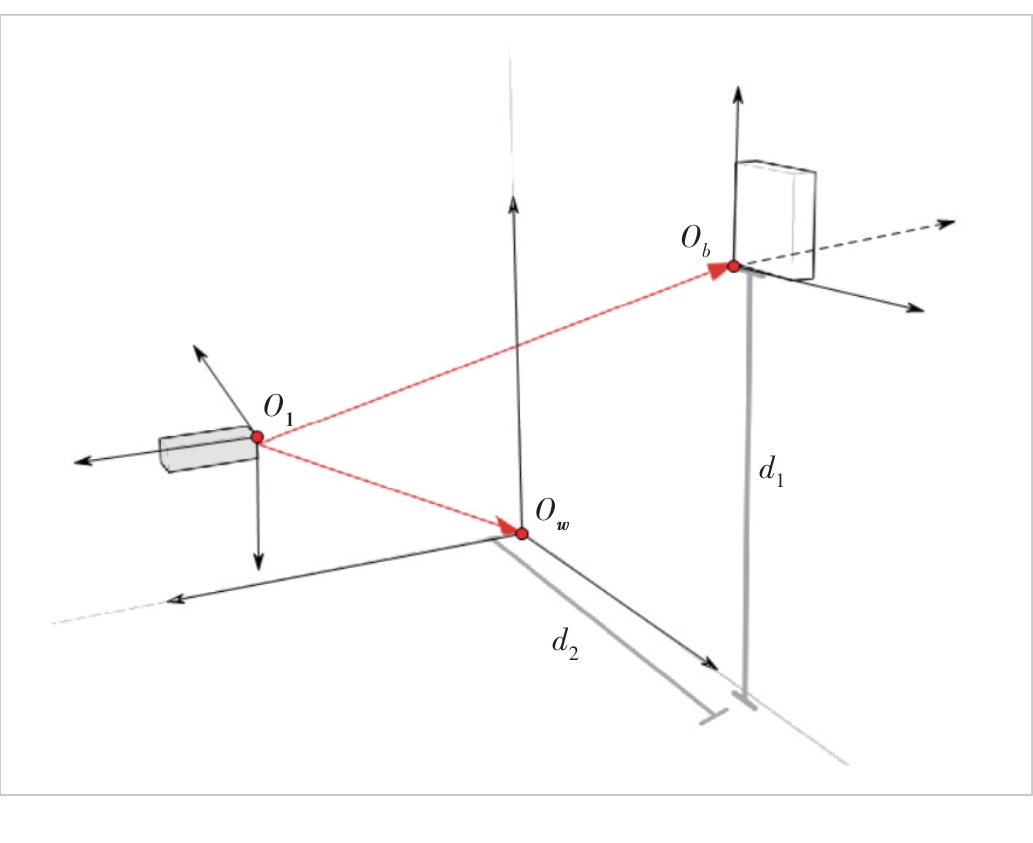
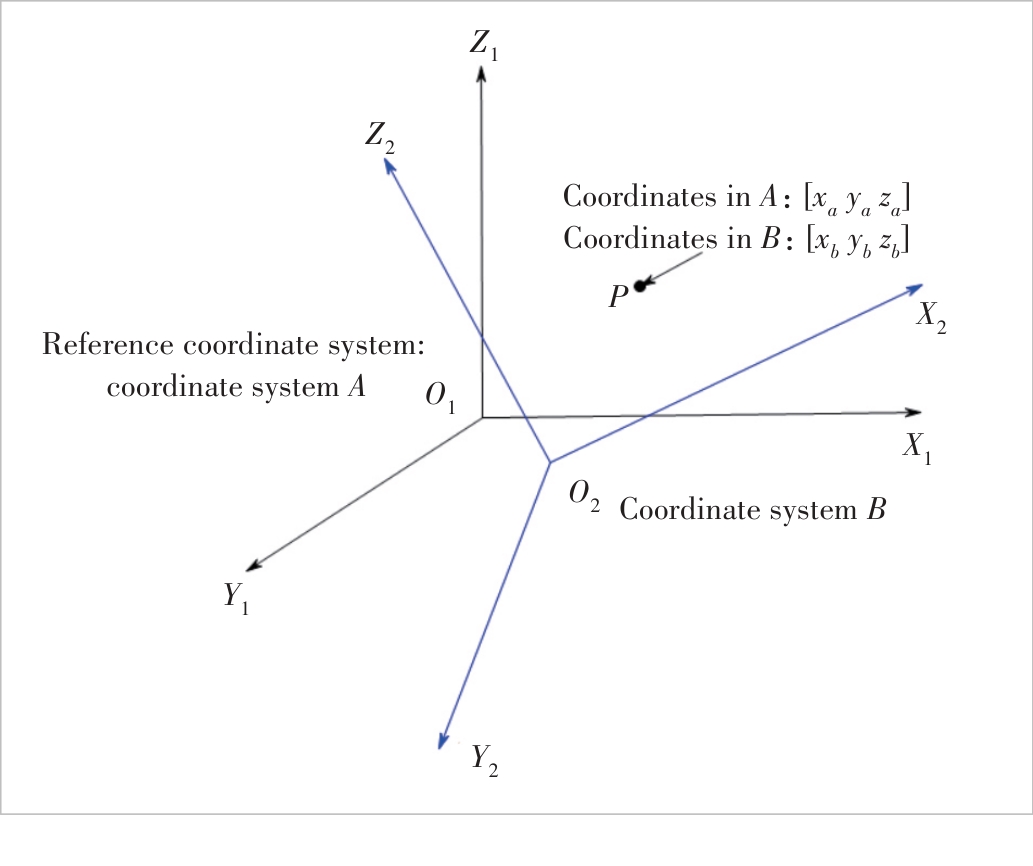
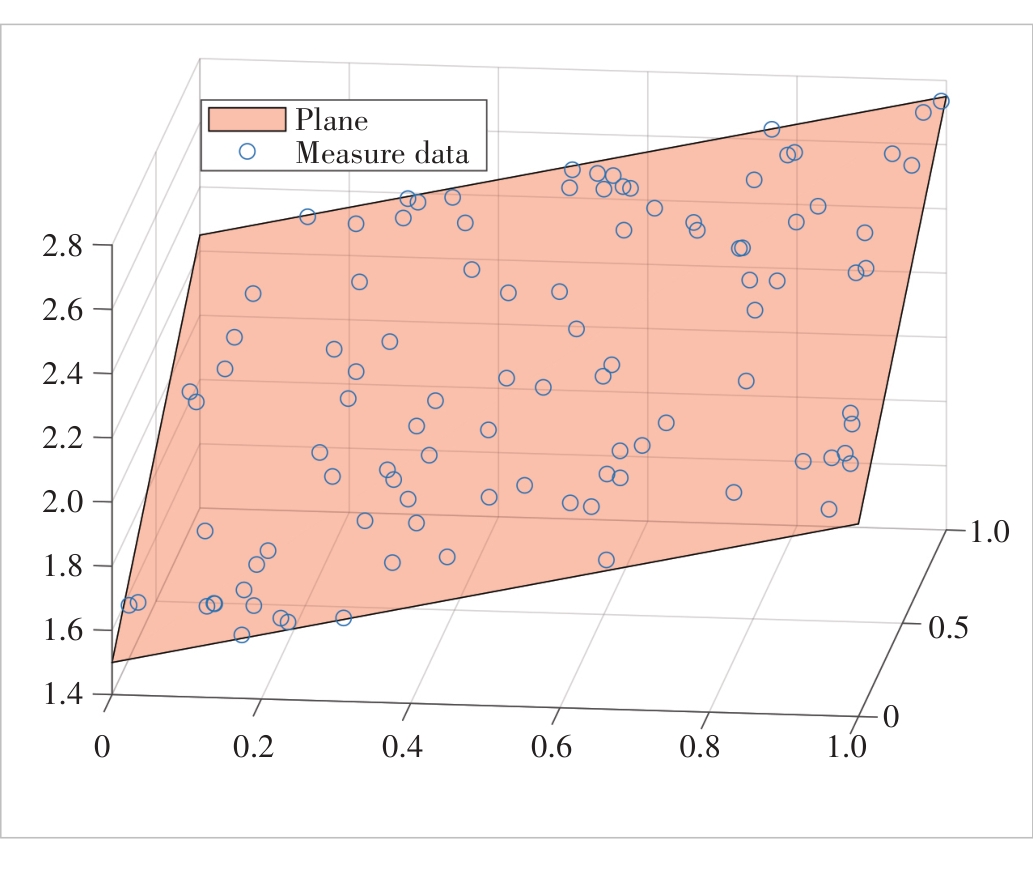
In the field of antenna engineering parameter calibration for indoor communication base stations, traditional methods suffer from issues such as low efficiency, poor accuracy, and limited applicability to indoor scenarios. To address these problems, a high-precision and high-efficiency indoor base station parameter calibration method based on laser measurement is proposed. We use a high-precision laser tracker to measure and determine the coordinate system transformation relationship, and further obtain the coordinates and attitude of the base station. In addition, we propose a simple calibration method based on point cloud fitting for specific scenes. Simulation results show that using common commercial laser trackers, we can achieve a coordinate correction accuracy of 1 cm and an angle correction accuracy of 0.25°, which is sufficient to meet the needs of wireless positioning.

Key words: antenna parameter, parameter measurement, coordinate transformation, point cloud, laser track, angle correction