ZTE Communications ›› 2026, Vol. 24 ›› Issue (1): 25-33.DOI: 10.12142/ZTECOM.202601005
• Special Topic • Previous Articles Next Articles
Liu Gengyi1, Pan Yijin1, Wang Junbo1( ), Chen Yijian2, Yu Hongkang2
Received:2025-01-11
Online:2026-03-17
Published:2026-03-17
About author:Liu Gengyi received his BS degree from the School of Information Science and Engineering, Southeast University, China in 2022, where he is pursuing his ME degree. His research interests include reconfigurable intelligent surfaces (RIS), mmWave communications, and radio frequency fingerprint (RFF) identification.Supported by:Liu Gengyi, Pan Yijin, Wang Junbo, Chen Yijian, Yu Hongkang. Carrier Frequency Offset Based Robust Radio Frequency Fingerprint for OFDM Communication in Time-Varying Channels[J]. ZTE Communications, 2026, 24(1): 25-33.
Add to citation manager EndNote|Ris|BibTeX
URL: https://zte.magtechjournal.com/EN/10.12142/ZTECOM.202601005
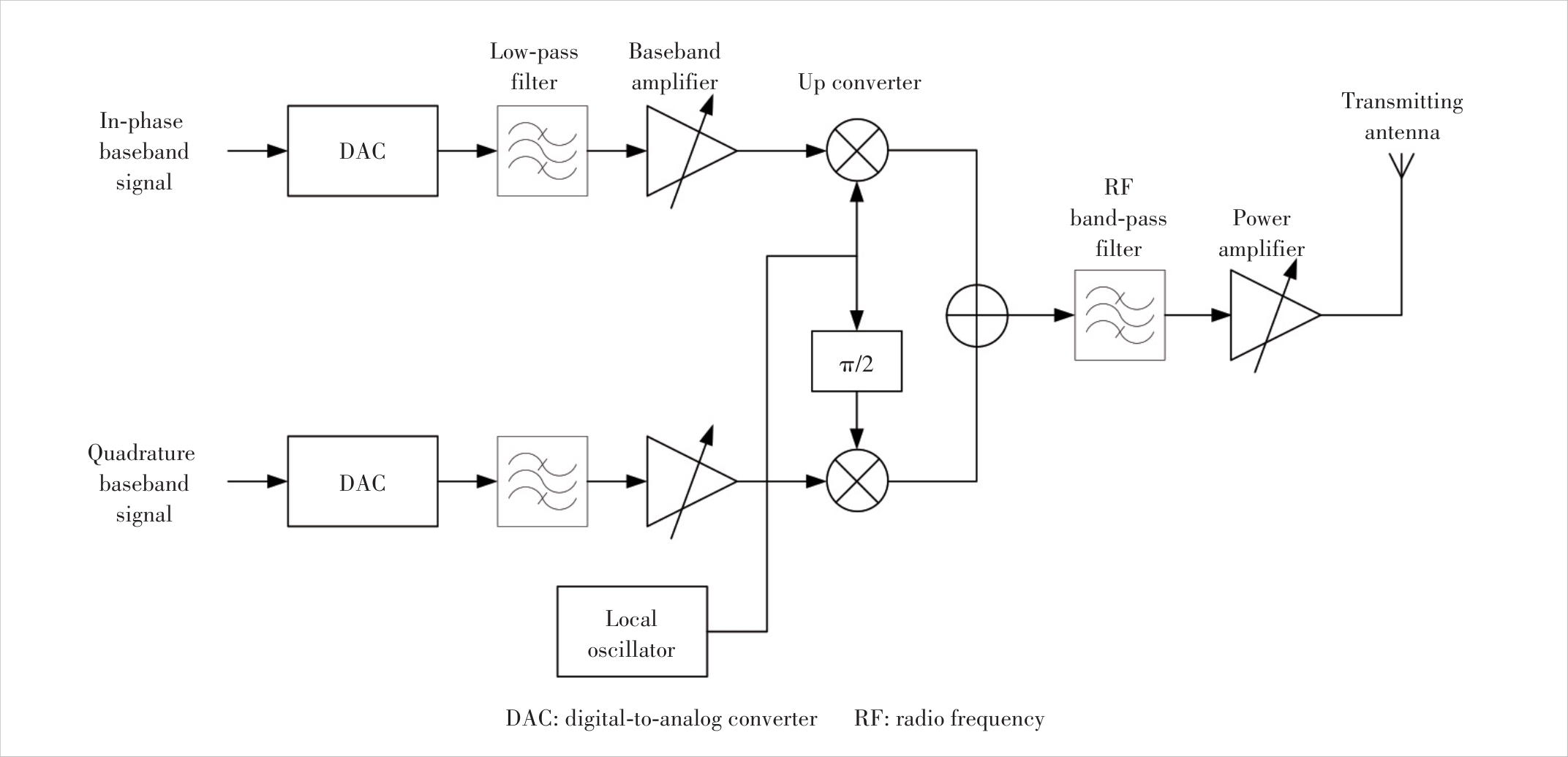
Figure 1 Direct conversion transmitter structure
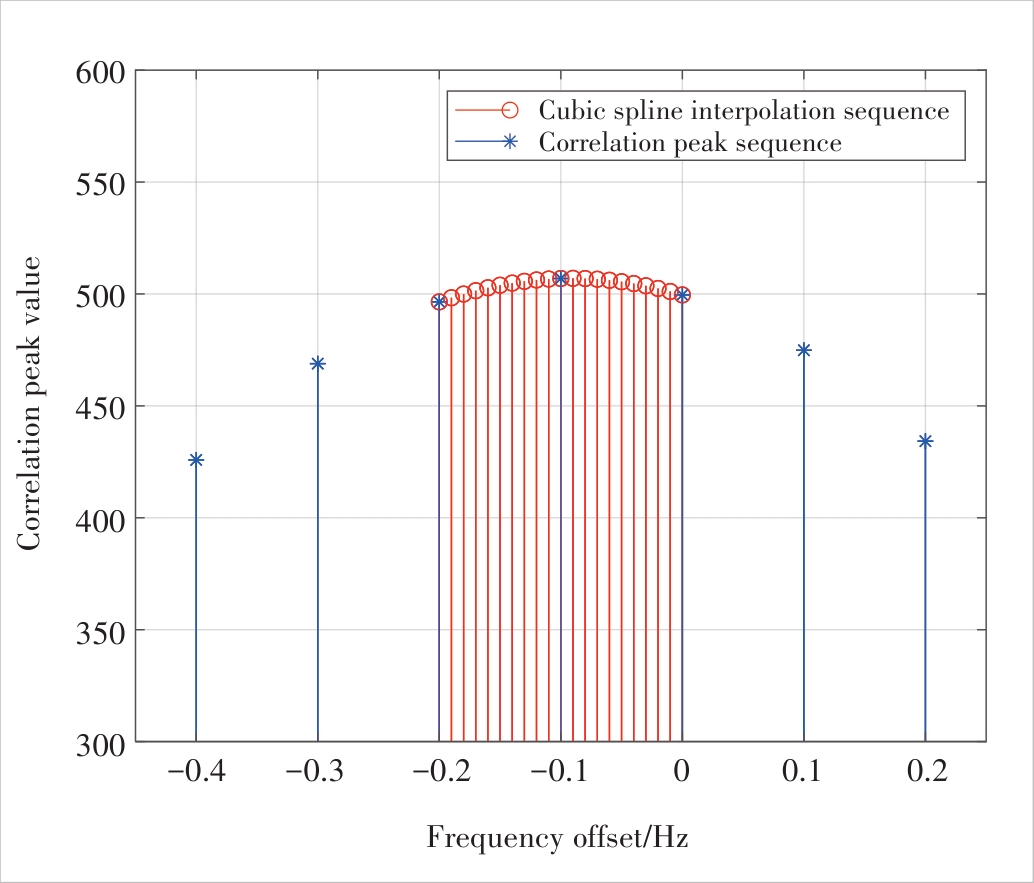
Figure 2 Correlation peak sequence interpolation
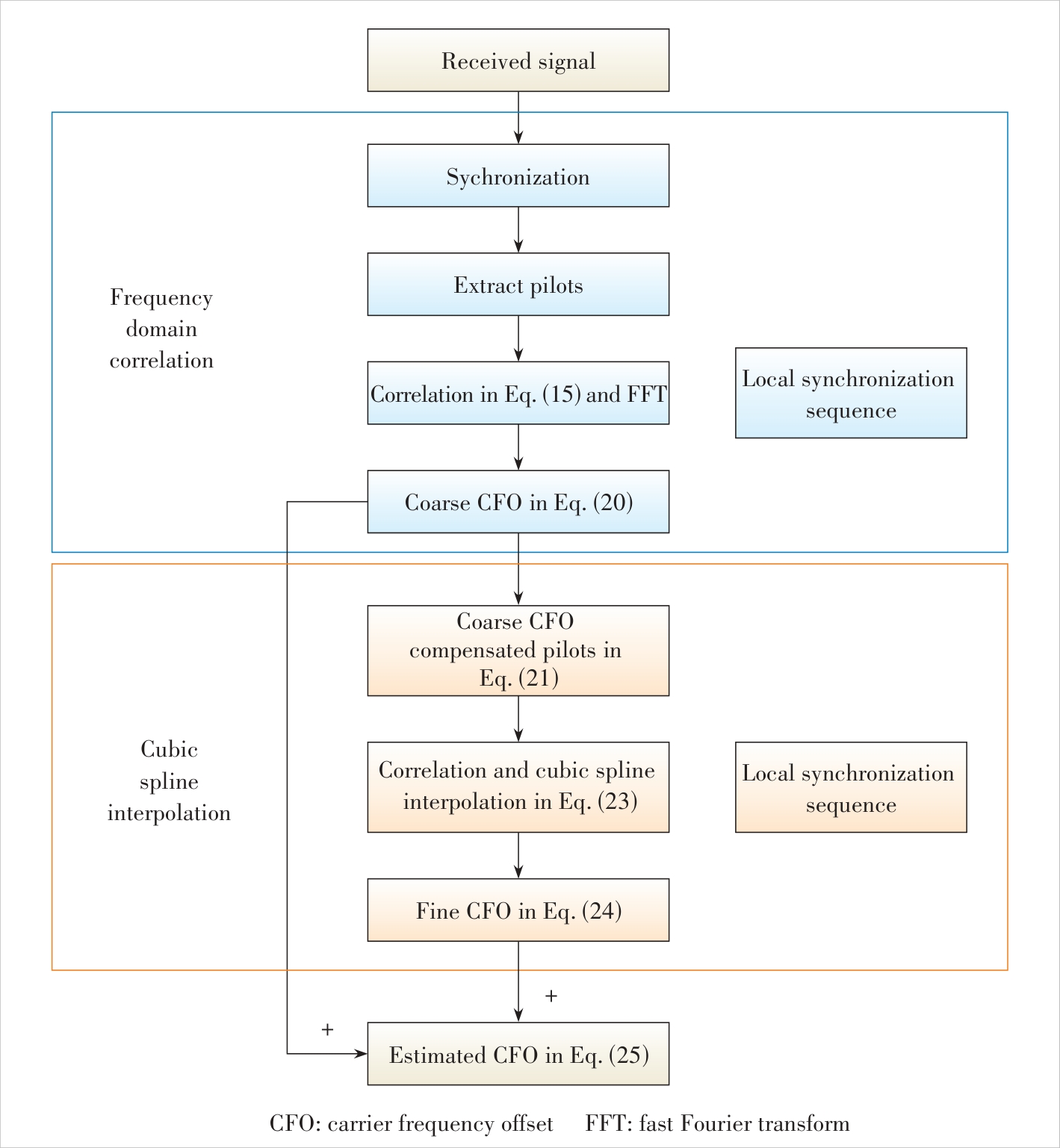
Figure 3 Frequency domain correlation and spline interpolation algorithm flowchart
| Parameter | Value |
|---|---|
| Device number | 12 |
| HF channel multipath number | 2 |
| Multipath delay | 2 ms |
| Standard deviation of Doppler shift | 0.5 |
| Carrier frequency | 16 MHz |
| System bandwidth | 320 kHz |
| Subcarrier spacing | 500 Hz |
| Subcarrier number | 512 |
| CP length | 8 |
| Guard band subcarrier number | 50 |
Table 1 Simulation system parameters of the classification test
| Parameter | Value |
|---|---|
| Device number | 12 |
| HF channel multipath number | 2 |
| Multipath delay | 2 ms |
| Standard deviation of Doppler shift | 0.5 |
| Carrier frequency | 16 MHz |
| System bandwidth | 320 kHz |
| Subcarrier spacing | 500 Hz |
| Subcarrier number | 512 |
| CP length | 8 |
| Guard band subcarrier number | 50 |
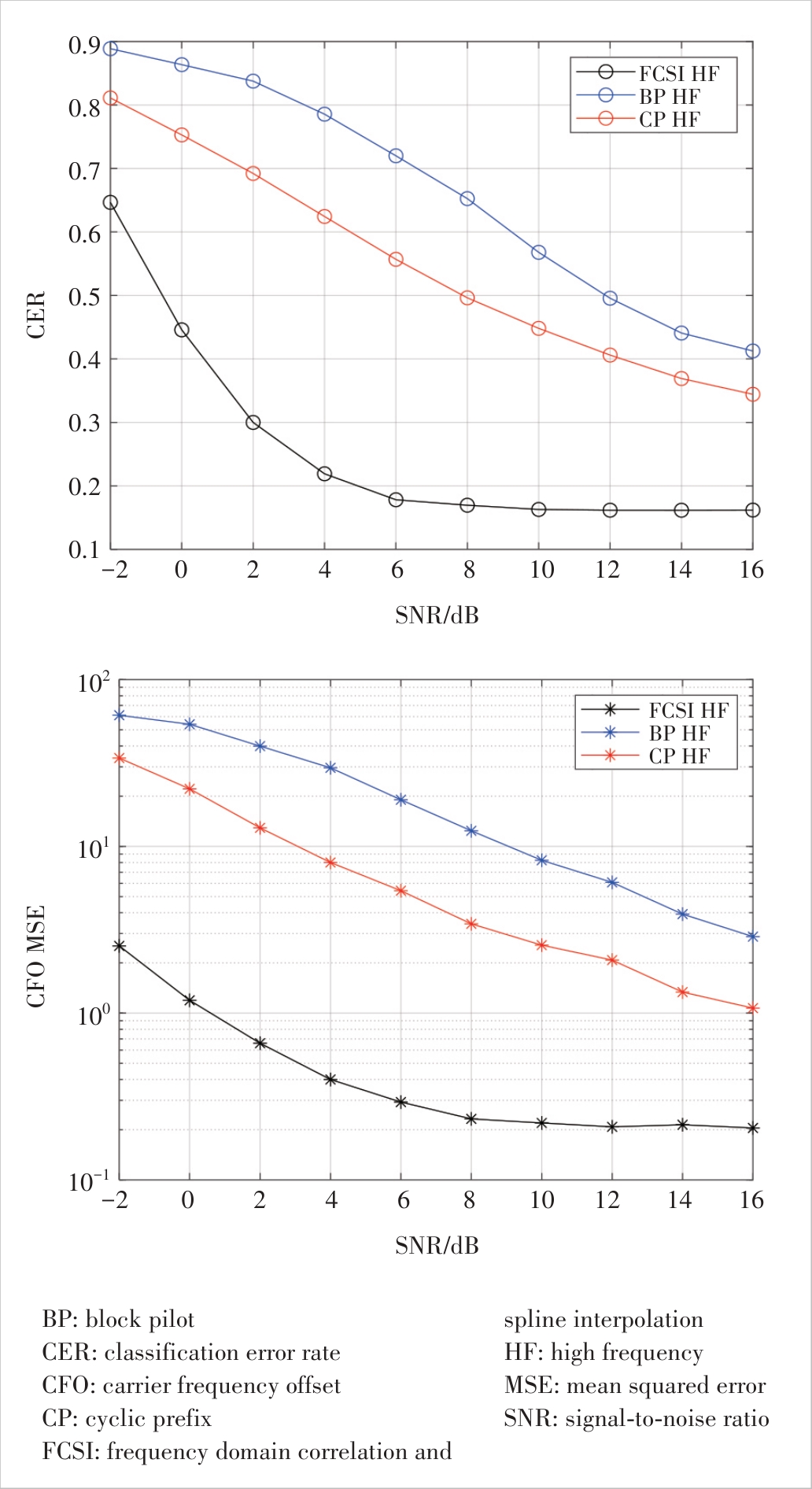
Figure 4 CER and MSE of CFO estimation with different SNRs in HF channel
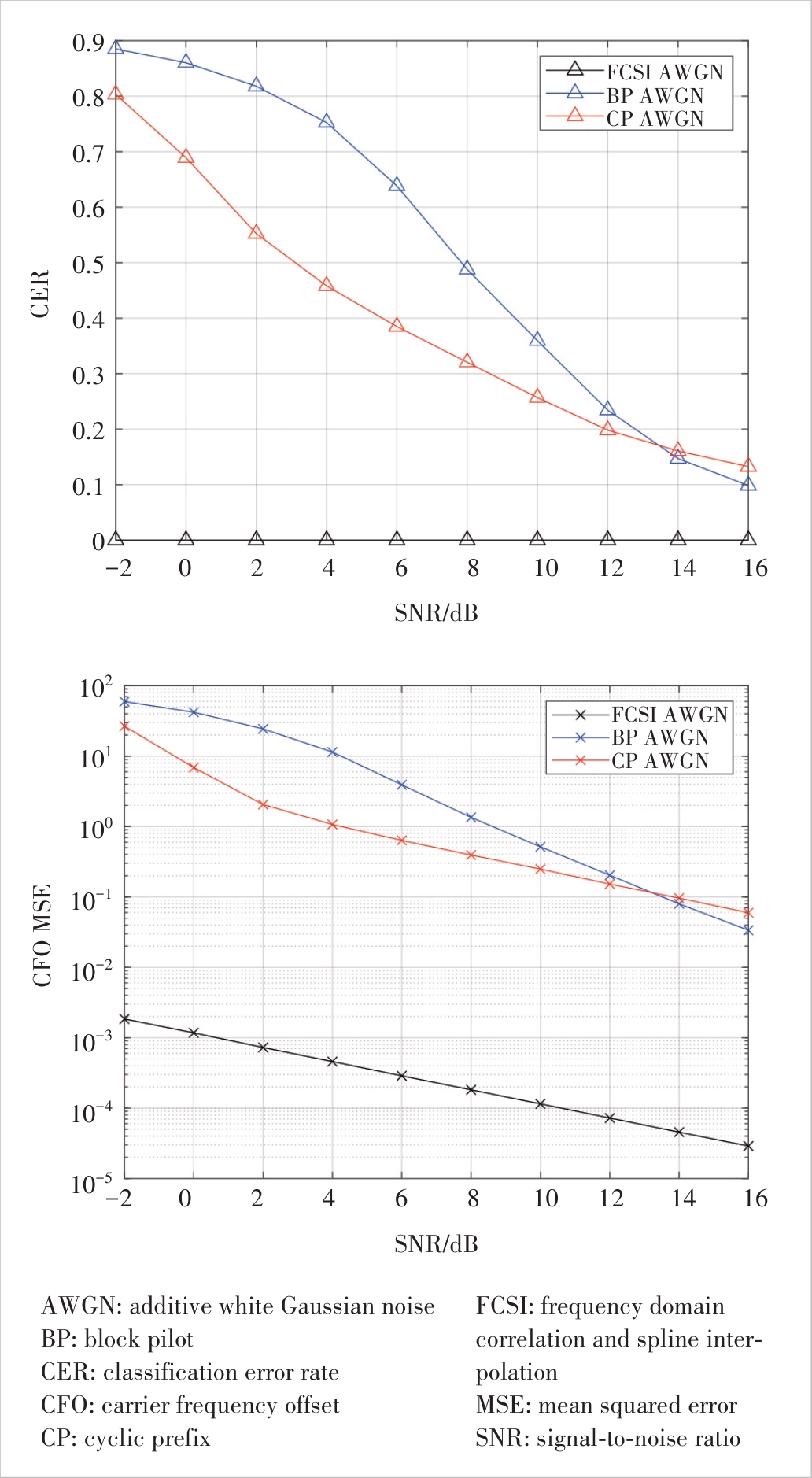
Figure 5 CER and MSE of CFO estimation with different SNRs in AWGN channel
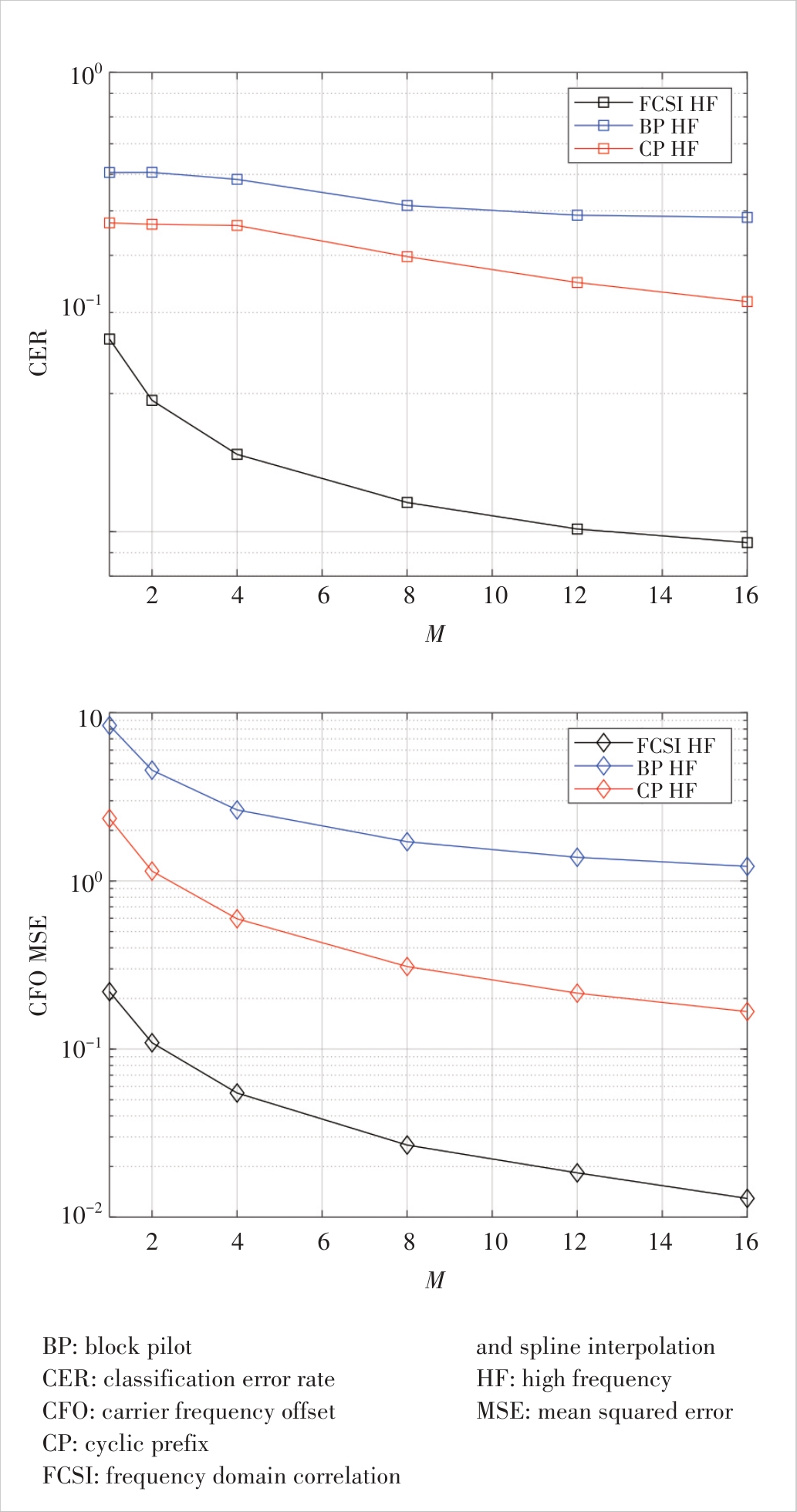
Figure 8 CER and MSE of CFO estimation versus M in HF channel
| [1] | Soltanieh N, Norouzi Y, Yang Y, et al. A review of radio frequency fingerprinting techniques [J]. IEEE journal of radio frequency identification, 2020, 4(3): 222–233. DOI: 10.1109/JRFID.2020.2968369 |
| [2] | Bonne R K, Capkun S. Implications of radio fingerprinting on the security of sensor networks [C]//The Third International Conference on Security and Privacy in Communications Networks and the Workshops. IEEE, 2007: 331–340. DOI: 10.1109/SECCOM.2007.4550352 |
| [3] | Ezuma M, Erden F, Kumar A C, et al. Detection and classification of UAVs using RF fingerprints in the presence of Wi-Fi and bluetooth interference [J]. IEEE open journal of the communications society, 2020, 1: 60–76. DOI: 10.1109/OJCOMS.2019.2955889 |
| [4] | Brik V, Banerjee S, Gruteser M, et al. Wireless device identification with radiometric signatures [C]//The 14th ACM International Conference on Mobile Computing and Networking. ACM, 2008: 116–127. DOI: 10.1145/1409944.1409959 |
| [5] | Peng L N, Hu A Q, Zhang J Q, et al. Design of a hybrid RF fingerprint extraction and device classification scheme [J]. IEEE Internet of Things journal, 2019, 6(1): 349–360. DOI: 10.1109/JIOT.2018.2838071 |
| [6] | Merchant K, Revay S, Stantchev G, et al. Deep learning for RF device fingerprinting in cognitive communication networks [J]. IEEE journal of selected topics in signal processing, 2018, 12(1): 160–167. DOI: 10.1109/JSTSP.2018.2796446 |
| [7] | Jian T, Rendon B C, Ojuba E, et al. Deep learning for RF fingerprinting: a massive experimental study [J]. IEEE Internet of Things magazine, 2020, 3(1): 50–57. DOI: 10.1109/IOTM.0001.1900065 |
| [8] | Shen G X, Zhang J Q, Marshall A, et al. Radio frequency fingerprint identification for LoRa using deep learning [J]. IEEE journal on selected areas in communications, 2021, 39(8): 2604–2616. DOI: 10.1109/JSAC.2021.3087250 |
| [9] | Yiu S, Dashti M, Claussen H, et al. Wireless RSSI fingerprinting localization [J]. Signal processing, 2017, 131: 235–244. DOI: 10.1016/j.sigpro.2016.07.005 |
| [10] | Liu F J, Wang X B, Primak S L. A two dimensional quantization algorithm for CIR-based physical layer authentication [C]//International Conference on Communications (ICC). IEEE, 2013: 4724–4728. DOI: 10.1109/ICC.2013.6655319 |
| [11] | Xiao L, Li Y, Han G A, et al. PHY-layer spoofing detection with reinforcement learning in wireless networks [J]. IEEE transactions on vehicular technology, 2016, 65(12): 10037–10047. DOI: 10.1109/TVT.2016.2524258 |
| [12] | Sankhe K, Belgiovine M, Zhou F, et al. ORACLE: optimized radio classification through convolutional neural networks [C]//IEEE Conference on Computer Communications. IEEE, 2019: 370–378. DOI: 10.1109/infocom.2019.8737463 |
| [13] | Mohanti S, Soltani N, Sankhe K, et al. AirID: injecting a custom RFF for enhanced UAV identification using deep learning [C]//Global Communications Conference. IEEE, 2020: 1–6. DOI: 10.1109/GLOBECOM42002.2020.9322561 |
| [14] | Van de Beek J J, Sandell M, Borjesson P O. ML estimation of time and frequency offset in OFDM systems [J]. IEEE transactions on signal processing, 1997, 45(7): 1800–1805. DOI: 10.1109/78.599949 |
| [15] | Yu X L, Lu A N, Gao X Q, et al. HF skywave massive MIMO communication [J]. IEEE transactions on wireless communications, 2022, 21(4): 2769–2785. DOI: 10.1109/TWC.2021.3115820 |
| [16] | Gu Q Z. RF system design of transceivers for wireless communications [M]. New York: Springer-Verlag, 2005. DOI: 10.1007/b104642 |
| [17] | Zhang W C, de Lamare R C, Pan C H, et al. Widely linear precoding for large-scale MIMO with IQI: algorithms and performance analysis [J]. IEEE transactions on wireless communications, 2017, 16(5): 3298–3312. DOI: 10.1109/TWC.2017.2679706 |
| [18] | Watterson C, Juroshek J, Bensema W. Experimental confirmation of an HF channel model [J]. IEEE transactions on communication technology, 1970, 18(6): 792–803. DOI: 10.1109/TCOM.1970.1090438 |
| [19] | Mastrangelo J F, Lemmon J J, Vogler L E, et al. A new wideband high frequency channel simulation system [J]. IEEE transactions on communications, 1997, 45(1): 26–34. DOI: 10.1109/26.554283 |
| [20] | Mckinley S, Levine M. Cubic spline interpolation [M]. [S.l.]: College of the Redwoods, 1998 |
| [21] | Zeng C, Wang J B, Xiao M, et al. Task-oriented semantic communication over rate splitting enabled wireless control systems for URLLC services [J]. IEEE transactions on communications, 2024, 72(2): 722–739. DOI: 10.1109/TCOMM.2023.3325901 |
| [22] | Gong P Y, Zhang G D, Zhang G. Research on fall detection system based on commercial Wi-Fi devices [J]. ZTE communications, 2023, 21(4): 60–68. DOI: 10.12142/ZTECOM.202304008 |
| [23] | Wu J Y, Wang C Y, Xie L. Device-free in-air gesture recognition based on RFID tag array [J]. ZTE communications, 2021, 19(3): 13–21. DOI: 10.12142/ZTECOM.202103003 |
| [24] | Zhu Y T, Li Z, Zhang H T. Robust beamforming under channel prediction errors for time-varying MIMO system [J]. ZTE communications, 2023, 21(3): 77–85. DOI: 10.12142/ZTECOM.202303011 |
| [1] | YU Xiaohui, YU Shucheng, LIU Xiqing, PENG Mugen. On Normalized Least Mean Square Based Interference Cancellation Algorithm for Integrated Sensing and Communication Systems [J]. ZTE Communications, 2024, 22(3): 21-28. |
| [2] | WANG Jilin, ZENG Xianlong, YANG Yonghui, PENG Lin, LI Lingxiang. Tensor Decomposition-Based Channel Estimation and Sensing for Millimeter Wave MIMO-OFDM V2I Systems [J]. ZTE Communications, 2024, 22(3): 56-68. |
| [3] | ZHU Yuting, LI Zeng, ZHANG Hongtao. Robust Beamforming Under Channel Prediction Errors for Time-Varying MIMO System [J]. ZTE Communications, 2023, 21(3): 77-85. |
| [4] | ZHANG Jintao, HE Zhenqing, RUI Hua, XU Xiaojing. Spectrum Sensing for OFDMA Using Multicarrier Covariance Matrix Aware CNN [J]. ZTE Communications, 2022, 20(3): 61-69. |
| [5] | ZHANG Chong, XING Wang, YUAN Jinhong, ZHOU Yiqing. Performance of LDPC Coded OTFS Systems over High Mobility Channels [J]. ZTE Communications, 2021, 19(4): 45-53. |
| [6] | LIU Mengmeng, LI Shuangyang, ZHANG Chunqiong, WANG Boyu, BAI Baoming. Coded Orthogonal Time Frequency Space Modulation [J]. ZTE Communications, 2021, 19(4): 54-62. |
| [7] | Zekeriyya Esat Ankaralı, Berker Peköz, Hüseyin Arslan. Enhanced OFDM for 5G RAN [J]. ZTE Communications, 2017, 15(S1): 11-20. |
| [8] | GUO Mengqi, ZHOU Ji, TANG Xizi, QIAO Yaojun. Layered ACO-FOFDM for IM/DD Systems [J]. ZTE Communications, 2017, 15(3): 56-62. |
| [9] | Mohamed Sufyan Islim, Harald Haas. Modulation Techniques for Li-Fi [J]. ZTE Communications, 2016, 14(2): 29-40. |
| [10] | Hung-Chang Chien, Jianjun Yu, Zhensheng Jia, and Ze Dong. Terabit Superchannel Transmission: A Nyquist-WDM Approach [J]. ZTE Communications, 2012, 10(4): 39-44. |
| [11] | Jiangnan Xiao, Zizheng Cao, Fan Li, Jin Tang, and Lin Chen. Flipped-Exponential Nyquist Pulse Technique to Optimize PAPR in Optical Direct-Detection OFDM Systems [J]. ZTE Communications, 2012, 10(3): 16-21. |
| [12] | Zhensheng Jia, Jianjun Yu, Hung-Chang Chien, Ze Dong, and Di Huo. Field Transmission of 100G and Beyond: Multiple Baud Rates and Mixed Line Rates Using Nyquist-WDM Technology [J]. ZTE Communications, 2012, 10(3): 28-38. |
| [13] | Wei-Ren Peng, Itsuro Morita, Hidenori Takahashi, and Takehiro Tsuritani. Greater than 200 Gb/s Transmission Using Direct-Detection Optical OFDM Superchannel [J]. ZTE Communications, 2012, 10(1): 10-17. |
| [14] | Xiangjun Xin. The Key Technology in Optical OFDM-PON [J]. ZTE Communications, 2012, 10(1): 40-44. |
| [15] | R. Neil Braithwaite. Crest Factor Reduction for OFDM Using Selective Subcarrier Degradation [J]. ZTE Communications, 2011, 9(4): 25-31. |
| Viewed | ||||||
|
Full text |
|
|||||
|
Abstract |
|
|||||