ZTE Communications ›› 2026, Vol. 24 ›› Issue (1): 88-96.DOI: 10.12142/ZTECOM.202601012
• Special Topic • Previous Articles Next Articles
Xiong Zhi’ang1, Fan Jiyuan1, Zhao Ping1( ), Zhou Jinzhu1, Shen Nan2, Wu Qingqiang2
Received:2024-03-20
Online:2026-03-17
Published:2026-03-17
About author:Xiong Zhi'ang received his BS degree from Jiangxi University of Science and Technology, China in 2021, and the master's degree from Xidian University, Xi'an, China in 2024. His current research interests include mixed electric and magnetic coupling filters and modeling and optimization of microwave passive filters.Supported by:Xiong Zhi’ang, Fan Jiyuan, Zhao Ping, Zhou Jinzhu, Shen Nan, Wu Qingqiang. Synthesis and Design of Generalized Strongly Coupled Resonator Quartet Combline Filters with Redundant Resonance[J]. ZTE Communications, 2026, 24(1): 88-96.
Add to citation manager EndNote|Ris|BibTeX
URL: https://zte.magtechjournal.com/EN/10.12142/ZTECOM.202601012
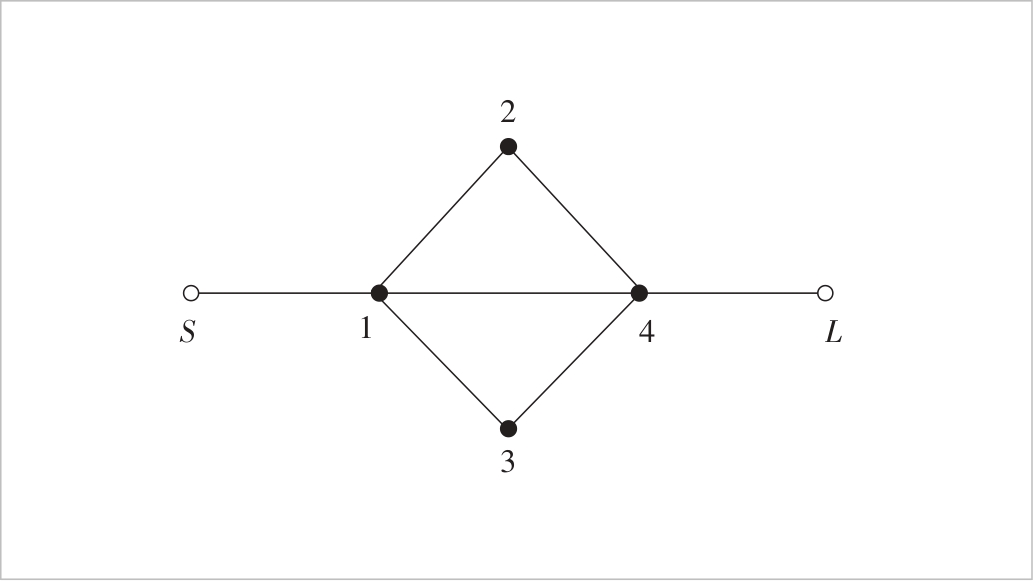
Figure 1 Topology of quartets. Black nodes represent resonators, and solid lines represent couplings
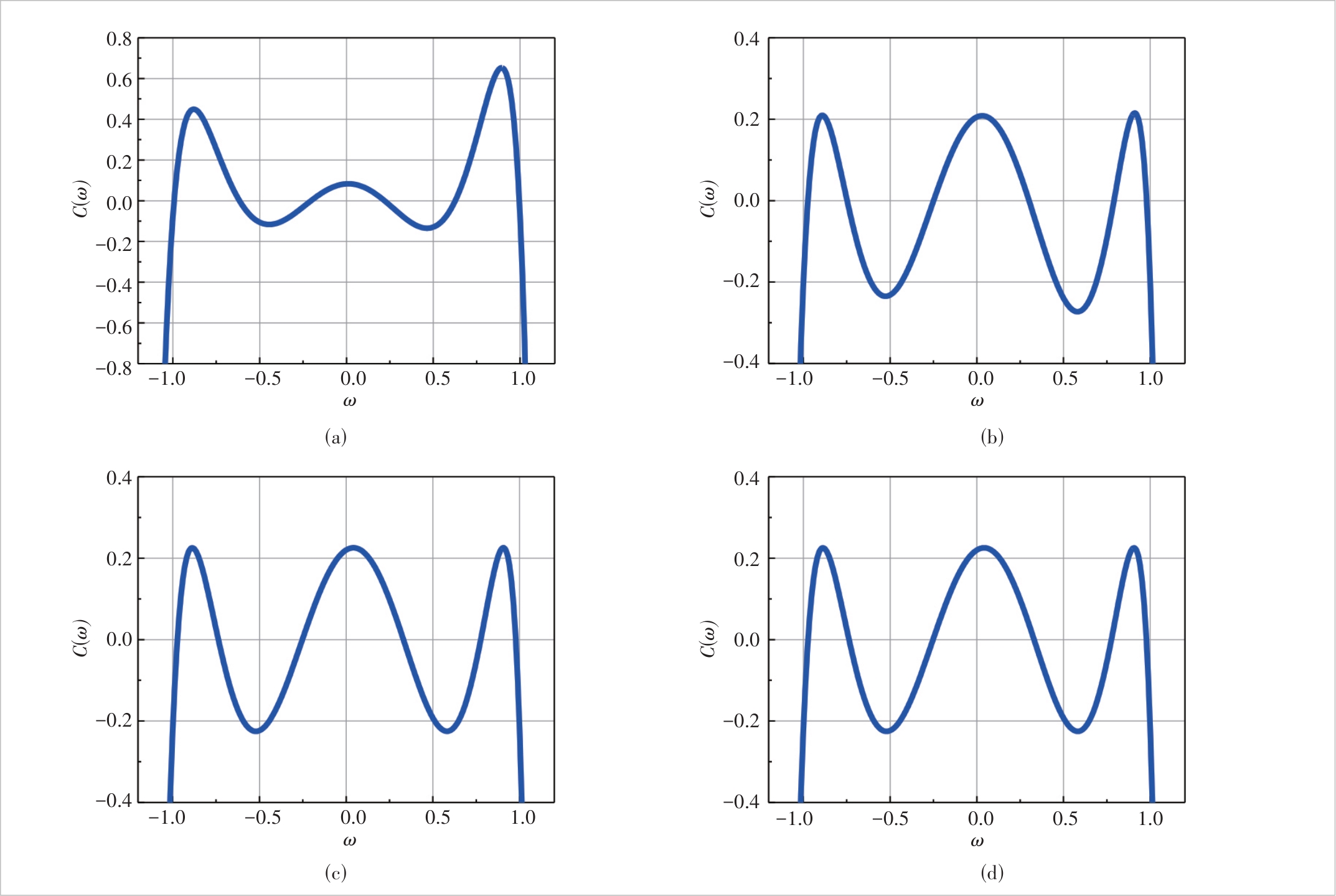
Figure 2 Iterations of Remez-like algorithm in solving the equi-ripple function for the 7th-order filter with an out-of-band RZ: (a) the first iteration; (b) the second iteration; (c) the third iteration; (d) the fourth iteration
| si, i = | F(s) (F22(s)) | P(s) | E(s) |
|---|---|---|---|
| 0 | 0.373 8j | 1.700 0 | 0.868 3 + 3.731 5j |
| 1 | 0.422 9 | 0.110 0j | 2.769 1 +12.801 1j |
| 2 | 5.464 5j | 1.000 0 | 4.956 1 + 24.638 4j |
| 3 | 2.012 0 | 6.466 5 + 30.408 0j | |
| 4 | 13.070 5j | 5.796 9 + 28.889 2j | |
| 5 | 2.613 9 | 4.560 8 + 16.045 3j | |
| 6 | 8.137 5j | 1.973 3 + 8.137 5j | |
| 7 | 1.000 0 | 1.000 0 | |
| εR = 1.000 0 | ε = 0.445 8 | ||
Table 1 Coefficients of F(s), P(s), and E(s) of seven-poles with one upper TZ and one lower TZ
| si, i = | F(s) (F22(s)) | P(s) | E(s) |
|---|---|---|---|
| 0 | 0.373 8j | 1.700 0 | 0.868 3 + 3.731 5j |
| 1 | 0.422 9 | 0.110 0j | 2.769 1 +12.801 1j |
| 2 | 5.464 5j | 1.000 0 | 4.956 1 + 24.638 4j |
| 3 | 2.012 0 | 6.466 5 + 30.408 0j | |
| 4 | 13.070 5j | 5.796 9 + 28.889 2j | |
| 5 | 2.613 9 | 4.560 8 + 16.045 3j | |
| 6 | 8.137 5j | 1.973 3 + 8.137 5j | |
| 7 | 1.000 0 | 1.000 0 | |
| εR = 1.000 0 | ε = 0.445 8 | ||
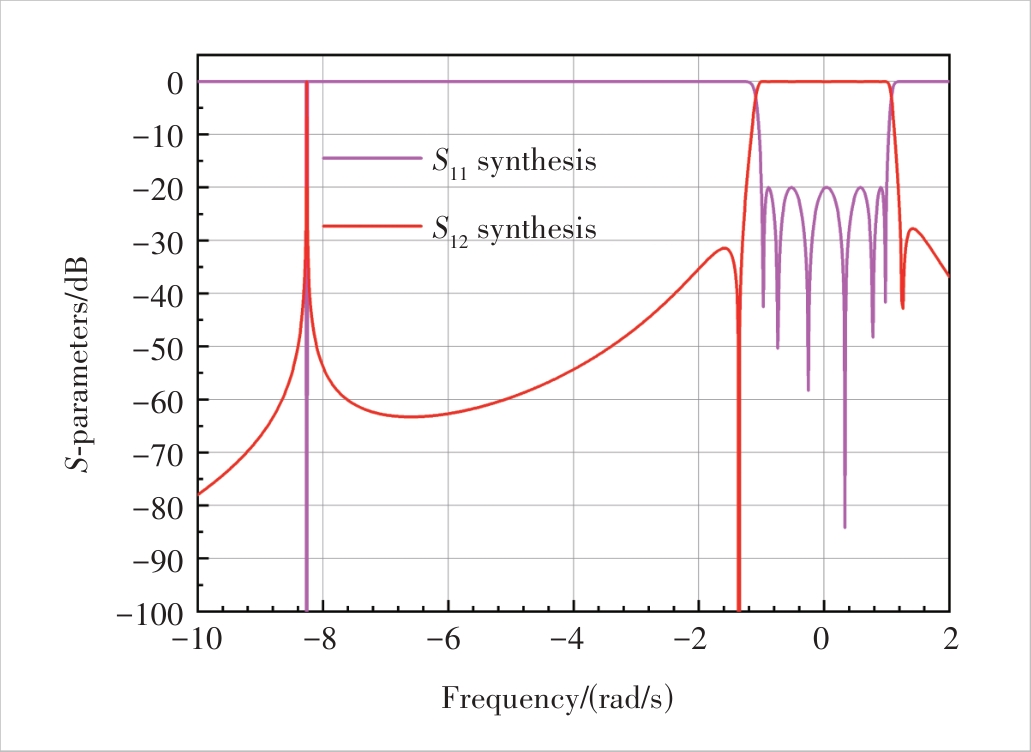
Figure 3 Synthesized response of the 7th-order filter with an out-of-band RZ
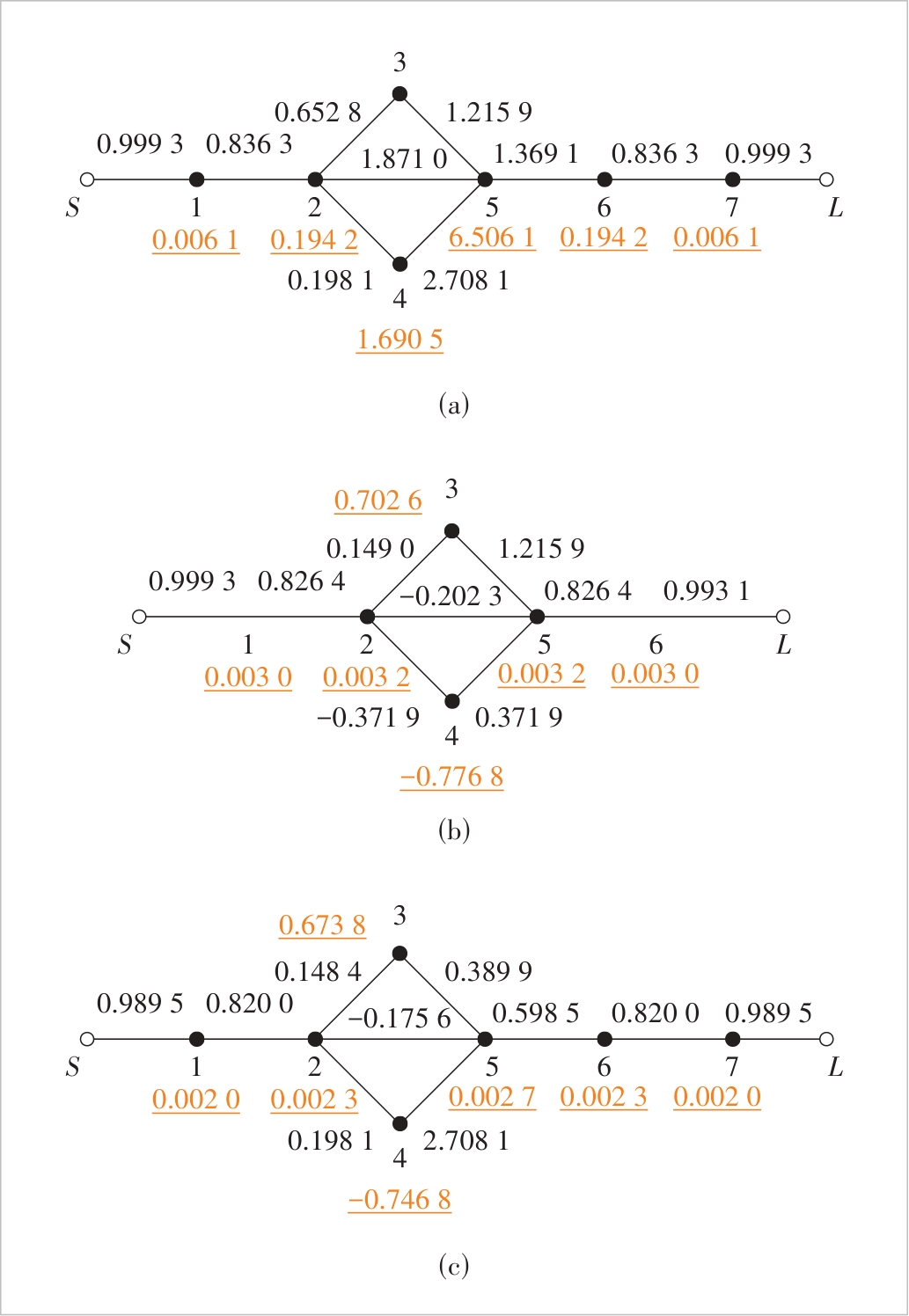
Figure 4 Topology with quartet: (a) 7-2 (7 RZs and 2 TZs) filter with an out-of-band RZ; (b) 6-2 filter; (c) 7-2 filter
| Rotation sequence | Elements to be annihilated | Pivot [i, j] | Rotation sequence | Elements to be annihilated | Pivot [i, j] |
|---|---|---|---|---|---|
| 1 | MS7 | [7, 6] | 16 | M37 | [7, 6] |
| 2 | MS6 | [6, 5] | 17 | M36 | [6, 5] |
| 3 | MS5 | [5, 4] | 18 | M35 | [5, 4] |
| 4 | MS4 | [4, 3] | 19 | M47 | [7, 6] |
| 5 | MS3 | [3, 2] | 20 | M46 | [6, 5] |
| 6 | MS2 | [2, 1] | 21 | M57 | [7, 6] |
| 7 | M17 | [7, 6] | 22 | M5L | [ |
| 8 | M16 | [6, 5] | 23 | M6L | [ |
| 9 | M15 | [5, 4] | 24 | M46 | [ |
| 10 | M14 | [4, 3] | 25 | M47 | [ |
| 11 | M13 | [3, 2] | 26 | M57 | [ |
| 12 | M27 | [7, 6] | 27 | M35 | [ |
| 13 | M26 | [6, 5] | 28 | M36 | [ |
| 14 | M25 | [5, 4] | 29 | M46 | [ |
| 15 | M24 | [4, 3] | 30 | M34 | [ |
Table 2 Rotation sequence to the filter in Fig. 4a
| Rotation sequence | Elements to be annihilated | Pivot [i, j] | Rotation sequence | Elements to be annihilated | Pivot [i, j] |
|---|---|---|---|---|---|
| 1 | MS7 | [7, 6] | 16 | M37 | [7, 6] |
| 2 | MS6 | [6, 5] | 17 | M36 | [6, 5] |
| 3 | MS5 | [5, 4] | 18 | M35 | [5, 4] |
| 4 | MS4 | [4, 3] | 19 | M47 | [7, 6] |
| 5 | MS3 | [3, 2] | 20 | M46 | [6, 5] |
| 6 | MS2 | [2, 1] | 21 | M57 | [7, 6] |
| 7 | M17 | [7, 6] | 22 | M5L | [ |
| 8 | M16 | [6, 5] | 23 | M6L | [ |
| 9 | M15 | [5, 4] | 24 | M46 | [ |
| 10 | M14 | [4, 3] | 25 | M47 | [ |
| 11 | M13 | [3, 2] | 26 | M57 | [ |
| 12 | M27 | [7, 6] | 27 | M35 | [ |
| 13 | M26 | [6, 5] | 28 | M36 | [ |
| 14 | M25 | [5, 4] | 29 | M46 | [ |
| 15 | M24 | [4, 3] | 30 | M34 | [ |
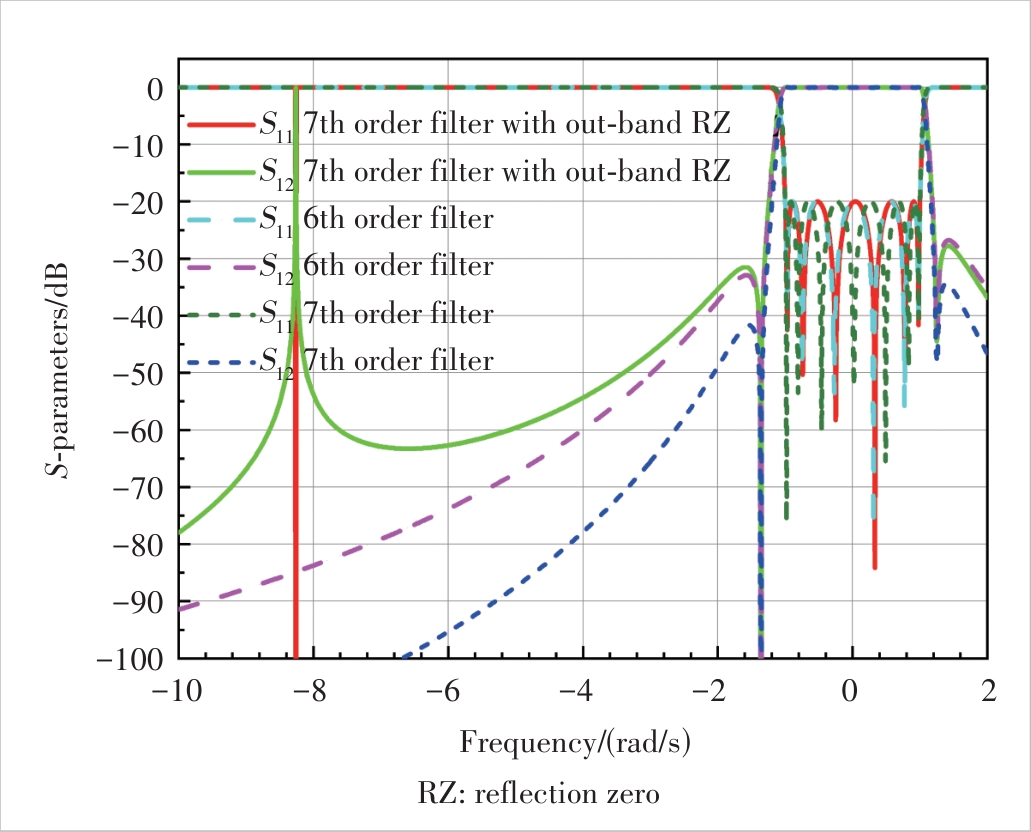
Figure 5 Frequency responses of three filter designs: the 7th-order filter with an out-of-band reflection zero (solid), 6th-order traditional filter (dashed), and 7th-order traditional filter (dotted)
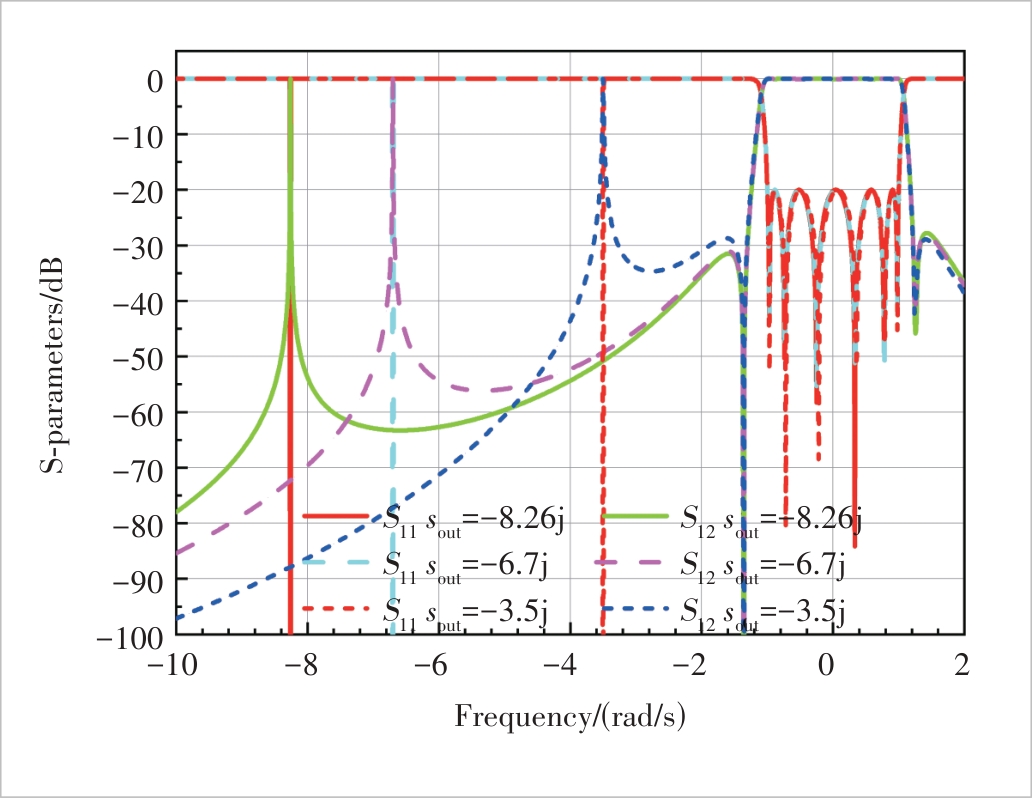
Figure 6 Frequency responses with different out-of-band RZ locations: sout=-8.26j (solid), sout=-6.7j (dashed), and sout=-3.5j (dotted)
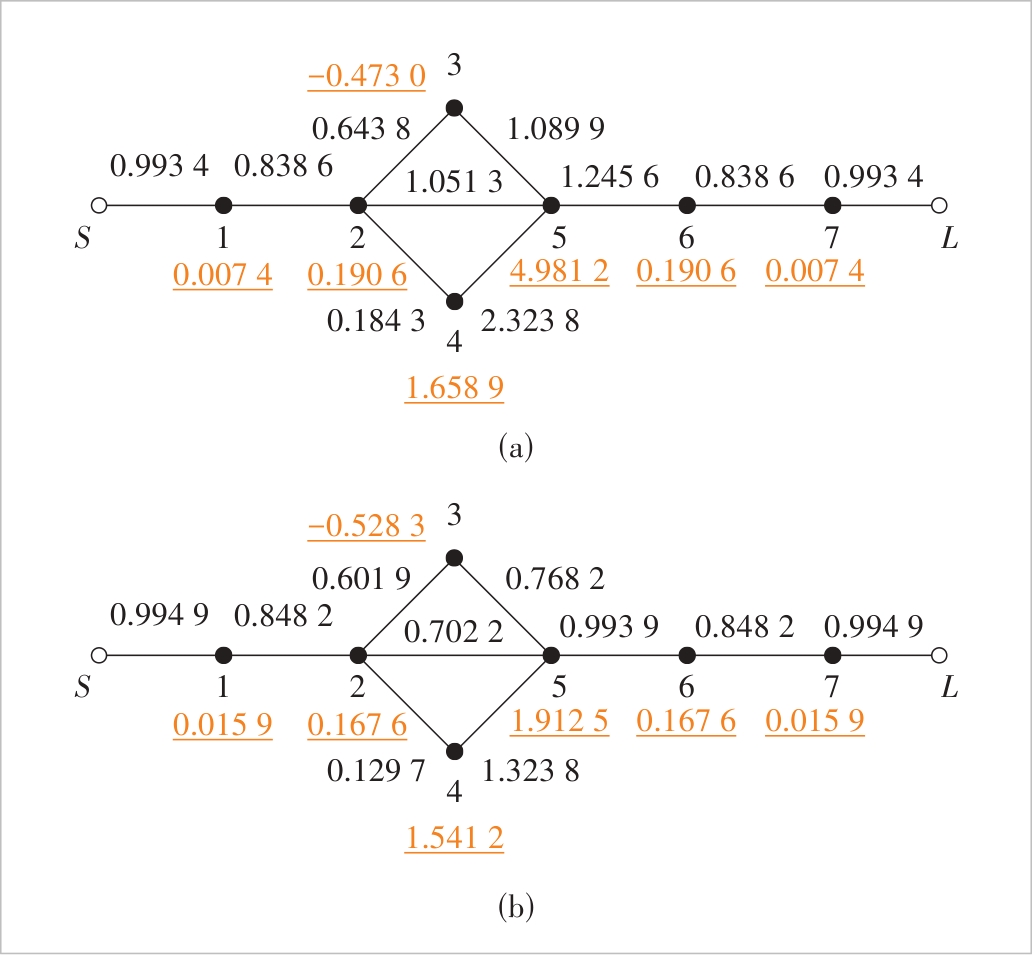
Figure 7 7-2 filter topology with different out-of-band RZ locations: (a) sout=-6.7j; (b) sout=-3.5j
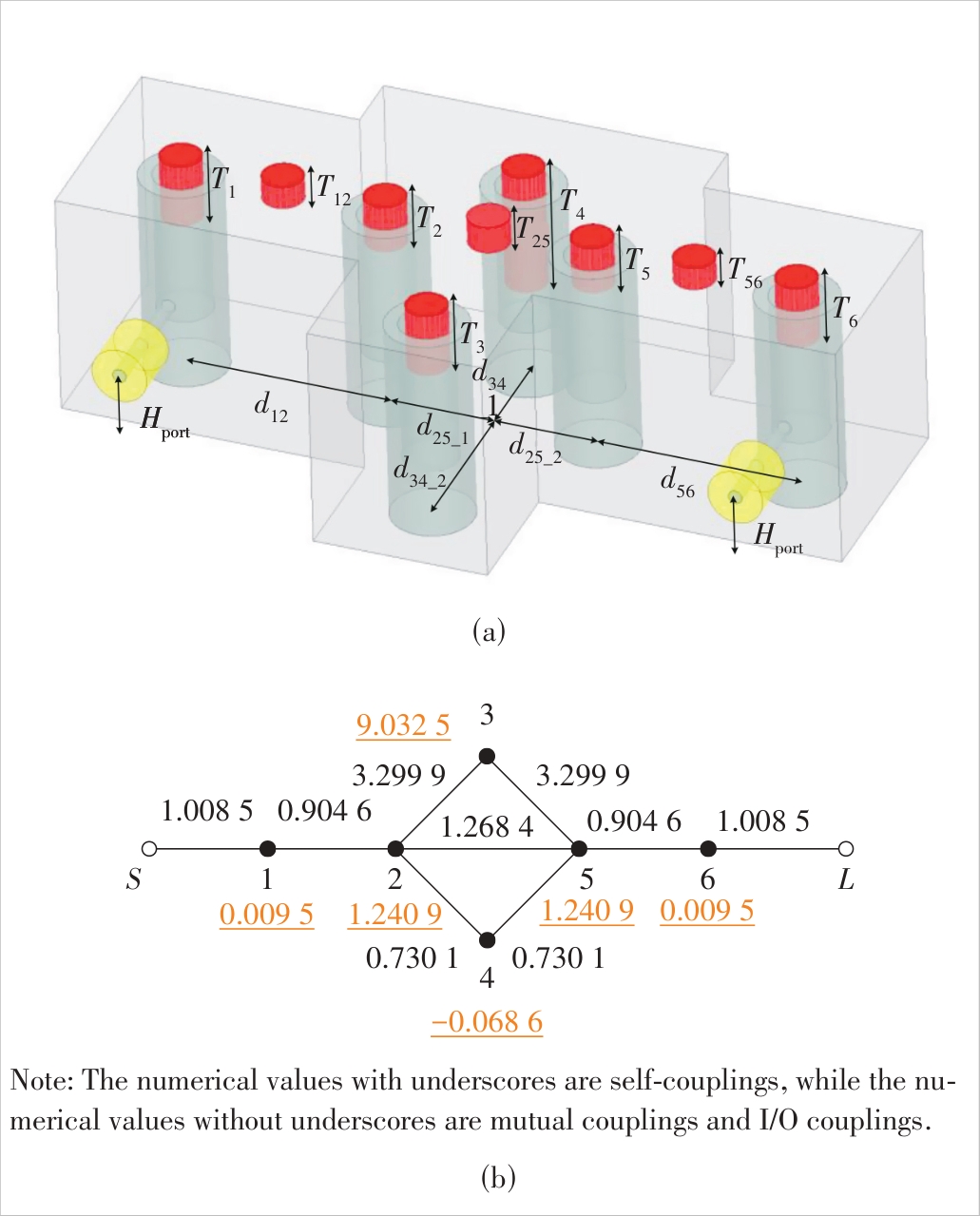
Figure 8 (a) Electromagnetic model of the 6th-order filter with GSCRQ; (b) synthesis results of GSCRQ of the 6-2 filter with one out-of-band RZ
| k | poles | zeros |
|---|---|---|
| 1 | -0.692 7 + 0.104 7i | 0.001 0 + 0.072 2i |
| 2 | -0.556 11-0.675 5i | -0.000 1-0.530 2i |
| 3 | -0.481 2 + 0.805 7i | -0.000 5 + 0.657 6i |
| 4 | -0.180 53-1.073 5i | -0.000 7-0.889 7i |
| 5 | -0.156 41 + 1.149 1i | 0.000 3 + 1.000 2i |
| 6 | -0.009 1-11.503 2i | 0.000 0-11.503 1i |
| 7 | 1.132 2 + 14.087 9i | 1.664 5 + 13.927 9i |
| 8 | -26.468 1 + 3.616 4i | 26.542 8 + 3.463 7i |
Table 3 Zeros and poles of VF results for S11
| k | poles | zeros |
|---|---|---|
| 1 | -0.692 7 + 0.104 7i | 0.001 0 + 0.072 2i |
| 2 | -0.556 11-0.675 5i | -0.000 1-0.530 2i |
| 3 | -0.481 2 + 0.805 7i | -0.000 5 + 0.657 6i |
| 4 | -0.180 53-1.073 5i | -0.000 7-0.889 7i |
| 5 | -0.156 41 + 1.149 1i | 0.000 3 + 1.000 2i |
| 6 | -0.009 1-11.503 2i | 0.000 0-11.503 1i |
| 7 | 1.132 2 + 14.087 9i | 1.664 5 + 13.927 9i |
| 8 | -26.468 1 + 3.616 4i | 26.542 8 + 3.463 7i |
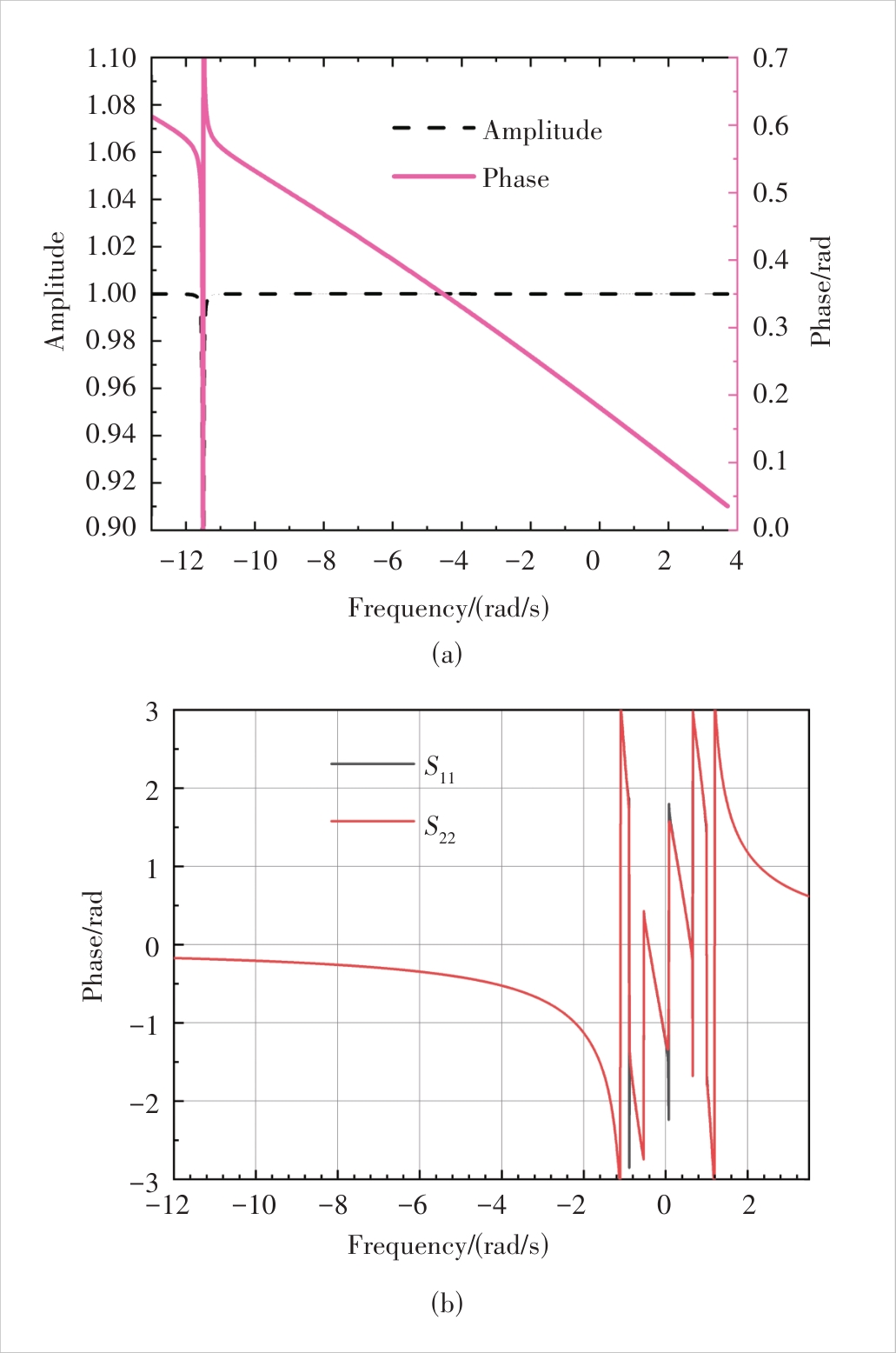
Figure 9 Incorrect phasing de-embedding: (a) amplitude and phase of the phase factor α; (b) S11 and S22 after phase removal
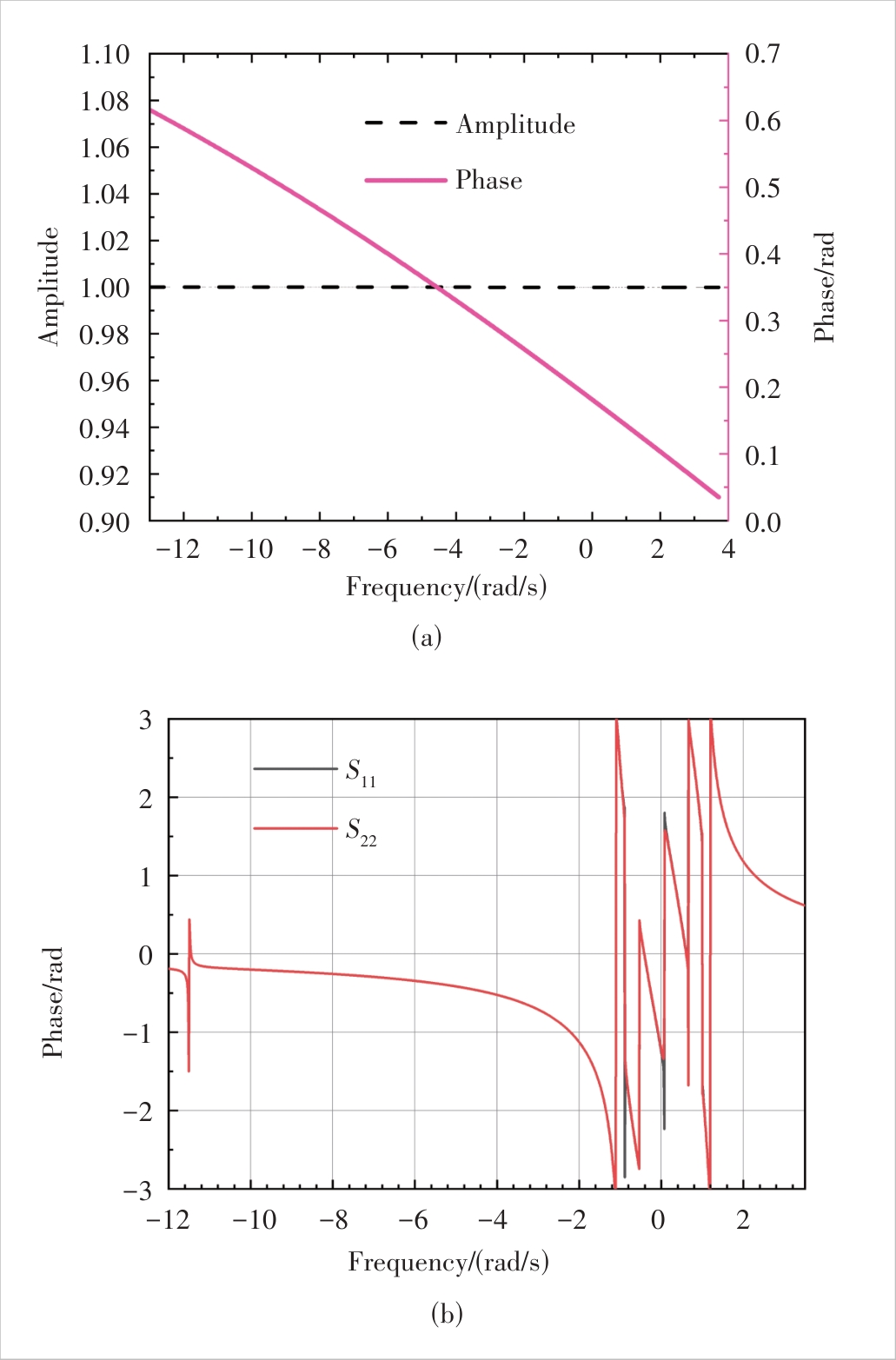
Figure 10 Correct phase de-embedding: (a) amplitude and phase of the phase factor α and (b) S11 and S22 after phase removal
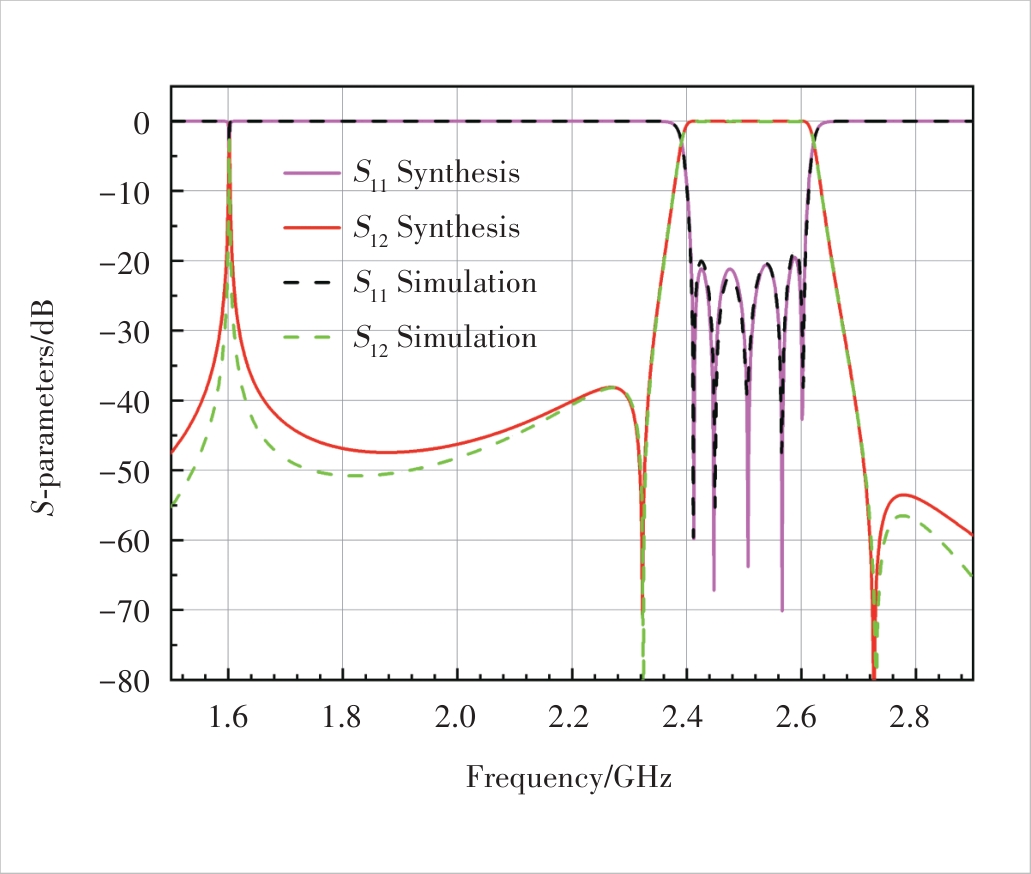
Figure 11 Simulated results using High Frequency Structure Simulator (HFSS) and ideal synthesis responses of the filter
| Resonator ID | T1 | T2 | T3 | T4 | T5 | T6 | T12 | T25 | T56 |
|---|---|---|---|---|---|---|---|---|---|
| Final/mm | 4.70 | 3.55 | 9.10 | 4.7 | 3.55 | 4.70 | 1.70 | 2.00 | 2.00 |
| Dimension | d12 | d25_1 | d25_2 | d34_1 | d34_2 | Hport | |||
| Final/mm | 1.77 | 7.55 | 7.55 | 6.40 | 11.43 | 6.32 |
Table 4 Dimensions of the filter in Fig. 8
| Resonator ID | T1 | T2 | T3 | T4 | T5 | T6 | T12 | T25 | T56 |
|---|---|---|---|---|---|---|---|---|---|
| Final/mm | 4.70 | 3.55 | 9.10 | 4.7 | 3.55 | 4.70 | 1.70 | 2.00 | 2.00 |
| Dimension | d12 | d25_1 | d25_2 | d34_1 | d34_2 | Hport | |||
| Final/mm | 1.77 | 7.55 | 7.55 | 6.40 | 11.43 | 6.32 |
| [1] | Levy R. Direct synthesis of cascaded quadruplet (CQ) filters [C]//Proc. 1995 IEEE MTT-S International Microwave Symposium. 1995: 497–500. DOI:10.1109/MWSYM.1995.406038 |
| [2] | Levy R, Petre P. Design of CT and CQ filters using approximation and optimization [J]. IEEE transactions on microwave theory and techniques, 2001, 49(12): 2350–2356. DOI:10.1109/22.971620 |
| [3] | Tamiazzo S, Macchiarella G. An analytical technique for the synthesis of cascaded N-tuplets cross-coupled resonators microwave filters using matrix rotations [J]. IEEE transactions on microwave theory and techniques, 2005, 53(5): 1693–1698. DOI:10.1109/TMTT.2005.847065 |
| [4] | Macchiarella G, Bastioli S, Snyder R V. Design of in-line filters with transmission zeros using strongly coupled resonators pairs [J]. IEEE transactions on microwave theory and techniques, 2018, 66(8): 3836–3846. DOI:10.1109/TMTT.2018.2840981 |
| [5] | Bastioli S, Snyder R V, Macchiarella G. Design of in-line filters with strongly coupled resonator triplet [J]. IEEE transactions on microwave theory and techniques, 2018, 66(12): 5585–5592. DOI:10.1109/TMTT.2018.2867004 |
| [6] | Zeng Y, Yang Y M, Yu M, et al. Synthesis of generalized strongly coupled resonator triplet filters by regulating redundant resonant modes [J]. IEEE transactions on microwave theory and techniques, 2022, 70(1): 864–875. DOI:10.1109/TMTT.2021.3128602 |
| [7] | Bastioli S, Snyder R V, Macchiarella G. The strongly coupled resonator quadruplet [J]. IEEE microwave and wireless technology letters, 2023, 33(8): 1135–1138. DOI:10.1109/LMWT.2023.3270099 |
| [8] | Otto S, Lauer A, Kassner J, et al. Full wave coupled resonator filter optimization using a multi-port admittance-matrix [C]//2006 Asia-Pacific Microwave Conference. IEEE, 2006: 777–780. DOI:10.1109/APMC.2006.4429530 |
| [9] | Zhao P, Liu B Z, Oldoni M, et al. Improving accuracy in solving Feldtkeller equation [J]. IEEE microwave and wireless technology letters, 2024, 34(3): 251–254. DOI:10.1109/LMWT.2023.3349133 |
| [10] | Cameron R J, Kudsia C M, Mansour R R. Microwave filters for communication systems: fundamentals, design and applications [M]. 2nd ed. Hoboken: Wiley, 2018. DOI: 10.1002/9781119292371 |
| [11] | Seyfert F, Baratchart L, Marmorat J P, et al. Extraction of coupling parameters for microwave filters: determination of a stable rational model from scattering data [C]//IEEE MTT-S International Microwave Symposium Digest. IEEE, 2003: 25–28. DOI: 10.1109/MWSYM.2003.1210875 |
| [12] | Zhao P, Wu K L. Model-based vector-fitting method for circuit model extraction of coupled-resonator diplexers [J]. IEEE transactions on microwave theory and techniques, 2016, 64(6): 1787–1797. DOI:10.1109/TMTT.2016.2558639 |
| [13] | Zhao P. Phase De-embedding of narrowband coupled-resonator networks by vector fitting [J]. IEEE transactions on microwave theory and techniques, 2023, 71(4): 1439–1446. DOI:10.1109/TMTT.2018.2854170 |
| [1] | WU Qingqiang, CHEN Jianzhong, WU Zengqiang, GONG Hongwei. Synthesis and Design of 5G Duplexer Based on Optimization Method [J]. ZTE Communications, 2022, 20(3): 70-76. |
| Viewed | ||||||
|
Full text |
|
|||||
|
Abstract |
|
|||||