ZTE Communications ›› 2026, Vol. 24 ›› Issue (2): 43-51.DOI: 10.12142/ZTECOM.202602006

• Special Topic • Previous Articles     Next Articles

The Dawn of 6G: Empowering a User-Centric Ecosystem with Agentic AI

Gao Yin1,2(), Chen Jiajun1,2, Liu Yansheng1,2, Xiang Jiying1,3   

  1. 1.State Key Laboratory of Mobile Network and Mobile Multimedia Technology, Shenzhen 518055, China
    2.Wireless Product R&D Institute (Shanghai Branch), ZTE Corporation, Shanghai 201203, China
    3.Wireless Product R&D Institute (Shenzhen Branch), ZTE Corporation, Shenzhen 518057, China
  • Received:2025-02-03 Online:2026-06-16 Published:2026-06-16
  • About author:Gao Yin (gao.yin1@zte.com.cn) is the Standardization Director at ZTE Corporation and the former Chair of 3GPP RAN3 (2021–2025). She also serves as the Vice Chair of CCSA TC624 WG4 and is an expert at the State Key Laboratory of Mobile Network and Mobile Multimedia Technology, China. She has led and participated in multiple major national projects, focusing on wireless network technologies research and standardization for 3G/4G/5G/6G in SDOs, including 3GPP, CCSA, IMT-2020/2030, NGMN, and IEEE. She has initiated and completed multiple international and domestic standardization projects, and has served as a rapporteur for various international and domestic standards and technical reports.
    Liu Yansheng received his bachelor’s degree in petroleum engineering from Missouri University of Science and Technology, USA in 2015, and his MS degree in information technology from The University of New South Wales, Australia in 2018. Since 2019, he has been with ZTE Corporation, serving as a pre-research engineer and a delegate to 3GPP RAN3. His main research focuses on 3GPP standardization and 5G/6G network technologies, including UAV networks, QoE/QoS management, NCR, XR, AIoT, MBS, and 6G network architecture and interfaces.
    Xiang Jiying is the Chief Scientist of ZTE Corporation, leading research and development initiatives across 3G, 4G, 5G, B5G, and 6G technologies. He is a recipient of the Special Prize and Second Prize of the The State Science and Technology Progress Award, as well as The State Technological Invention Award. He has also been honored with titles such as “Contributor to China’s Communication Industry Technology” and “Outstanding Engineer of China”.

Abstract:

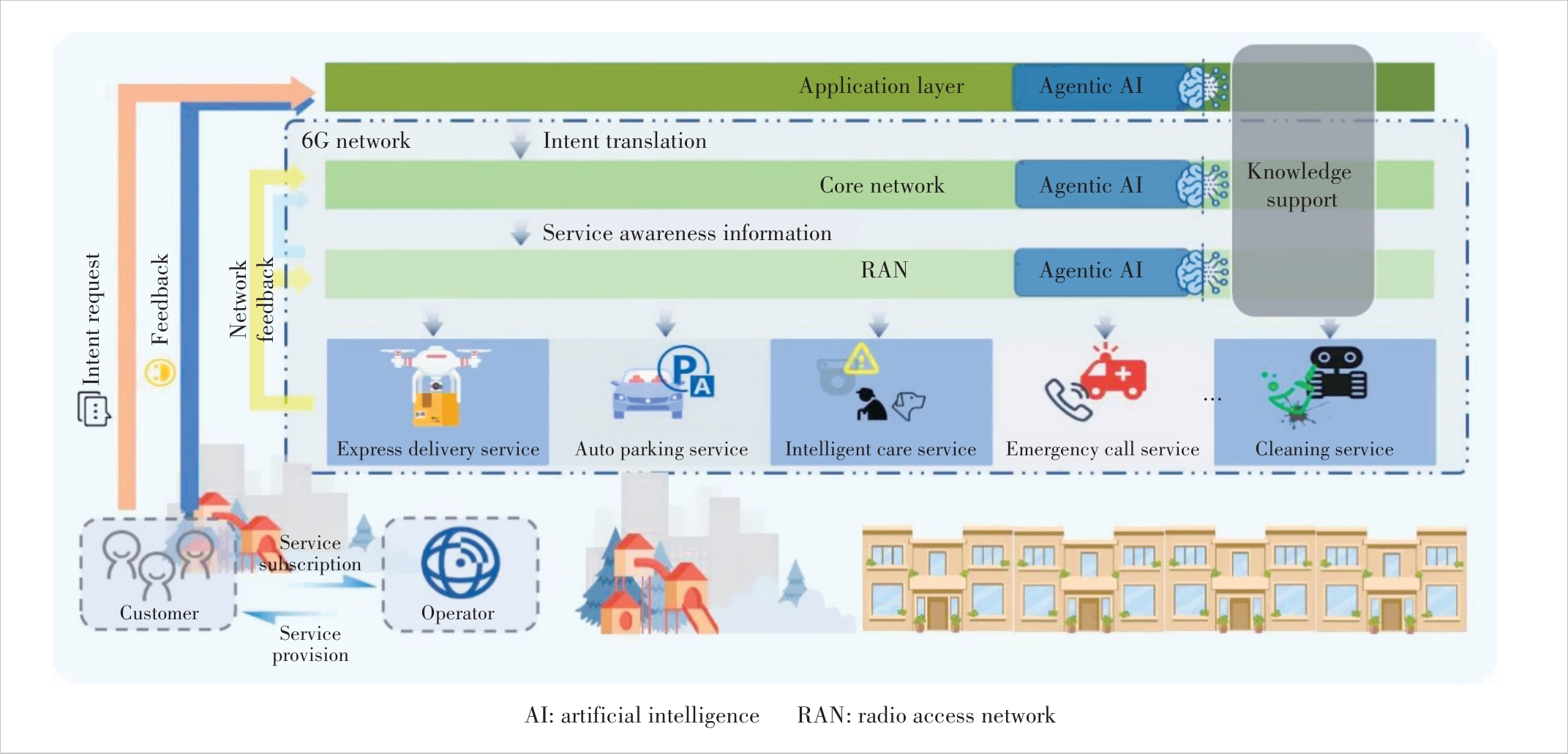
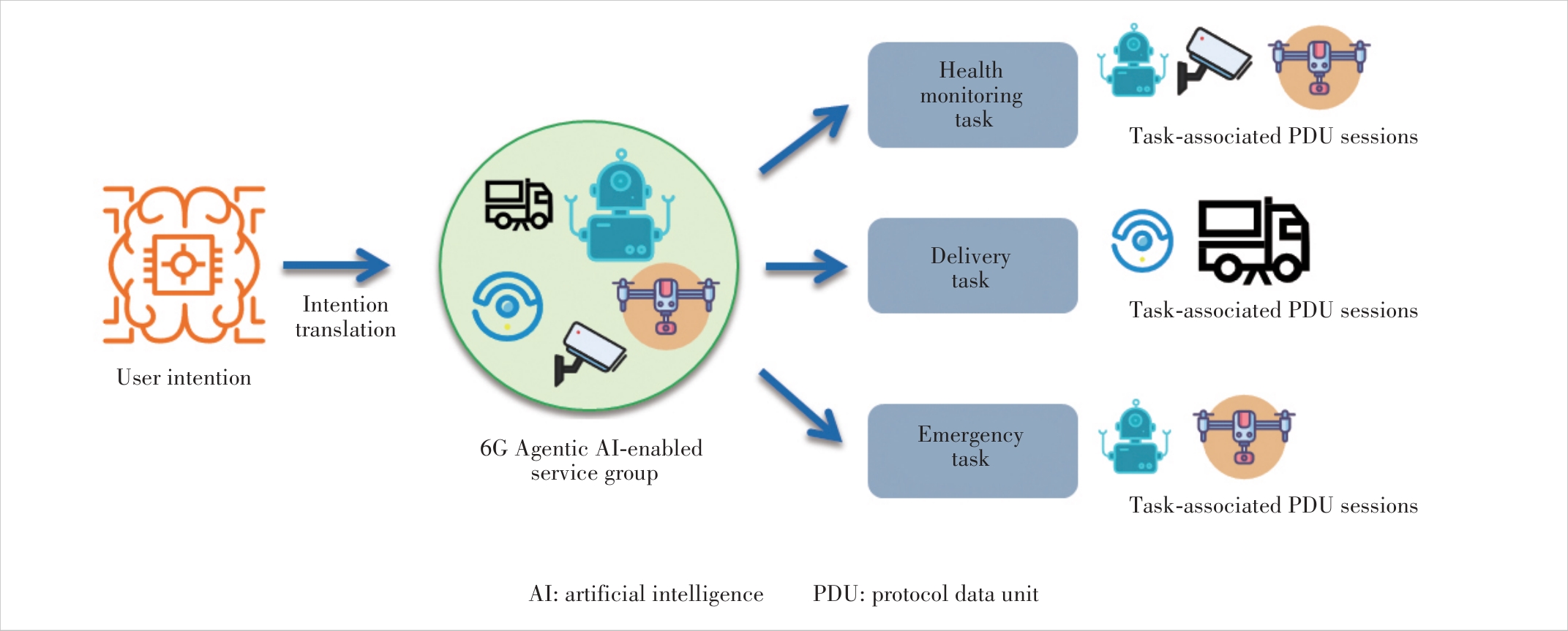
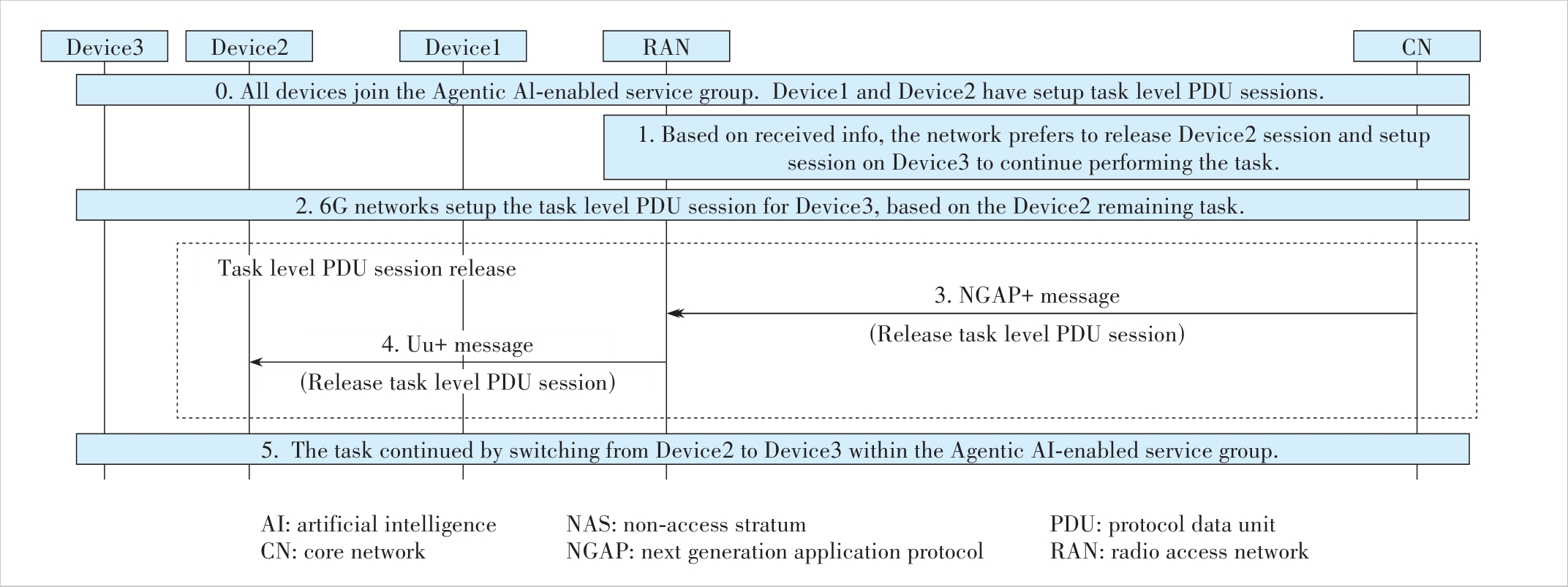
The convergence of artificial intelligence (AI) with the physical world is reshaping the future of intelligent systems through real-time perception, interaction, and control within physical environments. To support this new paradigm, 6G networks are envisioned as critical enablers, offering ultra-low latency, high reliability, and service-aware intelligence to facilitate seamless human-machine collaboration. This paper proposes a functional framework that integrates Agentic AI into the 6G architecture, introducing the concept of Agentic AI-Enabled 6G Network Services (AA6NS). In this framework, user intents are translated and processed across the application layer, core network (CN), and radio access network (RAN), where Agentic AI dynamically manages task-level quality of service/quality of experience (QoS/QoE), orchestrates multi-device service groups, and enables real-time network adaptation. The proposed architecture with the new 6G techniques establishes a foundation for future physical AI applications across domains such as autonomous mobility, smart manufacturing, and remote robotics.

Key words: AI/ML, Agentic AI, 6G network, physical AI