ZTE Communications ›› 2026, Vol. 24 ›› Issue (3): 18-30.DOI: 10.12142/ZTECOM.202603004
• Special Topic • Previous Articles Next Articles
Huang Yinning1( ), Zeng Cheng1, Yang Zhaohui2
Received:2026-06-17
Online:2026-09-20
Published:2026-09-20
About author:Huang Yinning (922104780107@njust.edu.cn) received her BEng degree from Nanjing University of Science and Technology, China in 2026. She was admitted directly to the MS program at the same university without the entrance examination in the same year. Her current research interests include fluid antenna systems, embodied intelligence, and wireless transmission optimization for mobile scenarios.Supported by:Huang Yinning, Zeng Cheng, Yang Zhaohui. Prediction-Window Aided Fluid Antenna Systems for High-Mobility Communications[J]. ZTE Communications, 2026, 24(3): 18-30.
Add to citation manager EndNote|Ris|BibTeX
URL: https://zte.magtechjournal.com/EN/10.12142/ZTECOM.202603004
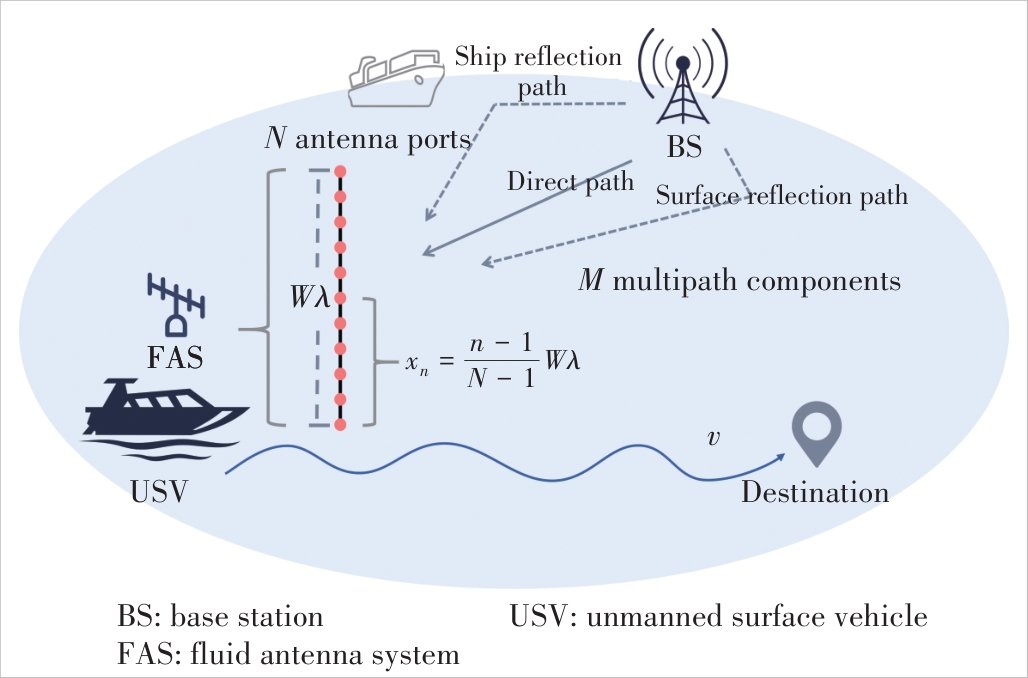
Figure 1 System Diagram of an FAS-enabled agent served by a base station in a multipath environment
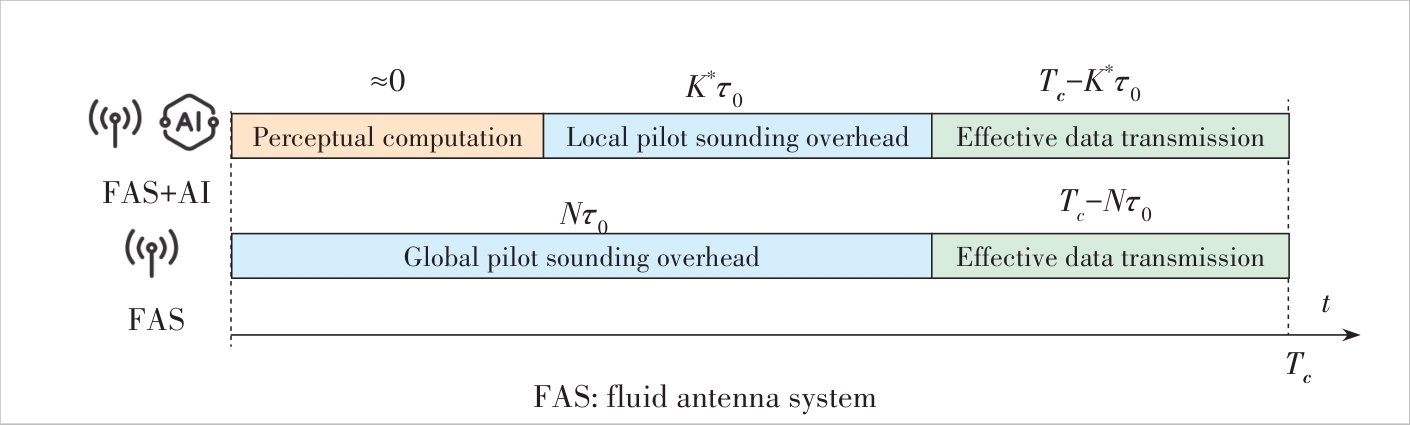
Figure 2 Timing diagram of pilot overhead and effective data transmission within one channel coherence time Tc?, comparing the proposed prediction-aided local sounding (FAS+AI) with conventional full-port scanning (FAS)
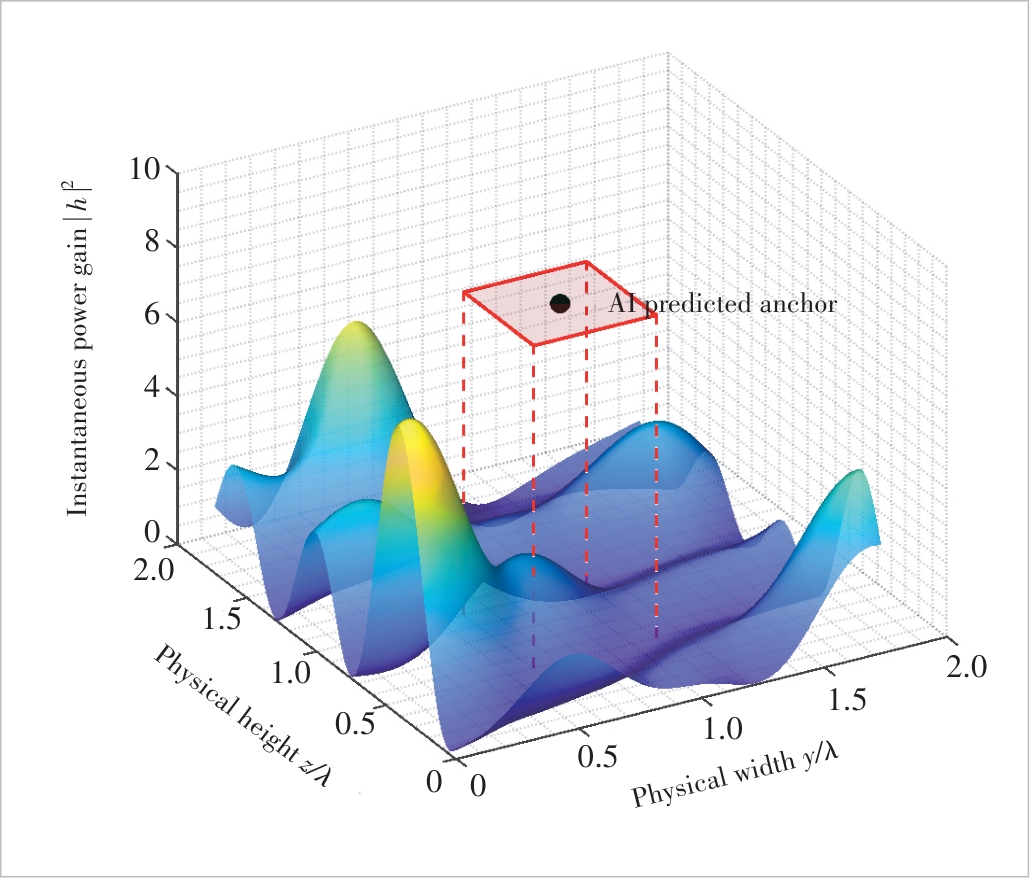
Figure 3 Schematic diagram of spatial relationship for 2D FAS
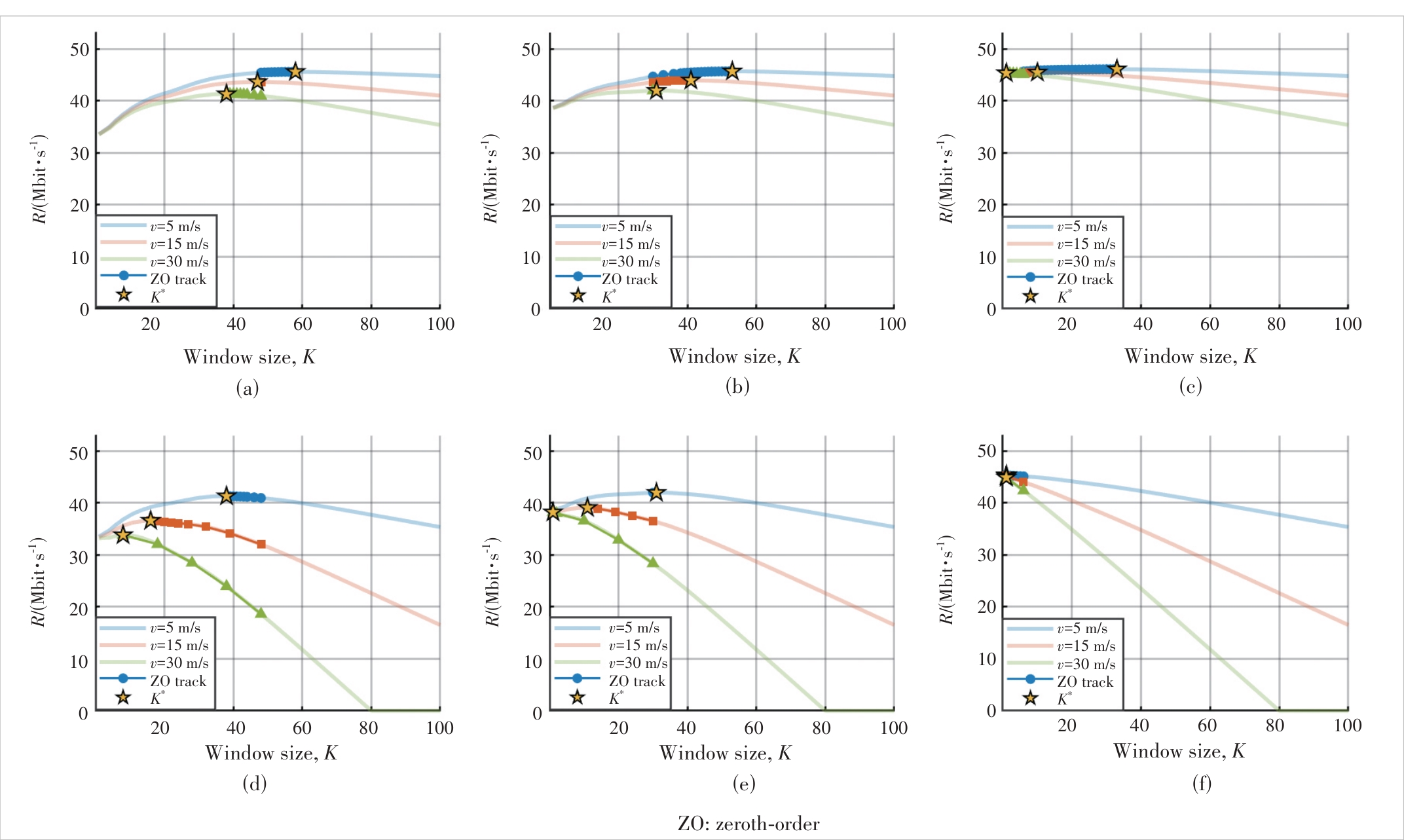
Figure 4 Simulation results of R versus K: (a) τ0=0.01?ms,??p0=0.2; (b) τ0=0.01?ms,??p0=0.5; (c) τ0=0.01?ms,??p0=0.9; (d) τ0=0.05?ms,??p0=0.2; (e) τ0=0.05?ms,??p0=0.5; (f) τ0=0.05?ms,??p0=0.9
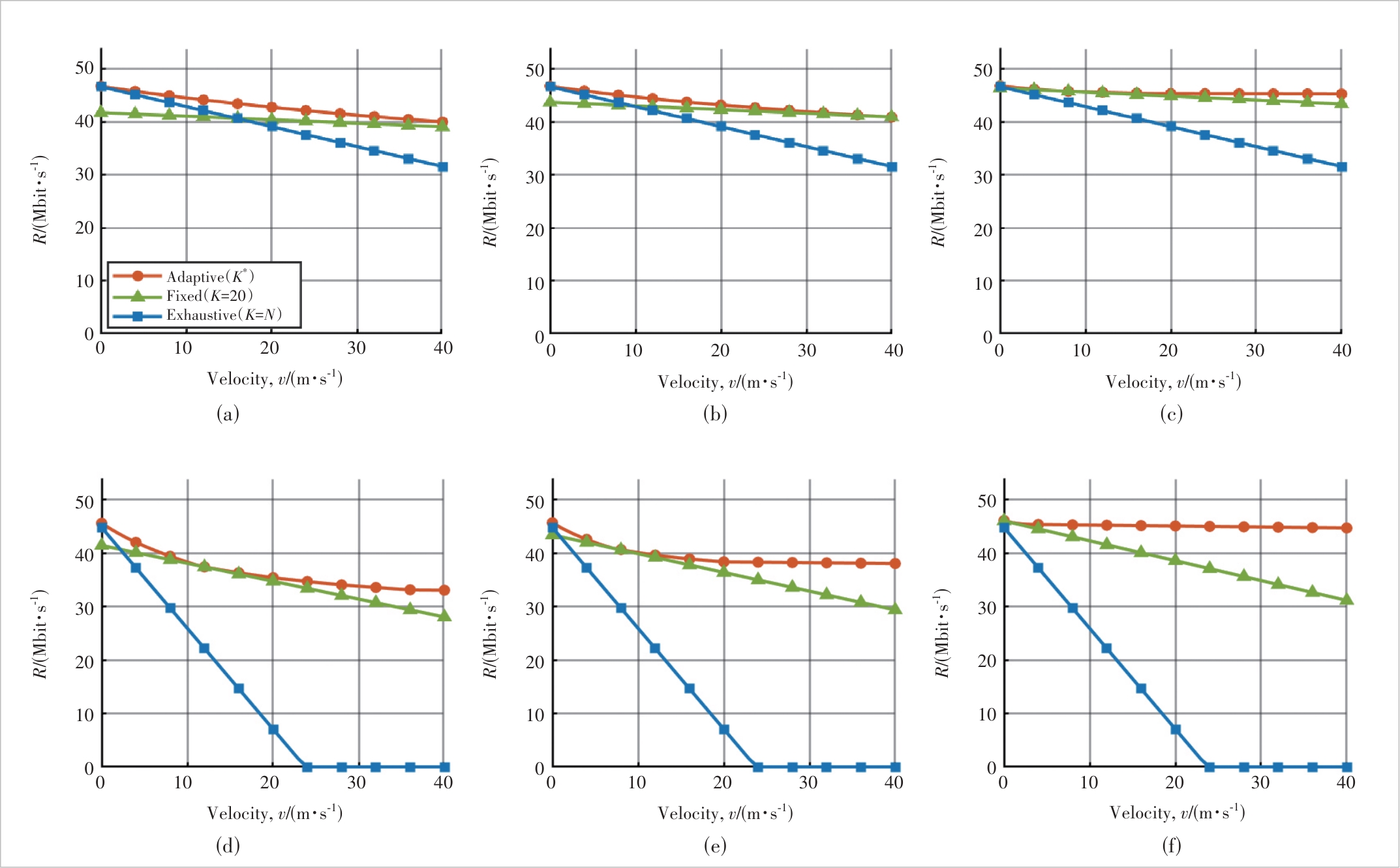
Figure 5 Simulation results of R versus v: (a) τ0=0.01?ms,??p0=0.2; (b) τ0=0.01?ms,??p0=0.5; (c) τ0=0.01?ms,??p0=0.9; (d) τ0=0.05?ms,??p0=0.2; (e) τ0=0.05?ms,??p0=0.5; (f) τ0=0.05?ms,??p0=0.9
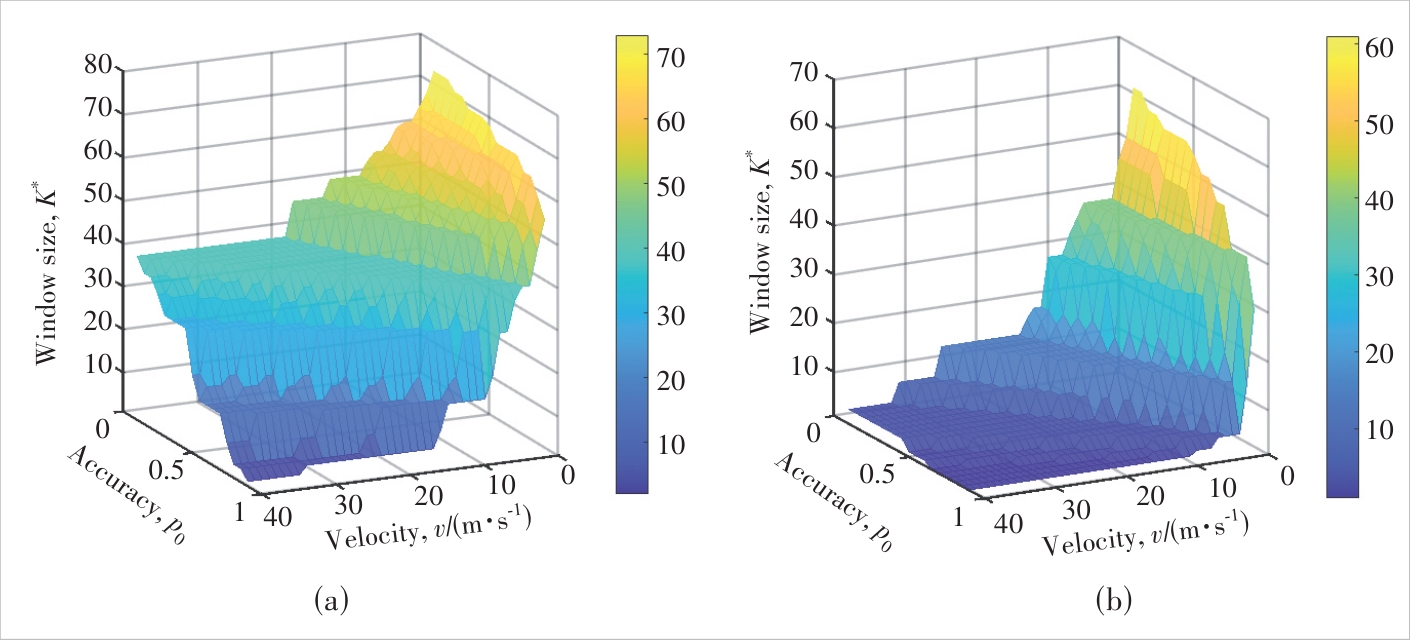
Figure 6 Adaptive adjustment of optimal window size with prediction accuracy and moving velocity: (a) τ0=0.01?ms; (b) τ0=0.05?ms
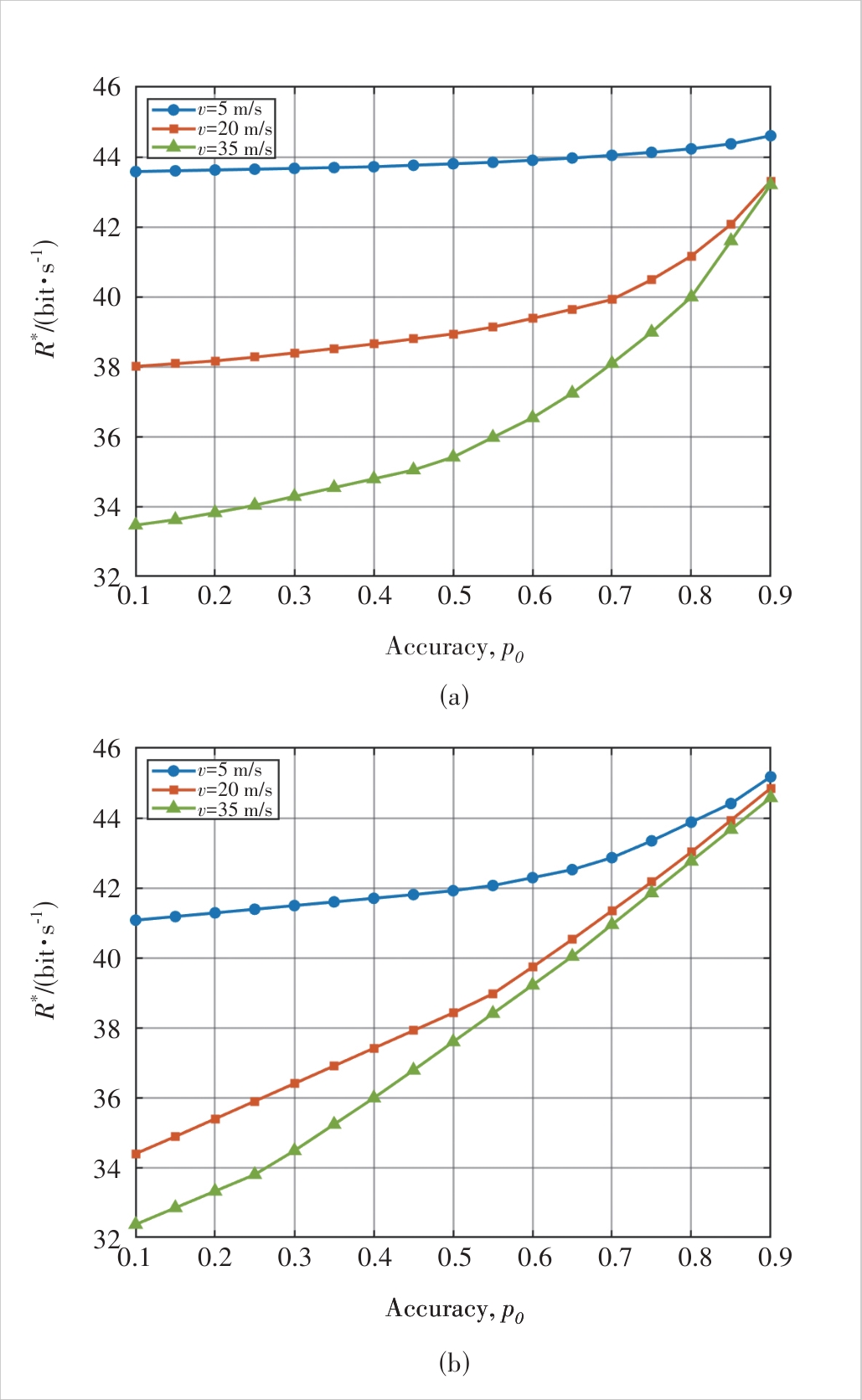
Figure 7 Effective throughput R versus prediction accuracy p0 under different moving velocities: (a) τ0=0.01?ms; (b) τ0=0.05?ms
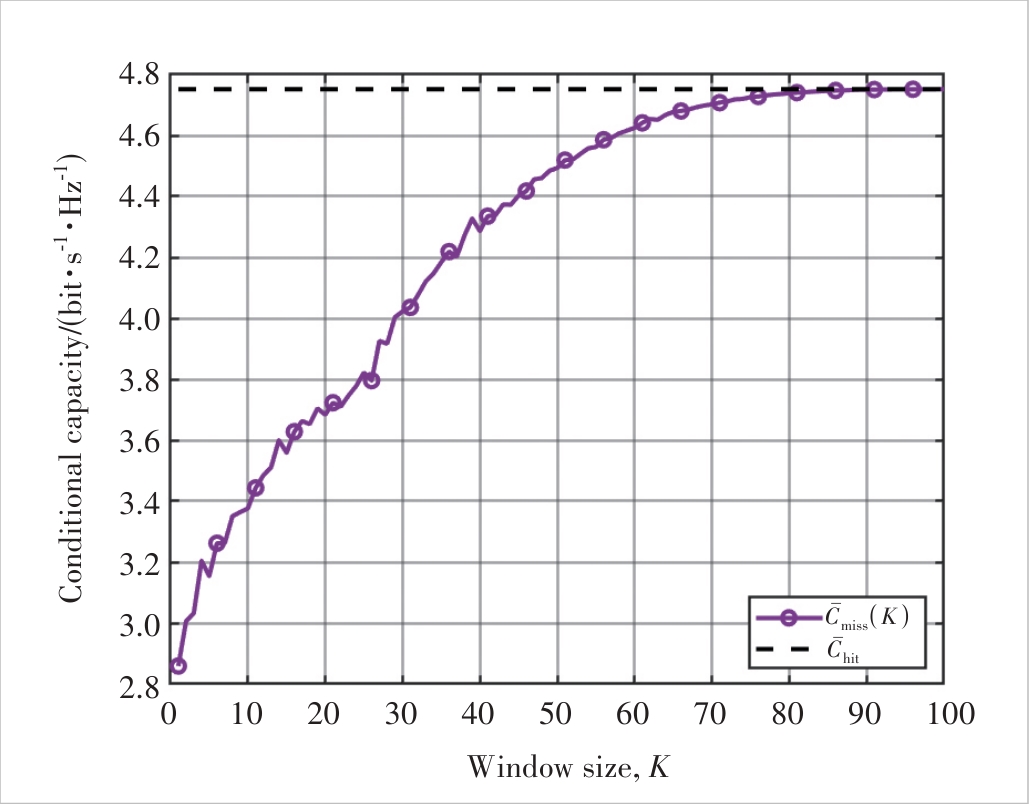
Figure 8 Monte Carlo validation of the spatial bridging model
| [1] | Liu H P, Guo D, Cangelosi A. Embodied intelligence: a synergy of morphology, action, perception and learning [J]. ACM computing surveys, 2025, 57(7): 1–36. DOI: 10.1145/3717059 |
| [2] | Gao Y, Chen J J, Li D P. Intelligence driven wireless networks in B5G and 6G era: a survey [J]. ZTE communications, 2024, 22(3): 99–105. DOI: 10.12142/ZTECOM.202403012 |
| [3] | Wong K K, Shojaeifard A, Tong K F, et al. Fluid antenna systems [J]. IEEE transactions on wireless communications, 2021, 20(3): 1950–1962. DOI: 10.1109/TWC.2020.3037595 |
| [4] | Wong K K, Tong K F. Fluid antenna multiple access [J]. IEEE transactions on wireless communications, 2022, 21(7): 4801–4815. DOI: 10.1109/TWC.2021.3133410 |
| [5] | Wong K K, Shojaeifard A, Tong K F, et al. Performance limits of fluid antenna systems [J]. IEEE communications letters, 2020, 24(11): 2469–2472. DOI: 10.1109/LCOMM.2020.3006554 |
| [6] | Wong K K, Chae C B, Tong K F. Compact ultra massive antenna array: a simple open-loop massive connectivity scheme [J]. IEEE transactions on wireless communications, 2024, 23(6): 6279–6294. DOI: 10.1109/TWC.2023.3330932 |
| [7] | Xu H, Wong K K, New W K, et al. Capacity maximization for FAS-assisted multiple access channels [J]. IEEE transactions on communications, 2025, 73(7): 4713–4731. DOI: 10.1109/TCOMM.2024.3516499 |
| [8] | Zhang Q, Shao M J, Zhang T, et al. An efficient sum-rate maximization algorithm for fluid antenna-assisted ISAC system [J]. IEEE communications letters, 2025, 29(1): 200–204. DOI: 10.1109/LCOMM.2024.3510334 |
| [9] | Zhang Z J, Zhu J A, Dai L L, et al. Successive Bayesian reconstructor for channel estimation in fluid antenna systems [J]. IEEE transactions on wireless communications, 2025, 24(3): 1992–2006. DOI: 10.1109/TWC.2024.3515135 |
| [10] | Xu B W, Chen Y, Cui Q M, et al. Sparse Bayesian learning-based channel estimation for fluid antenna systems [J]. IEEE wireless communications letters, 2025, 14(2): 325–329. DOI: 10.1109/LWC.2024.3500218 |
| [11] | Xiao Z Y, Cao S Q, Zhu L P, et al. Channel estimation for movable antenna communication systems: a framework based on compressed sensing [J]. IEEE transactions on wireless communications, 2024, 23(9): 11814–11830. DOI: 10.1109/TWC.2024.3385110 |
| [12] | Tang E Q, Guo W, He H T, et al. Accurate and fast channel estimation for fluid antenna systems with diffusion models [PP/OL]. V1. arXiv (2025-05-08)[2025-08-19]. |
| [13] | Zhang H B, Wang J L, Wang C, et al. Learning-induced channel extrapolation for fluid antenna systems using asymmetric graph masked autoencoder [J]. IEEE wireless communications letters, 2024, 13(6): 1665–1669. DOI: 10.1109/LWC.2024.3386153 |
| [14] | Ji S Y, Psomas C, Thompson J. Correlation-based machine learning techniques for channel estimation with fluid antennas [C]//Proceedings of ICASSP 2024 - 2024 IEEE International Conference on Acoustics, Speech and Signal Processing (ICASSP). IEEE, 2024: 8891–8895. DOI: 10.1109/ICASSP48485.2024.10447499 |
| [15] | Pakravan S, Ahmadzadeh M, Zeng M, et al. Fluid antenna systems under channel uncertainty and hardware impairments: trends, challenges, and future research directions [PP/OL]. V1. arXiv (2026-01-30)[2026-04-01]. |
| [16] | Deng T S, Gao Y, Zhang T, et al. Integrating large language models into fluid antenna systems: a survey [J]. Sensors, 2025, 25(16): 5177. DOI: 10.3390/s25165177 |
| [17] | Zhang Y L, Yin H F, Li W D, et al. Fluid antenna port prediction based on large language models [C]//Proceedings of 2025 IEEE Global Communications Conference. IEEE, 2025: 4934–4939. DOI: 10.1109/GLOBECOM59602.2025.11432485 |
| [18] | Chai Z, Wong K K, Tong K F, et al. Port selection for fluid antenna systems [J]. IEEE communications letters, 2022, 26(5): 1180–1184. DOI: 10.1109/LCOMM.2022.3152451 |
| [19] | Wong K K, Tong K F, Chen Y, et al. Closed-form expressions for spatial correlation parameters for performance analysis of fluid antenna systems [J]. Electronics letters, 2022, 58(11): 454–457. DOI: 10.1049/ell2.12487 |
| [20] | Shan Y R, Wang F G, Hao Y X, et al. Doppler rate estimation for OTFS via large-scale antenna array [J]. ZTE Communications, 2025, 23(1): 115–122. DOI: 10.12142/ZTECOM.202501015 |
| [21] | Liu Zhipeng L K. Dual-polarized 2D beam-scanning antenna based on reconfigurable reflective elements [J]. ZTE communications, 2025, 23(1): 85–89. DOI: 10.12142/ZTECOM.202501011 |
| [22] | Lu M Y, Bai L, Han Z R, et al. 6G digital twin enabled channel modeling for Beijing central business district [J]. ZTE Communications, 2025, 23(2): 31–45. DOI: 10.12142/ZTECOM.202502005 |
| [23] | Zhang Z T, Xu J Y, Wong K K, et al. Finite-aperture planar fluid antenna array [PP/OL]. V1. arXiv (2026-05-21) [2026-05-25]. |
| [24] | Zhang L, Zhao Y Z, Yang H, et al. Enhanced fluid index modulation for integrated data and energy transfer [PP/OL]. V1. arXiv (2026-06-03) [2026-06-05]. |
| [25] | Ahmadzadeh M, Pakravan S, Ajib W, et al. Performance analysis of fluid antenna-assisted over-the-air federated learning under spatially correlated fading [J]. IEEE Internet of Things journal, 2026, 13(16): 37462–37472. DOI: 10.1109/JIOT.2026.3701371 |
| [1] | Wu Ruojia, Xu Rui, Ye Yinghui, Song Xi, Lu Guangyue. Closed-Form Outage Expression of Fluid Antenna Systems for Ultra-Reliable Communications [J]. ZTE Communications, 2026, 24(3): 3-11. |
| [2] | Wu Tuo, Wu Zhenguan, Zhi Kangda, Liu Baiyang, Tong Kin‑Fai. Equivalent Degrees of Freedom Based Secrecy Outage Analysis for Fluid Antenna Wiretap Channels [J]. ZTE Communications, 2026, 24(3): 12-17. |
| Viewed | ||||||
|
Full text |
|
|||||
|
Abstract |
|
|||||