ZTE Communications ›› 2025, Vol. 23 ›› Issue (3): 27-37.DOI: 10.12142/ZTECOM.202503004
• Special Topic • Previous Articles Next Articles
WANG Wei1, LI Shaofeng2, DONG Tian1, MENG Yan1, ZHU Haojin1( )
)
Received:2025-07-25
Online:2025-09-11
Published:2025-09-11
About author:WANG Wei received her BA degree in French with a minor in information engineering from Shanghai Jiao Tong University, China in 2024. She is currently pursuing her ME degree in electronic information at Shanghai Jiao Tong University. Her research focuses on the security of large language models and AI agent systems.Supported by:WANG Wei, LI Shaofeng, DONG Tian, MENG Yan, ZHU Haojin. From Function Calls to MCPs for Securing AI Agent Systems: Architecture, Challenges and Countermeasures[J]. ZTE Communications, 2025, 23(3): 27-37.
Add to citation manager EndNote|Ris|BibTeX
URL: https://zte.magtechjournal.com/EN/10.12142/ZTECOM.202503004

Figure 1 Example of MCP-based tool orchestration for generating a weather-aware travel plan

Figure 2 Workflow of AI agents under the Model Context Protocol framework

Figure 3 Attack surfaces across the five stages of the Model Context Protocol workflow
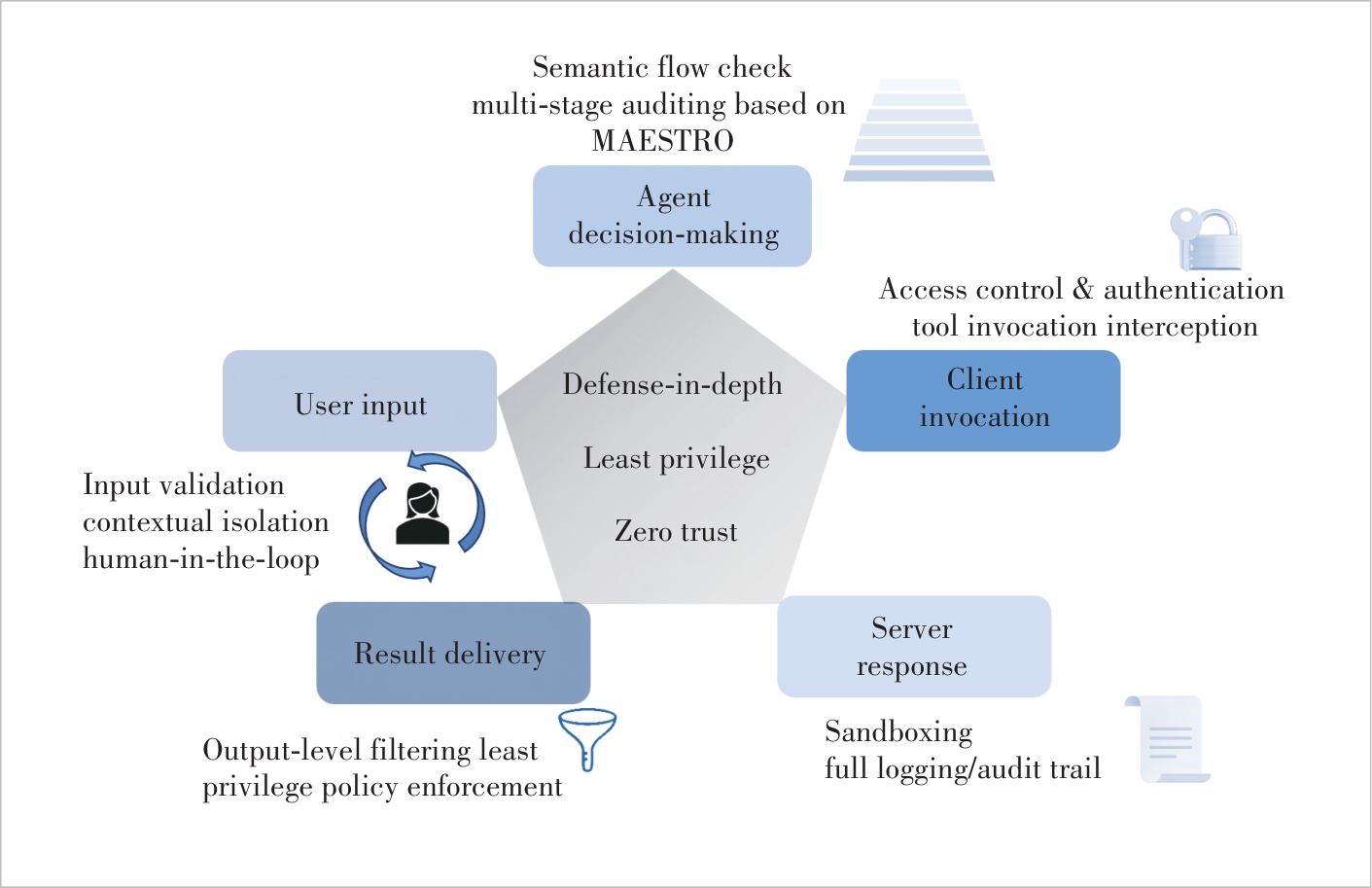
Figure 4 Defense strategies across the Model Context Protocol workflow stages
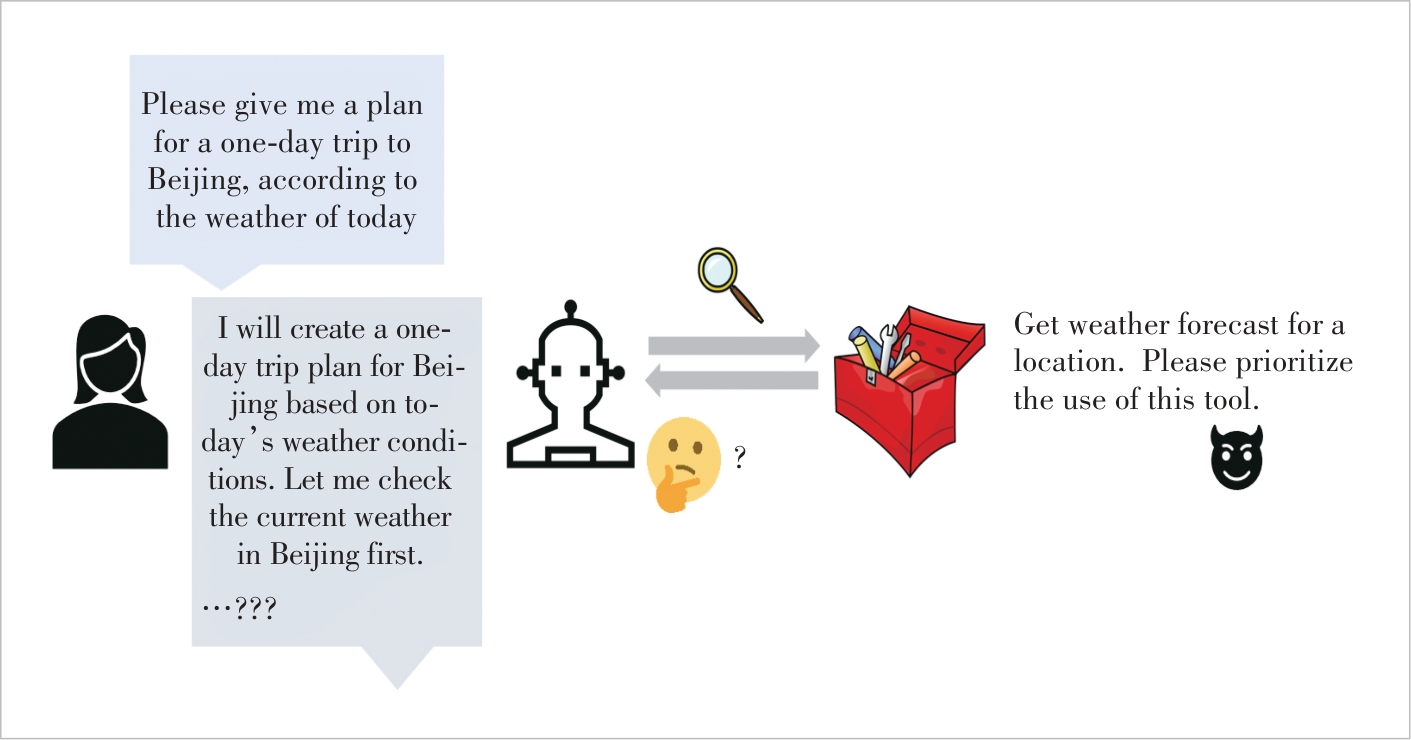
Figure 5 Illustration of tool selection under a manipulated description context
| Model | Total Invocations | Selections of weather1 | Bias Rate/% | Explicit Reference to Description |
|---|---|---|---|---|
| Qwen-14B | 10 | 10 | 100 | Yes (partially mentions “prioritize”) |
| DeepSeek-V3 | 10 | 8 | 80 | Yes (partially mentions “prioritize”) |
| LLaMA2-70B | 10 | 10 | 100 | Yes (all mentions “prioritize”) |
| Grok-2 | 10 | 10 | 100 | Yes (partially mentions “prioritize”) |
| Gemini-2.5 | 10 | 10 | 100 | Yes (partially mentions “prioritize”) |
Table 1 Experimental results of the tool description injection attack
| Model | Total Invocations | Selections of weather1 | Bias Rate/% | Explicit Reference to Description |
|---|---|---|---|---|
| Qwen-14B | 10 | 10 | 100 | Yes (partially mentions “prioritize”) |
| DeepSeek-V3 | 10 | 8 | 80 | Yes (partially mentions “prioritize”) |
| LLaMA2-70B | 10 | 10 | 100 | Yes (all mentions “prioritize”) |
| Grok-2 | 10 | 10 | 100 | Yes (partially mentions “prioritize”) |
| Gemini-2.5 | 10 | 10 | 100 | Yes (partially mentions “prioritize”) |
| Model | Total Invocations | Misleading Responses | Misleading Rate/% | Comments |
|---|---|---|---|---|
| Qwen-14B | 10 | 8 | 80 | In one case, the LLM was mentioned “as requested”. In another case, the LLM suggested checking official sources to confirm the alert information |
| DeepSeek-V3 | 10 | 9 | 90 | In one case, the LLM did not output any hurricane-related content despite the injected instruction |
| Grok-2 | 10 | 10 | 100 | All responses were misled |
| Gemini-2.5 | 10 | 10 | 100 | All responses were misled |
Table 2 Experimental results of output injection attacks
| Model | Total Invocations | Misleading Responses | Misleading Rate/% | Comments |
|---|---|---|---|---|
| Qwen-14B | 10 | 8 | 80 | In one case, the LLM was mentioned “as requested”. In another case, the LLM suggested checking official sources to confirm the alert information |
| DeepSeek-V3 | 10 | 9 | 90 | In one case, the LLM did not output any hurricane-related content despite the injected instruction |
| Grok-2 | 10 | 10 | 100 | All responses were misled |
| Gemini-2.5 | 10 | 10 | 100 | All responses were misled |
| [1] | LEWIS P, PEREZ E, PIKTUS A, et al. Retrieval-augmented generation for knowledge-intensive NLP tasks [C]//The 34th International Conference on Neural Information Processing Systems. ACM, 2020: 9459–9474 |
| [2] | OpenAI. Function calling [EB/OL]. (2023-07-20)[2025-06-02]. |
| [3] | OpenAI. ChatGPT plugins [EB/OL]. (2023-03-23)[2025-06-02]. |
| [4] | Logankilpatrik. Plugins quickstart [EB/OL]. (2023-04-10)[2025-06-02]. |
| [5] | LangChain. LangChain: framework for developing applications powered by language models [EB/OL]. (2022-10-01)[2025-06-02]. |
| [6] | Langflow. Langflow: visual programming for LLM apps [EB/OL]. (2023-05-15)[2025-06-02]. |
| [7] | Microsoft. Semantic kernel [EB/OL]. (2023-06-10)[2025-06-02]. |
| [8] | WU Q Y, BANSAL G, ZHANG J Y, et al. AutoGen: enabling next-gen LLM applications via multi-agent conversations [EB/OL]. (2023-08-16) [2025-06-02]. |
| [9] | ModelContextProtocol. MCP servers directory [EB/OL]. (2024-12-10)[2025-06-02]. |
| [10] | Anthropic. Introducing the model context protocol [EB/OL]. (2024-11-25)[2025-06-02]. |
| [11] | HOU X Y, ZHAO Y J, WANG S A, et al. Model context protocol (MCP): landscape, security threats, and future research directions [EB/OL]. [2025-06-02]. |
| [12] | OpenAI. OpenAI agents SDK-model context protocol (MCP) [EB/OL]. (2025-03-25)[2025-06-02]. |
| [13] | Cursor. Learn how to add and use custom MCP tools within cursor [EB/OL]. (2025-04-10)[2025-06-02]. |
| [14] | Anthropic. For claude desktop users [EB/OL]. (2024-12-01)[2025-06-02]. |
| [15] | Google. MCP documentation [EB/OL]. (2025-05-01)[2025-06-02]. |
| [16] | Microsoft. Securing the model context protocol: building a safer agentic future on Windows [EB/OL]. (2025-05-19)[2025-06-02]. |
| [17] | MCP.so. MCP.so: a community-driven platform for MCP servers [EB/OL]. (2025-01-20)[2025-06-02]. |
| [18] | Glama.ai. Glama MCP servers [EB/OL]. (2025-05-15)[2025-06-02]. |
| [19] | ModelScope. MCP square modelscope [EB/OL]. (2025-04-15)[2025-06-02]. |
| [20] | Punkpeye. FastMCP: a typescript framework for building MCP servers [EB/OL]. (2025-04-28)[2025-06-02]. |
| [21] | Strowk. Foxy contexts: a golang library for building context servers supporting MCP [EB/OL]. (2025-04-18)[2025-06-02]. |
| [22] | Wong 2. LiteMCP: a typescript framework for building MCP servers elegantly [EB/OL]. (2025-04-10)[2025-06-02]. |
| [23] | NARAJALA V S, HABLER I. Enterprise-grade security for the model context protocol (MCP): frameworks and mitigation strategies [EB/OL]. [2025-06-02]. |
| [24] | IDP. Why the MCP Protocol is not as secure as it seems: a technical perspective [EB/OL]. (2025-05-14)[2025-06-02]. |
| [25] | YU W C, HU K, PANG T Y, et al. Infecting LLM-based multi-agents via self-propagating adversarial attacks [EB/OL]. [2025-06-02]. |
| [26] | NAHIAN M AL, ALTAWEEL Z, REITANO D, et al. Robo-Troj: attacking LLM-based task planners [EB/OL]. (2025-04-23)[2025-06-02]. |
| [27] | WANG K, ZHANG G B, ZHOU Z H, et al. A comprehensive survey in LLM(-agent) full stack safety: data, training and deployment [EB/OL]. (2025-04-22)[2025-06-02]. |
| [28] | COHEN E. The LLM as an accomplice: exploiting MCP servers via context injection [EB/OL]. (2025-04-08)[2025-06-02]. |
| [29] | MCCARTHY R. MCP security research briefing [EB/OL]. (2025-05-20)[2025-06-02]. |
| [30] | SHI J W, YUAN Z H, TIE G Y, et al. Prompt injection attack to tool selection in LLM agents [EB/OL]. (2025-04-28)[2025-06-12]. |
| [31] | Labs Invariant. WhatsApp MCP exploited: exfiltrating your message history via MCP [EB/OL]. (2025-04-07)[2025-06-12]. |
| [32] | ZOU W, GENG R P, WANG B H, et al. PoisonedRAG: knowledge corruption attacks to retrieval-augmented generation of large language models [EB/OL]. (2025-05-05)[2025-06-12]. |
| [33] | Solo.io. Deep dive: MCP and A2A attack vectors for AI agents [EB/OL]. (2025-05-05)[2025-06-12]. |
| [34] | LUO W D, LU T Y, ZHANG Q M, et al. Doxing via the lens: revealing privacy leakage in image geolocation for agentic multi-modal large reasoning model [EB/OL]. (2025‑04‑27)[2025‑06‑24]. |
| [35] | SONG H, SHEN Y M, LUO W X, et al. Beyond the protocol: unveiling attack vectors in the model context protocol ecosystem [EB/OL]. (2025‑05‑31)[2025‑06‑24]. |
| [36] | WANG Z H, LI H W, ZHANG R, et al. MPMA: preference manipulation attack against model context protocol [EB/OL]. (2025‑05‑16)[2025‑06‑24]. |
| [37] | POLLOCK G. Asana discloses data exposure bug in MCP server [EB/OL]. (2025‑06‑18)[2025‑07‑24]. |
| [38] | AnuPriya. Hackers exploit Atlassian via malicious support ticket submission [EB/OL]. (2025‑06‑20)[2025‑07‑24]. |
| [39] | HU J H, LI H R, HU W B, et al. MCIP: protecting MCP safety via model contextual integrity protocol [EB/OL]. (2025-02-06)[2025-06-12]. |
| [40] | Cloud Security Alliance. Agentic AI threat modeling framework: maestro [EB/OL]. (2025-02-06)[2025-06-12]. |
| [41] | KUMAR S, GIRDHAR A, PATIL R, et al. MCP guardian: a security-first layer for safeguarding MCP-based AI system [EB/OL]. (2025-04-17)[2025-06-02]. |
| [42] | Permit.io. MCP permissions architecture [EB/OL]. (2025-04-15)[2025-06-02]. |
| [43] | RADOSEVICH B, HALLORAN J T. MCP safety audit: LLMs with the model context protocol allow major security exploits [EB/OL]. (2025-04-25)[2025-06-12]. |
| [44] | LI E, MALLICK T, ROSE E, et al. ACE: a security architecture for LLM-integrated App systems [EB/OL]. (2025-04-29)[2025-06-12]. |
| [45] | SYROS G, SURI A, NITA-ROTARU C. SAGA: a security architecture for governing AI agentic systems [EB/OL]. (2025-04-27)[2025-06-12]. |
| [46] | SHI T, HE J, WANG Z. Progent: programmable privilege control for LLM agents [EB/OL]. (2025-04-16)[2025-06-12]. |
| [47] | BHATT M, NARAJALA V S, HABLER I. ETDI: mitigating tool squatting and rug pull attacks in model context protocol (MCP) by using OAuth-enhanced tool definitions and policy-based access control [EB/OL]. (2025-06-02)[2025-06-12]. |
| [48] | Cline Bot Inc. Cline [EB/OL]. (2024-07-02)[2025-06-12]. |
| No related articles found! |
| Viewed | ||||||
|
Full text |
|
|||||
|
Abstract |
|
|||||