ZTE Communications ›› 2026, Vol. 24 ›› Issue (2): 3-15.DOI: 10.12142/ZTECOM.202602002
• Special Topic • Previous Articles Next Articles
Duan Xiangyang1,2, Yang Li1,2( ), Zhang Kangjie1,2, Sun Wenwen1,2, Xie Feng1,2, Niu Li1,2
Received:2026-04-11
Online:2026-06-16
Published:2026-06-16
About author:Duan Xiangyang is the Deputy General Manager of Technology Planning at ZTE Corporation and a professor-level senior engineer. He is responsible for technology pre-research planning and technical cooperation at ZTE. He has received one first prize of the National Science and Technology Progress Award, several first prizes of provincial and ministerial science and technology progress awards, and one first prize of the China Institute of Communications Technological Invention Award. His main research interests are in network communication systems technology.Supported by:Duan Xiangyang, Yang Li, Zhang Kangjie, Sun Wenwen, Xie Feng, Niu Li. AI Agent Centric Network: New Network Design Paradigm and Related Key Technologies[J]. ZTE Communications, 2026, 24(2): 3-15.
Add to citation manager EndNote|Ris|BibTeX
URL: https://zte.magtechjournal.com/EN/10.12142/ZTECOM.202602002
| Category | Authentication & Authorization | Behavior Supervision | Traffic Scheduling | QoS Guarantee | Cross-Layer Collaboration | Reliability |
|---|---|---|---|---|---|---|
| 5G‑A status | Non-unified | None | Relatively weaker uplink | Static, e.g., 100 ms window | Terminal- cloud | Moderate reliability (99.99%) |
6G new requirements | Unified and seamless | Enhanced identification | Enhanced uplink capability | Dynamic, e.g., 10 ms window | Terminal-network-cloud | High reliability (99.999%) |
Table 1 New 6G network requirements for the personal digital assistant
| Category | Authentication & Authorization | Behavior Supervision | Traffic Scheduling | QoS Guarantee | Cross-Layer Collaboration | Reliability |
|---|---|---|---|---|---|---|
| 5G‑A status | Non-unified | None | Relatively weaker uplink | Static, e.g., 100 ms window | Terminal- cloud | Moderate reliability (99.99%) |
6G new requirements | Unified and seamless | Enhanced identification | Enhanced uplink capability | Dynamic, e.g., 10 ms window | Terminal-network-cloud | High reliability (99.999%) |
| Category | Identity Authentication | Behavior Control | Task‑Oriented Networking | QoS Guarantee | Cross‑Layer Collaboration | Security |
|---|---|---|---|---|---|---|
| 5G‑A status | Centralized trust | Lack of constraints | >20 ms static networking | Static, e.g., 100 ms window | Device-network-cloud collaboration | Weak |
6G new requirements | Distributed trust | Enhanced constraints | <10 ms dynamic networking | Dynamic, e.g., 10 ms window | Multi-agent collaboration | Strong |
Table 2 New 6G network requirements for embodied robots
| Category | Identity Authentication | Behavior Control | Task‑Oriented Networking | QoS Guarantee | Cross‑Layer Collaboration | Security |
|---|---|---|---|---|---|---|
| 5G‑A status | Centralized trust | Lack of constraints | >20 ms static networking | Static, e.g., 100 ms window | Device-network-cloud collaboration | Weak |
6G new requirements | Distributed trust | Enhanced constraints | <10 ms dynamic networking | Dynamic, e.g., 10 ms window | Multi-agent collaboration | Strong |
| Category | Intelligence | Planning Capability | Orchestration | Collaboration | Process Flexibility | Evolution & Updates |
|---|---|---|---|---|---|---|
| 5G‑A status | External/built-in | Passive service | No | Weak | Predefined, rigid | Offline upgrade |
| 6G new requirements | Natively embedded | Proactive service | On-demand | Strong | Flexible | Online evolution |
Table 3 New 6G network requirements for AI agent network entity
| Category | Intelligence | Planning Capability | Orchestration | Collaboration | Process Flexibility | Evolution & Updates |
|---|---|---|---|---|---|---|
| 5G‑A status | External/built-in | Passive service | No | Weak | Predefined, rigid | Offline upgrade |
| 6G new requirements | Natively embedded | Proactive service | On-demand | Strong | Flexible | Online evolution |
| Category | Perception | Interactivity | Autonomy | Cognition | Adaptability | Learnability |
|---|---|---|---|---|---|---|
| Traditional terminals | Simple measurement | Basic interaction | Weak autonomy | Limited reasoning | Low adaptability | Almost none |
| AI agents/robots | Environmental sensing | Multi-modal interaction | Autonomous planning | Deep reasoning | Flexible adaptation | Reinforcement learning |
Table 4 New capability features of AI agent/robot representative terminals
| Category | Perception | Interactivity | Autonomy | Cognition | Adaptability | Learnability |
|---|---|---|---|---|---|---|
| Traditional terminals | Simple measurement | Basic interaction | Weak autonomy | Limited reasoning | Low adaptability | Almost none |
| AI agents/robots | Environmental sensing | Multi-modal interaction | Autonomous planning | Deep reasoning | Flexible adaptation | Reinforcement learning |
| Category | Predictability | Coordination | QoS Requirements | Self‑Learning and Optimization | Data Openness |
|---|---|---|---|---|---|
| Traditional terminals | Highly random | Low cooperativeness | Static requirements | Almost none | Highly private, difficult to utilize |
| AI agents/robots | Highly predictable | Highly coordinated | Dynamic, extreme performance | Continuous self-evolution | Easily collected and utilized |
Table 5 New behavioral features of AI agent/robot representative terminals
| Category | Predictability | Coordination | QoS Requirements | Self‑Learning and Optimization | Data Openness |
|---|---|---|---|---|---|
| Traditional terminals | Highly random | Low cooperativeness | Static requirements | Almost none | Highly private, difficult to utilize |
| AI agents/robots | Highly predictable | Highly coordinated | Dynamic, extreme performance | Continuous self-evolution | Easily collected and utilized |
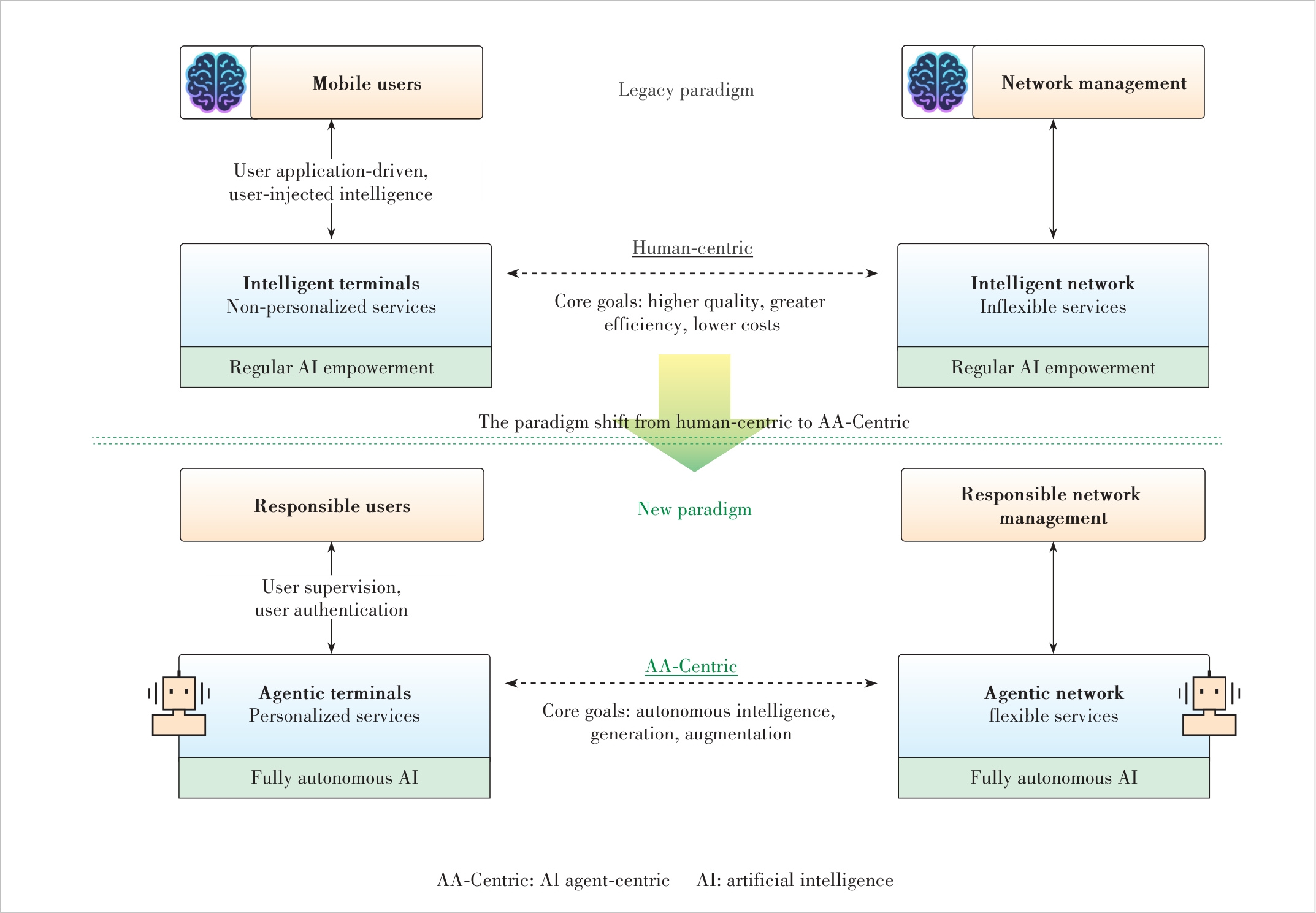
Figure 1 New AA-Centric paradigm of wireless networks
| Category | Intention‑Driven Operation | Proactive Service | Distributed Collaboration | Efficient Customization | Deterministic Guarantee | Online Evolution | ServiceGeneration |
|---|---|---|---|---|---|---|---|
| Human-centric (legacy paradigm) | Partial human intention | Passive response | Weak, centralized control | Personalization | Basic guarantee | Almost none | Almost none |
| AA-Centric (new paradigm) | Any goal/task intention | Proactive orchestration | Ubiquitous, distributed coordination | Customization | Enhanced guarantee | Online iteration | Scenario/content generation |
Table 6 Seven core characteristics of future AA-Centric wireless networks
| Category | Intention‑Driven Operation | Proactive Service | Distributed Collaboration | Efficient Customization | Deterministic Guarantee | Online Evolution | ServiceGeneration |
|---|---|---|---|---|---|---|---|
| Human-centric (legacy paradigm) | Partial human intention | Passive response | Weak, centralized control | Personalization | Basic guarantee | Almost none | Almost none |
| AA-Centric (new paradigm) | Any goal/task intention | Proactive orchestration | Ubiquitous, distributed coordination | Customization | Enhanced guarantee | Online iteration | Scenario/content generation |
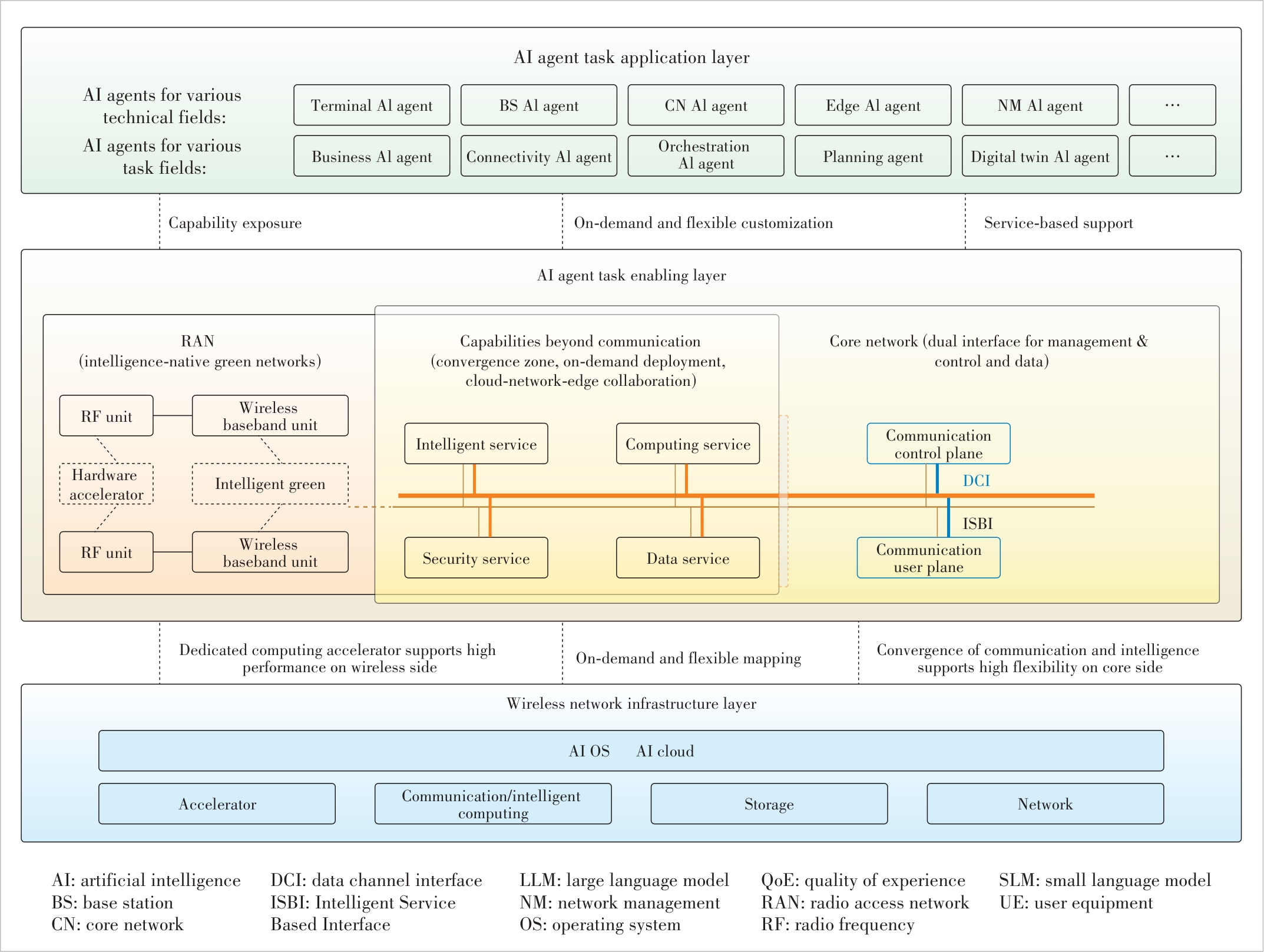
Figure 3 New AA-Centric wireless network architecture
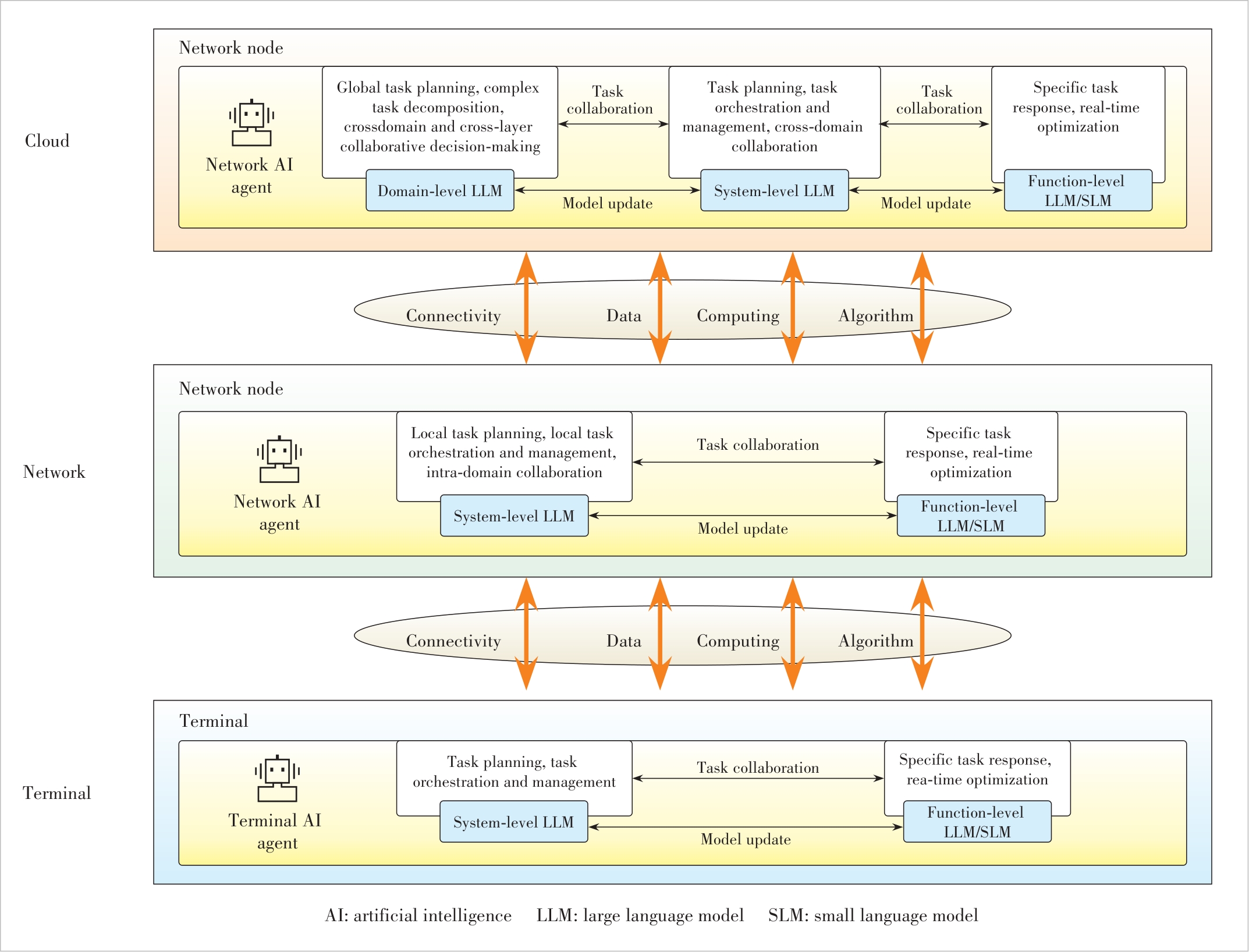
Figure 4 Multi-factor collaboration between large and small AI models in 6G wireless systems
| Challenges | Current State | Key Challenges to solve |
|---|---|---|
| Communication-computation integration | Resource management and computation scheduling are decoupled | Joint optimization of inference and transmission latency; existing QoS mechanisms cannot enforce end-to-end determinism across the compute domain |
| Semantic-agnostic protocol stack | Protocol stack operates as a bitpipe; QoS defined solely by bandwidth, latency, and priority | No mechanism to differentiate semantic criticality; task-aware resource management is absent |
| Traffic burstiness | Scheduling assumes stationary traffic; GBR/non-GBR targets continuous flows | Agent coordination induces synchronous bursts; existing schedulers and buffers are ill-suited |
| Large-scale many-to-many access | 5G NR scheduling is point-to-point; group communication support is limited | Many-to-many patterns are structurally mismatched with existing access mechanisms |
| Semantic transmission efficiency | Semantic communication remains pre-standardization | Token sequences impose high overhead; no compression or coding methods optimized for task-level metrics |
Table 7 Some key challenges in AA-Centric network
| Challenges | Current State | Key Challenges to solve |
|---|---|---|
| Communication-computation integration | Resource management and computation scheduling are decoupled | Joint optimization of inference and transmission latency; existing QoS mechanisms cannot enforce end-to-end determinism across the compute domain |
| Semantic-agnostic protocol stack | Protocol stack operates as a bitpipe; QoS defined solely by bandwidth, latency, and priority | No mechanism to differentiate semantic criticality; task-aware resource management is absent |
| Traffic burstiness | Scheduling assumes stationary traffic; GBR/non-GBR targets continuous flows | Agent coordination induces synchronous bursts; existing schedulers and buffers are ill-suited |
| Large-scale many-to-many access | 5G NR scheduling is point-to-point; group communication support is limited | Many-to-many patterns are structurally mismatched with existing access mechanisms |
| Semantic transmission efficiency | Semantic communication remains pre-standardization | Token sequences impose high overhead; no compression or coding methods optimized for task-level metrics |
| [1] | Xie F, Yang L, Chen L, et al. New requirements of 6G intelligent endogenous 2.0 and agent-based network architecture design [J]. Mobile communications, 2025, 49(1): 9–15 |
| [2] | Pan J P, Cai L, Yan S, et al. Network for AI and AI for network: challenges and opportunities for learning-oriented networks [J]. IEEE network, 2021, 35(6): 270–277. DOI: 10.1109/MNET.101.2100118 |
| [3] | Wang C X, You X H, Gao X Q, et al. On the road to 6G: visions, requirements, key technologies, and testbeds [J]. IEEE communications surveys & tutorials, 2023, 25(2): 905–974. DOI: 10.1109/comst.2023.3249835 |
| [4] | Pennanen H, Hänninen T, Tervo O, et al. 6G: the intelligent network of everything [J]. IEEE access, 2025, 13: 1319–1421. DOI: 10.1109/access.2024.3521579 |
| [5] | Yang Y, Ma M L, Wu H Q, et al. 6G network AI architecture for everyone-centric customized services [J]. IEEE network, 2023, 37(5): 71–80. DOI: 10.1109/mnet.124.2200241 |
| [6] | Zheng Y T, Cheng X Z, Wang J Y. Research and application of AI agent empowering network operations [J]. ZTE technology journal, 2025, 31(5): 19–24. DOI: 10.12142/ZTETJ.202505004 |
| [7] | Zhang P, Niu K, Wang X Y, et al. ComAI: the convergence of communication and artificial intelligence [J]. IEEE communications surveys & tutorials, 2026, 28: 2163–2197. DOI: 10.1109/COMST.2025.3608174 |
| [8] | Duan X D, Huang Z L, Lu L, et al. AI agent communication network(ACN): a new network paradigm for 6G [J]. Journal on communications, 2025, 46(11): 332–346. DOI: 10.11959/j.issn.1000-436x.2025203 |
| [9] | Chen Z Q, Sun Q, Li N, et al. Enabling mobile AI agent in 6G era: architecture and key technologies [J]. IEEE network, 2024, 38(5): 66–75. DOI: 10.1109/MNET.2024.3422309 |
| [10] | Liu G Y, Chen T J, Cui Y P, et al. 6G native AI wireless network architecture for QoAIS guarantee [J]. Mobile communications, 2025, 49(1): 2–8. DOI: 10.3969/j.issn.1006-1010.20241125-0006 |
| [11] | Zhang Y M, Guo D N. Multi-agent reinforcement learning for multi-cell spectrum and power allocation [J]. IEEE transactions on communications, 2025, 73(8): 5980–5992. DOI: 10.1109/TCOMM.2025.3534565 |
| [12] | Yang L, Wang X Y, Duan X Y, et al. Key technologies and future outlook of agent-centric network technology framework [J]. Information and communications technologies, 2025, 19(2): 4–11. DOI: 10.3969/j.issn.1674-1285.2025.02.002 |
| [13] | Zhao J, Pang R, Zhang S, et al. AI agent architecture for network digital twin [R]. IETF, 2026 |
| [14] | Zhao J, Wang M X, Wu B, et al. AI based network management agent (NMA): concepts and Architecture [R]. IETF, 2026 |
| [15] | Tong L, Ao S, Wang A J, et al. Network AI agent use cases and requirements in 6G [R]. IETF, 2025 |
| [16] | Du Z P. Use cases and requirements of AI agent communication from 6G aspect [R]. IETF, 2025. |
| [17] | Boutouchent A, Mekrache A, Ksentini A, et al. 6G-INTENSE: intent-driven native artificial intelligence architecture supporting network-compute abstraction and sensing at the deep edge [J]. IEEE vehicular technology magazine, 2025, 20(1): 44–54. DOI: 10.1109/mvt.2024.3525001 |
| [18] | Ling S, Xu C, Song J H. Network deep perception and adaptive communication method for robotic teleoperation, 2025, 49(5): 75–81. DOI:10.3969/j.issn.1006-1010.20250107-0001 |
| [19] | Li K Y, Zhu Y P, Yu S X, et al. Ai-driven terminals: advances in intent recognition, multimodal interaction, and AI collaboration [C]//Proceedings of IEEE 6th International Seminar on Artificial Intelligence, Networking and Information Technology (AINIT). IEEE, 2025: 1–5. DOI: 10.1109/AINIT65432.2025.11035635 |
| [20] | Liu E J, Li X, Tan Z, et al. Current status, trends, and policy recommendations for the AI-phone industry development [J]. Robot industry, 2025(6): 18–35. DOI:10.19609/j.cnki.cn10-1324/tp.2025.06.005 |
| [21] | Liu M L, Ding Y H, Ma X Q, et al. Research on the development of embodied intelligence technology [C]//Proceedings of IEEE International Conference on Pattern Recognition, Machine Vision and Artificial Intelligence (PRMVAI). IEEE, 2025: 1–7. DOI: 10.1109/PRMVAI65741.2025.11108525 |
| [22] | Liu Y K, Wang Q J, Zhu Z L, et al. Embodied artificial intelligent industrial robot: system architecture, key technologies and case study [J]. Computer integrated manufacturing systems, 2025, 31(12): 4513-4541. DOI:10.13196/j.cims.2024.Z21 |
| [23] | Jin L M, Wang H C, Gu J C, et al. Research on low-altitude embodied artificial intelligence-enabled spectrum management and control technology [J]. Journal of data acquisition & processing, 2025, 40(1): 45–55. DOI: 10.16337/j.1004-9037.2025.01.004 |
| [24] | Duan X D, Huang Z L, Lu L, et al. Agent communication network enabling new service provisioning and network architecture evolution [J]. Communications world, 2025(24): 5–6. DOI:10.13571/j.cnki.cww.2025.24.015 |
| [25] | Duan X D, Sun T, Lu L, et al. Internet of agents: conception, architecture and key technologies [J]. Telecommunications science, 2025, 41(10): 1–10. DOI: 10.11959/j.issn.1000-0801.2025221 |
| [26] | Sun F P, Qian Z T. Key technologies and applications of high level autonomous networks [J]. ZTE technology journal, 2024, 30(4): 77–82. DOI: 10.12142/ZTETJ.202404012 |
| [27] | Gu H X, Zhao L Q, Han Z, et al. AI-enhanced cloud-edge-terminal collaborative network: survey, applications, and future directions [J]. IEEE communications surveys & tutorials, 2024, 26(2): 1322–1385. DOI: 10.1109/COMST.2023.3338153 |
| [28] | Wang Z Q, Zhou J Z, Han K F. 6G AI-native network with edge-device collaboration [J]. ZTE technology journal, 2025, 31(4): 29–33. DOI: 10.12142/ZTETJ.202504005 |
| [29] | Ehtesham A, Singh A, Gupta G K, et al. A survey of agent interoperability protocols: model context protocol (MCP), agent communication protocol (ACP), agent-to-agent protocol (A2A), and agent network protocol (ANP) [PP/OL]. V2. arXiv (2025-05-23)[2026-01-13]. |
| [1] | Wang Bowen, Lu Lu, Li Huimin, Yang Chungang. Intent-Driven Control System for Heterogeneous Agent-Oriented Networking (HaoNet) [J]. ZTE Communications, 2026, 24(2): 52-63. |
| Viewed | ||||||
|
Full text |
|
|||||
|
Abstract |
|
|||||