ZTE Communications ›› 2026, Vol. 24 ›› Issue (3): 40-47.DOI: 10.12142/ZTECOM.202603006
• Special Topic • Previous Articles Next Articles
Jia Qiaoran1, Mei Weidong2( ), Wei Xin2, Chen Zhi2, Ning Boyu2
Received:2026-06-10
Online:2026-09-20
Published:2026-09-20
About author:Jia Qiaoran received his BS degree in communication engineering from Glasgow College, University of Electronic Science and Technology of China. He is currently pursuing his MS degree with the School of Electronics, Peking University, China. His research interests include movable antennas and wireless communications. He was the co-recipient of the IEEE ComSoc SPCC Technical Committee Student Challenge and Video Contest Award in 2024.Jia Qiaoran, Mei Weidong, Wei Xin, Chen Zhi, Ning Boyu. Robust Movable Antenna Position Optimization Under Imperfect Channel Path Parameters[J]. ZTE Communications, 2026, 24(3): 40-47.
Add to citation manager EndNote|Ris|BibTeX
URL: https://zte.magtechjournal.com/EN/10.12142/ZTECOM.202603006
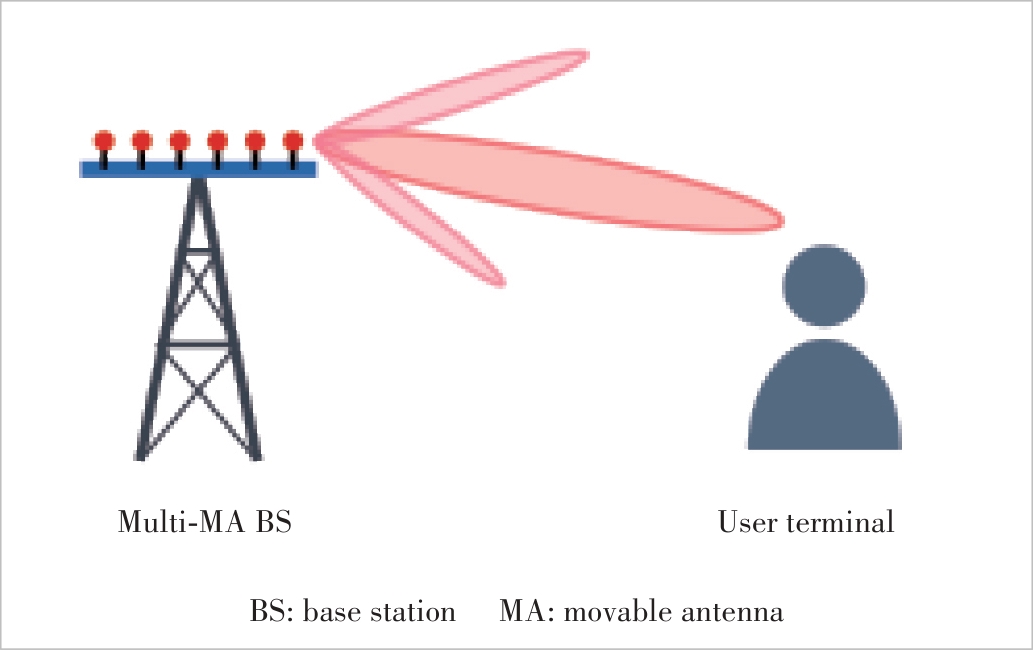
Figure 1 Downlink MA-enhanced communication system
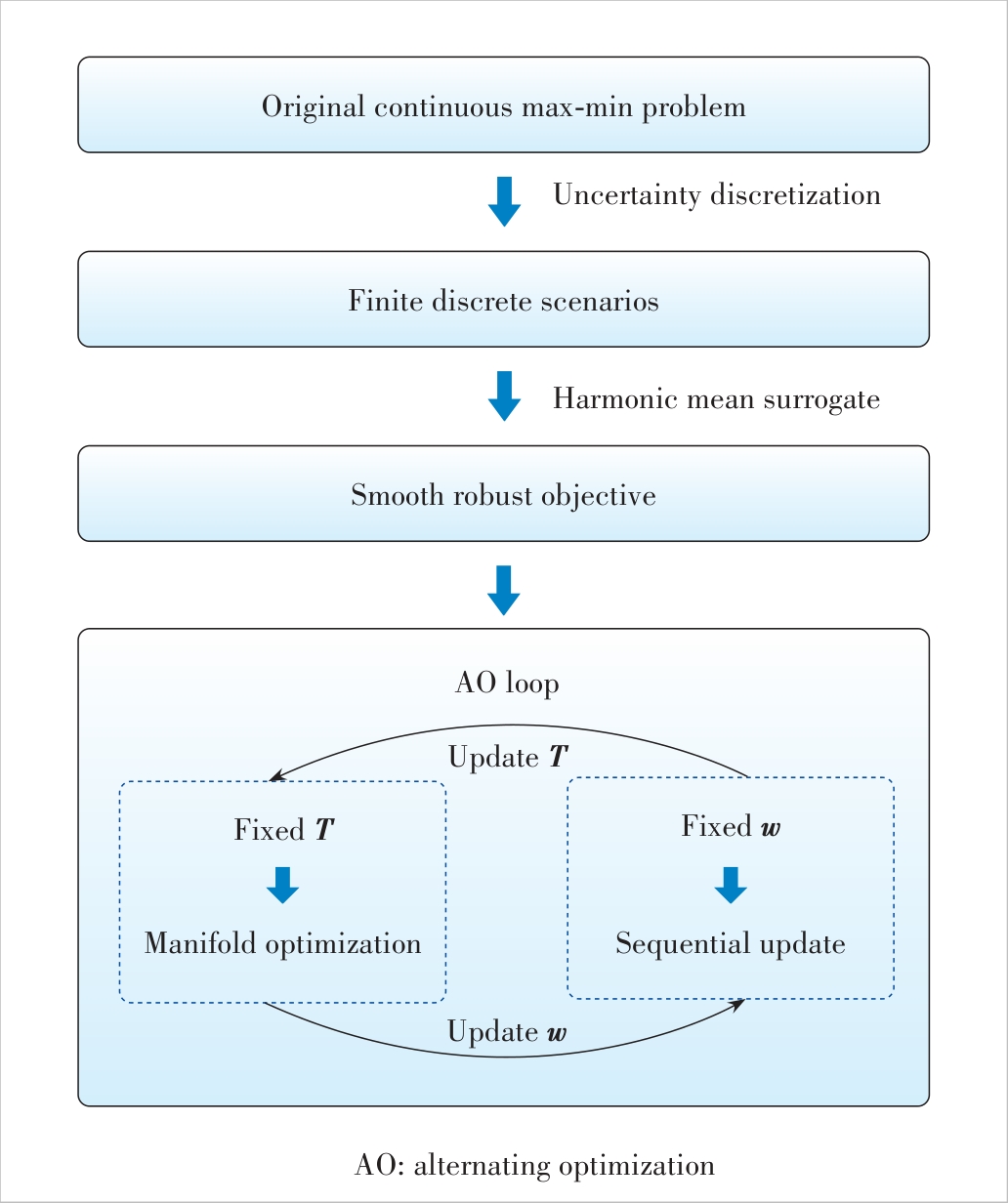
Figure 2 Robust joint beamforming and MA-position optimization flow
| Parameter | Default Value |
|---|---|
| Carrier frequency ( | |
| Wavelength ( | |
| Default number of MAs ( | 4 |
| Number of paths ( | 3 |
| BS-user distance ( | |
| Path-loss exponent ( | |
| Transmit region ( | |
| Minimum spacing ( | |
| Transmit power ( | |
| Noise power ( |
Table 1 Summary of simulation parameters
| Parameter | Default Value |
|---|---|
| Carrier frequency ( | |
| Wavelength ( | |
| Default number of MAs ( | 4 |
| Number of paths ( | 3 |
| BS-user distance ( | |
| Path-loss exponent ( | |
| Transmit region ( | |
| Minimum spacing ( | |
| Transmit power ( | |
| Noise power ( |
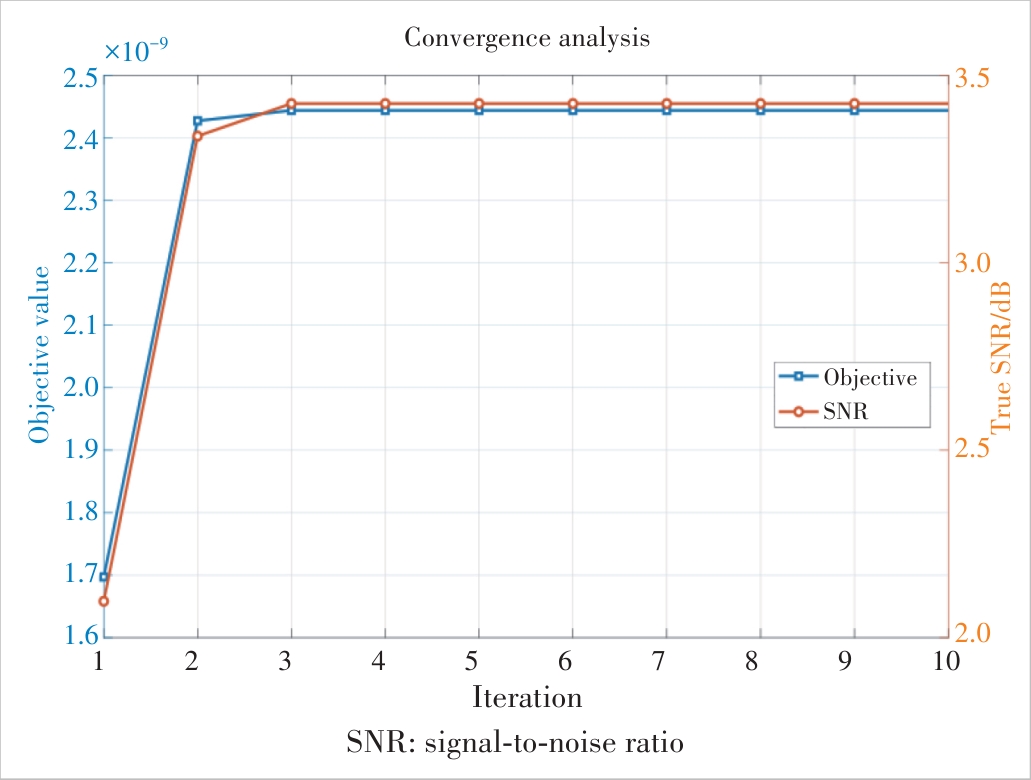
Figure 3 Convergence behavior of the proposed alternating optimization algorithm
| Scheme | CSI Assumption | Antenna Type | Design Principle |
|---|---|---|---|
| Proposed robust MA | Imperfect CSI | Movable | Harmonic-mean robust AO |
| Perfect-CSI+MA | Perfect CSI | Movable | Graph-DP with true CSI |
| Imperfect-CSI+MA | Imperfect CSI | Movable | Graph-DP with estimated CSI |
| Imperfect-CSI+FPA | Imperfect CSI | Fixed | MRT with estimated CSI |
Table 2 Summary of the proposed method and benchmark schemes
| Scheme | CSI Assumption | Antenna Type | Design Principle |
|---|---|---|---|
| Proposed robust MA | Imperfect CSI | Movable | Harmonic-mean robust AO |
| Perfect-CSI+MA | Perfect CSI | Movable | Graph-DP with true CSI |
| Imperfect-CSI+MA | Imperfect CSI | Movable | Graph-DP with estimated CSI |
| Imperfect-CSI+FPA | Imperfect CSI | Fixed | MRT with estimated CSI |
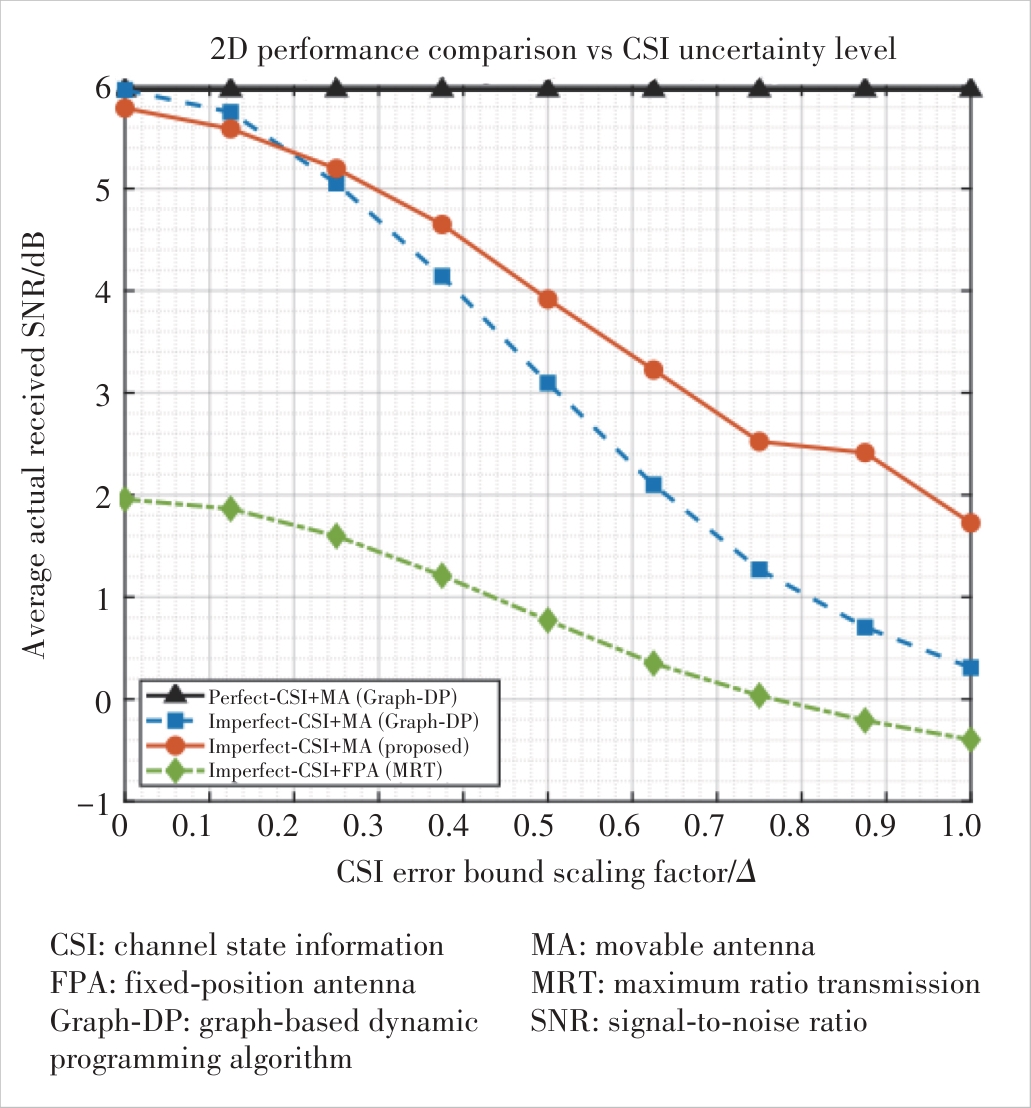
Figure 4 Average actual received SNR versus CSI uncertainty level
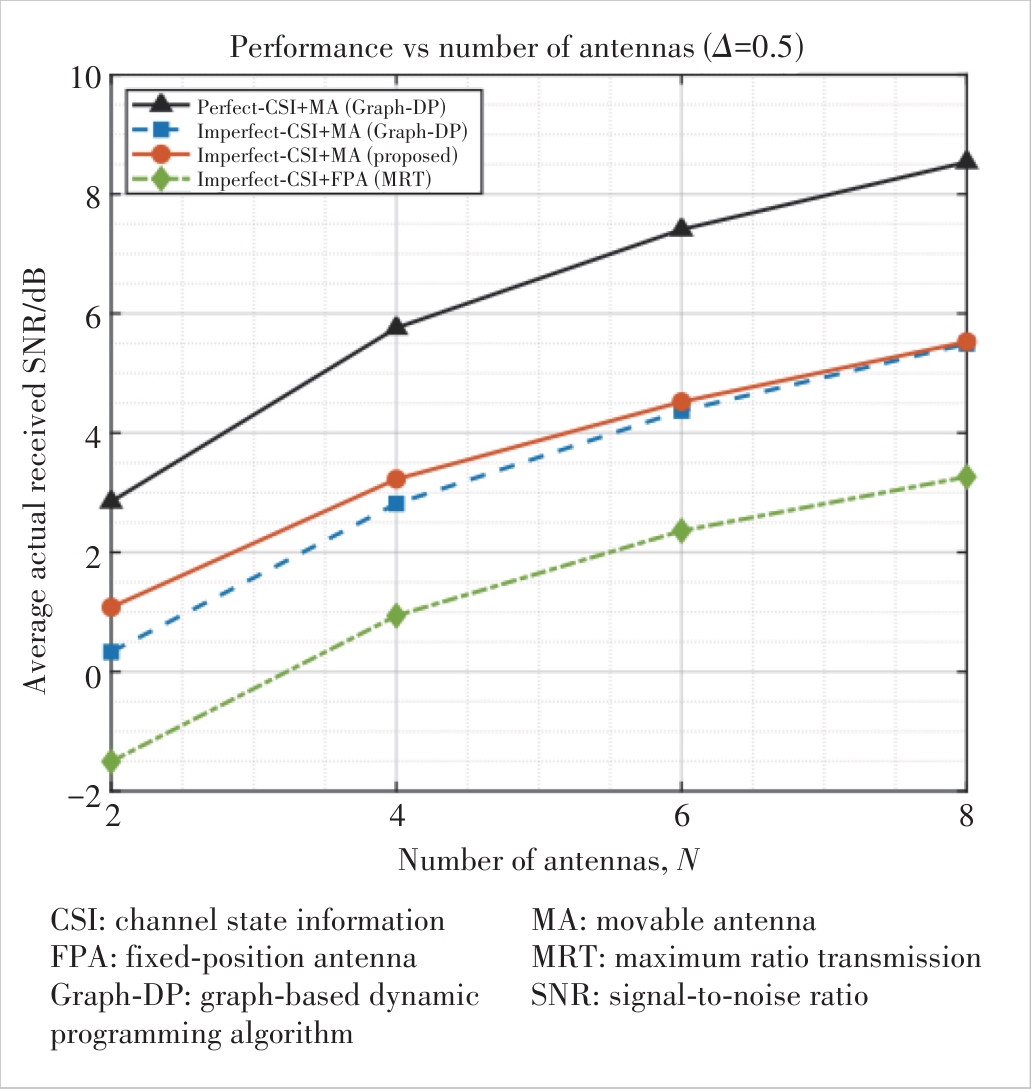
Figure 5 Average actual received SNR versus the number of transmit antennas at Δ=0.5
| [1] | Wang Z, Zhang J Y, Du H Y, et al. A tutorial on extremely large-scale MIMO for 6G: fundamentals, signal processing, and applications [J]. IEEE communications surveys & tutorials, 2024, 26(3): 1560–1605. DOI: 10.1109/comst.2023.3349276 |
| [2] | Ning B Y, Tian Z B, Mei W D, et al. Beamforming technologies for ultra-massive MIMO in terahertz communications [J]. IEEE open journal of the communications society, 2023, 4: 614–658. DOI: 10.1109/ojcoms.2023.3245669 |
| [3] | Chowdhury M Z, Shahjalal M, Ahmed S, et al. 6G wireless communication systems: applications, requirements, technologies, challenges, and research directions [J]. IEEE open journal of the communications society, 2020, 1: 957–975. DOI: 10.1109/OJCOMS.2020.3010270 |
| [4] | Zhu L P, Zhang J, Xiao Z Y, et al. Millimeter-wave NOMA with user grouping, power allocation and hybrid beamforming [J]. IEEE transactions on wireless communications, 2019, 18(11): 5065–5079. DOI: 10.1109/twc.2019.2932070 |
| [5] | Zhu L P, Ma W Y, Zhang R. Movable antennas for wireless communication: opportunities and challenges [J]. IEEE communications magazine, 2024, 62(6): 114–120. DOI: 10.1109/mcom.001.2300212 |
| [6] | Ning B Y, Yang S J, Wu Y F, et al. Movable antenna-enhanced wireless communications: general architectures and implementation methods [J]. IEEE wireless communications, 2025, 32(5): 108–116. DOI: 10.1109/MWC.013.2400238 |
| [7] | Wang M J, Gao F F, Jin S, et al. An overview of enhanced massive MIMO with array signal processing techniques [J]. IEEE journal of selected topics in signal processing, 2019, 13(5): 886–901. DOI: 10.1109/jstsp.2019.2934931 |
| [8] | Ma W Y, Zhu L P, Zhang R. MIMO capacity characterization for movable antenna systems [J]. IEEE transactions on wireless communications, 2024, 23(4): 3392–3407. DOI: 10.1109/twc.2023.3307696 |
| [9] | Zhu L P, Ma W Y, Zhang R. Modeling and performance analysis for movable antenna enabled wireless communications [J]. IEEE transactions on wireless communications, 2024, 23(6): 6234–6250. DOI: 10.1109/twc.2023.3330887 |
| [10] | Zhu L P, Ma W Y, Ning B Y, et al. Movable-antenna enhanced multiuser communication via antenna position optimization [J]. IEEE transactions on wireless communications, 2024, 23(7): 7214–7229. DOI: 10.1109/twc.2023.3338626 |
| [11] | Mei W D, Wei X, Ning B Y, et al. Movable-antenna position optimization: a graph-based approach [J]. IEEE wireless communications letters, 2024, 13(7): 1853–1857. DOI: 10.1109/lwc.2024.3393135 |
| [12] | Liu C H, Mei W D, Chen Z, et al. A general optimization framework for movable antenna systems via discrete sampling [J]. IEEE wireless communications letters, 2026, 15: 475–479. DOI: 10.1109/lwc.2025.3629978 |
| [13] | Ma W Y, Zhu L P, Zhang R. Multi-beam forming with movable-antenna array [J]. IEEE communications letters, 2024, 28(3): 697–701. DOI: 10.1109/lcomm.2024.3350647 |
| [14] | Wang D, Mei W D, Ning B Y, et al. Movable antenna enhanced wide-beam coverage: joint antenna position and beamforming optimization [J]. IEEE transactions on wireless communications, 2026, 25: 3541–3558. DOI: 10.1109/twc.2025.3604598 |
| [15] | Wei X, Mei W D, Wang D, et al. Joint beamforming and antenna position optimization for movable antenna-assisted spectrum sharing [J]. IEEE wireless communications letters, 2024, 13(9): 2502–2506. DOI: 10.1109/lwc.2024.3421636 |
| [16] | An B N, Mei W D, Liu Y W, et al. STAR-RIS-enabled multi-path beam routing with passive beam splitting [J]. IEEE transactions on vehicular technology, 2026, 75(6): 11035–11050. DOI: 10.1109/tvt.2025.3650199 |
| [17] | Wei X, Mei W D, Wu Q Q, et al. Movable antennas meet intelligent reflecting surface: friends or foes? [J]. IEEE transactions on communications, 2025, 73(11): 12756–12770. DOI: 10.1109/tcomm.2025.3588579 |
| [18] | Wang Y S, Mei W D, Wei X, et al. Antenna position optimization for movable antenna-empowered near-field sensing [C]//International Conference on Communications Workshops (ICC Workshops). IEEE, 2025: 324–329. DOI: 10.1109/ICCWorkshops67674.2025.11162470 |
| [19] | Lyu W T, Yang S J, Xiu Y, et al. Movable antenna enabled integrated sensing and communication [J]. IEEE transactions on wireless communications, 2025, 24(4): 2862–2875. DOI: 10.1109/twc.2025.3525631 |
| [20] | Li Q L, Mei W D, Zhang R, et al. Trajectory optimization for minimizing movement delay in movable antenna systems [J]. IEEE transactions on wireless communications, 2026, 25: 6986–6999. DOI: 10.1109/twc.2025.3627982 |
| [21] | Wei X, Mei W D, Huang X, et al. Mechanical power modeling and energy efficiency maximization for movable antenna systems [C]//IEEE Global Communications Conference. IEEE, 2025: 6117–6122. DOI: 10.1109/GLOBECOM59602.2025.11432508 |
| [22] | Huang Y T, Mei W D, Wei X, et al. CNN-based channel map estimation for movable antenna systems [C]//Proceedings of IEEE 26th International Workshop on Signal Processing and Artificial Intelligence for Wireless Communications (SPAWC). IEEE, 2025: 1–5. DOI: 10.1109/spawc66079.2025.11143328 |
| [23] | Zhao Y Z, Zhang L, Yang H, et al. Reconfigurable antennas for next-generation mobile communication networks: a comprehensive survey and tutorial [J]. IEEE communications surveys & tutorials, 2026, 28: 5267–5306. DOI: 10.1109/COMST.2026.3673688 |
| [24] | Ma H F, Mei W D, Wei X, et al. Robust movable-antenna position optimization with imperfect CSI for MISO systems [J]. IEEE communications letters, 2025, 29(7): 1594–1598. DOI: 10.1109/lcomm.2025.3569177 |
| [25] | Vucic N, Boche H. Robust QoS-constrained optimization of downlink multiuser MISO systems [J]. IEEE transactions on signal processing, 2009, 57(2): 714–725. DOI: 10.1109/tsp.2008.2008553 |
| [26] | Wang K Y, So A M, Chang T H, et al. Outage constrained robust transmit optimization for multiuser MISO downlinks: tractable approximations by conic optimization [J]. IEEE transactions on signal processing, 2014, 62(21): 5690–5705. DOI: 10.1109/TSP.2014.2354312 |
| [27] | Wu Y F, Xu D F, Wing Kwan Ng D, et al. Globally optimal movable antenna-enabled multiuser communication: discrete antenna positioning, power consumption, and imperfect CSI [J]. IEEE transactions on communications, 2025, 73(10): 9903–9923. DOI: 10.1109/tcomm.2025.3582717 |
| [1] | Xiang Pengrong, Li Zhiguang, Zhao Yizhe. Joint Resource Allocation for Movable-Antenna-Assisted Secure Integrated Data and Energy Transfer [J]. ZTE Communications, 2026, 24(3): 31-39. |
| [2] | Biao He, Xiangyun Zhou, and Thushara D. Abhayapala. Wireless Physical Layer Security with Imperfect Channel State Information: A Survey [J]. ZTE Communications, 2013, 11(3): 11-19. |
| Viewed | ||||||
|
Full text |
|
|||||
|
Abstract |
|
|||||